
TL;DR
Cross-platform content intelligence is the practice of using data and AI to understand what content works across TikTok, Instagram, YouTube, and Facebook, then acting on those insights to drive sales. Most sellers cobble together 3 to 5 separate tools for research, content creation, and publishing, spending $150 to $400 per month with no data flowing between them. This guide breaks down eight tools across five capability categories, introduces a Three Layers framework for evaluating them, and helps you pick the right stack (or single platform) for your social commerce business.
Cross-platform content intelligence is the process of using AI, analytics, and commerce data to identify which products, content formats, creators, and publishing strategies generate the best business results across multiple social platforms.
Unlike traditional social media analytics that only reports past performance, content intelligence combines trend discovery, creative analysis, publishing optimization, and revenue attribution into one workflow. Businesses use it to determine:
– What products are gaining momentum
– What type of videos convert best
– Which platform should receive priority
– When content should be published
– Which content actually generates revenue
The most advanced platforms combine discovery intelligence, creative intelligence, and distribution intelligence into a single system.
Why Cross-Platform Content Intelligence Matters Now
The global social commerce market hit $2.11 trillion in 2026, with the US crossing $100 billion for the first time. TikTok Shop alone is projected to generate $23.4 billion in US sales this year, a 48% jump from 2025. That would put it ahead of Target, Costco, Best Buy, and Kroger in ecommerce volume.
Here’s the problem: 58% of TikTok Shop sales come from short-form video, Instagram Reels deliver 30% higher ROI than other post formats, and live shopping converts at 10x the rate of traditional product pages. Content isn’t a marketing channel anymore. It is the storefront. Yet 83% of marketers still struggle to unify data across platforms, according to Improvado.
This is the gap cross-platform content intelligence fills. It’s the ability to discover what products and content formats are winning across channels, create assets that convert, and distribute them at the right time, all while tracking the revenue each piece of content generates. Without it, you’re guessing.
Explore the full Trenz platform to see how discovery, creation, and distribution work in one workflow.
What Is Cross-Platform Content Intelligence?
Content analytics tells you what happened. Cross-platform content intelligence tells you what to do next.
It combines market data, creative performance signals, and distribution insights from multiple social platforms into a single operating layer. Instead of checking TikTok Seller Center for sales, Buffer for scheduling, and a spreadsheet for margin, you get one system that answers three questions: What should I sell? What content should I create? Where and when should I publish it?
The Three Layers Framework
No existing tool comparison uses this framework, but it’s the clearest way to evaluate whether a platform actually delivers content intelligence or just content analytics.
Layer 1: Discovery Intelligence. What products and content themes are gaining traction, on which platforms, and why? This includes trending product databases, competitor tracking, creator analytics, and market sizing. If your tool can show you that a skincare serum is spiking on TikTok but hasn’t hit Instagram yet, that’s discovery intelligence.
Layer 2: Creative Intelligence. What formats, hooks, scripts, and visual styles convert across platforms? This goes beyond templates. Real creative intelligence analyzes top-performing content patterns and helps you generate assets (videos, images, scripts) informed by that data. When your platform knows what’s trending and can produce a video for it in 60 seconds, the feedback loop tightens dramatically.
Layer 3: Distribution Intelligence. When, where, and how should content be published for maximum impact? This includes cross-platform scheduling, best-time-to-post analysis, engagement tracking, and, most importantly, content-to-commerce attribution. Knowing which video drove which sale is not optional in a market where content is the sales mechanism.
Most tools cover one layer. A few cover two. The question is whether any platform covers all three. For a deeper look at how TikTok Shop analytics fits into this picture, we’ve written a separate breakdown.
Benefits of Cross-Platform Content Intelligence
Instead of managing each social network independently, businesses gain a unified view of content performance.
The biggest benefits include:
Faster content planning
Better product discovery
Reduced software costs
Improved cross-platform consistency
Higher ROI measurement
Less manual reporting
Better creative decisions using AI
More accurate attribution
Organizations managing multiple channels often save significant time by consolidating research, publishing, and analytics into fewer tools.
How Cross-Platform Content Intelligence Works
Most platforms follow the same workflow regardless of the software you choose.
Step 1: Collect Data
Gather content performance from every connected platform, including:
Views
Watch time
Engagement
Sales
Clicks
Audience demographics
Product performance
Step 2: Identify Patterns
AI analyzes:
Top-performing hooks
Winning formats
Best posting times
Viral products
Audience overlap
Competitor trends
Step 3: Recommend Actions
Instead of showing dashboards, intelligent platforms recommend actions such as:
Create more videos like this
Promote Product X
Stop posting Format Y
Publish on Instagram first
Reuse this TikTok for Shorts
Step 4: Measure Revenue
Modern platforms increasingly connect content directly to:
Revenue
GMV
Affiliate sales
ROAS
Conversion rate
This closes the feedback loop between content creation and business performance.
At-a-Glance Comparison Table
Tool | Starting Price | Discovery Intelligence | Content Creation | Cross-Platform Publishing | Commerce/GMV Tracking | Best For |
|---|---|---|---|---|---|---|
Trenz | Free (50 credits) | Deep (50M+ products, daily Radar) | AI video, image, scripts | TikTok, IG, YouTube, Facebook | Yes (TikTok Shop GMV) | End-to-end social commerce |
Kalodata | $45.90/mo | TikTok products & creators | No | No | Limited | TikTok Shop product research |
FastMoss | ~$59/mo | TikTok products, ads, LIVE | No | No | Limited | Agency-scale TikTok competitive intel |
Sprout Social | $249/mo | Social listening & sentiment | No | Yes (multi-platform) | No | Enterprise social management |
Buffer | Free (3 channels) | Basic post analytics | No | Yes (multi-platform) | No | Budget-friendly scheduling |
Triple Whale | $129/mo | Ad performance across channels | No | No | Yes (Shopify-centric) | DTC ad attribution |
Semrush | $139.95/mo | SEO content gaps & topics | No | No | No | SEO content optimization |
Conductor | Custom (enterprise) | Enterprise content audits | No | No | No | Large-scale content operations |
What Features Should a Cross-Platform Content Intelligence Tool Include?
Not every platform offers the same capabilities. Before comparing tools, evaluate whether each solution includes the following features.
Feature | Why It Matters |
|---|---|
Trend discovery | Find emerging products before competitors |
Competitor monitoring | Learn what is already working |
AI content generation | Produce videos, scripts, and images faster |
Multi-platform publishing | Reduce manual posting |
Attribution reporting | Connect content to revenue |
Audience insights | Understand who converts |
Best-time recommendations | Improve engagement |
Team collaboration | Scale workflows |
The 8 Best Cross-Platform Content Intelligence Tools
1. Trenz
Best for: TikTok Shop sellers who also publish to Instagram, YouTube, and Facebook and want one tool replacing 3 to 4 point solutions.
Pricing: Free plan with 50 credits (no credit card required). Growth tier includes 250 credits per month. Pro tier includes 650 credits per month. Scale tier includes 1,800 credits per month with team workspace at $19 per seat per month. Credits can be topped up at $10 for 100 credits; purchased credits never expire.
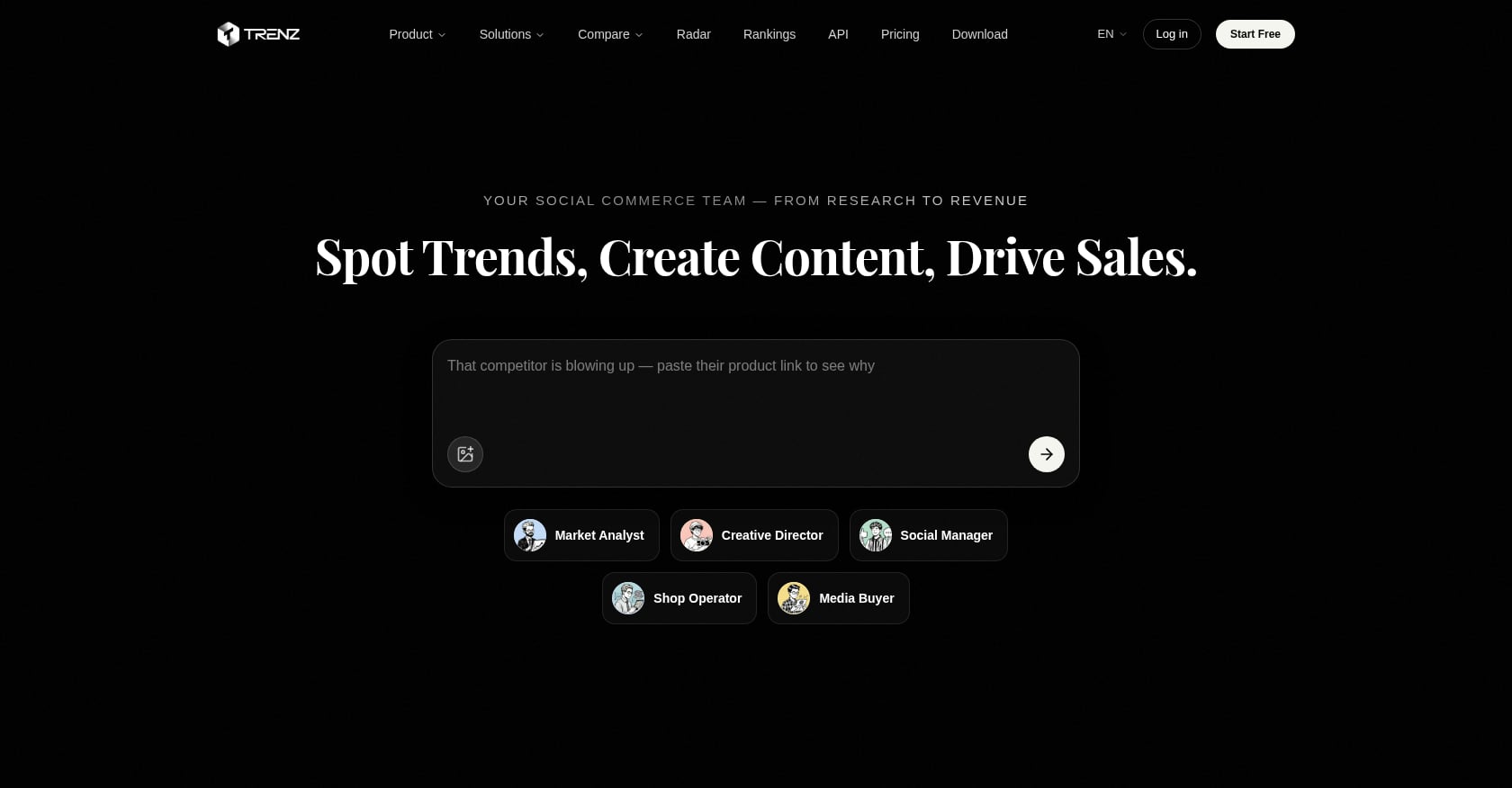
Trenz is the only platform in this list that covers all three layers of cross-platform content intelligence: discovery, creative, and distribution. It’s built around three AI agents, each handling one layer.
Key features:
Market Analyst agent: Scans 50M+ TikTok products and 2M+ creators. Identifies Blue Ocean opportunities, sales spikes, and seasonal trends. Includes competitor tracking and watchlists.
Creative Director agent: Generates AI videos (averaging about 60 seconds of production time), images, and scripts using models like Seedance 2.0, Veo 3.1, and Wan 2.6. Includes hook templates, content angles, and formula libraries sourced from top-GMV videos.
Social Manager agent: Publishes to TikTok, Instagram, YouTube, and Facebook from one calendar. Tracks engagement, suggests optimal posting times, and connects content performance to TikTok Shop GMV.
Daily Radar: Surfaces 5 data-backed product and market opportunities per day with GMV, growth, and creator-concentration analysis.
Monthly Rankings: Tracks $408.7M+ in GMV across TikTok Shop categories in the US and UK.
The practitioner pain point Trenz addresses is real. As one operations manager described a common TikTok Shop bottleneck: “Finance has one spreadsheet for margin. The affiliate manager has another tracker. The founder is checking Seller Center and still cannot answer a basic question fast enough.” That fragmentation is what a unified platform eliminates.
Tradeoffs:
TikTok-first depth. Other platforms (Instagram, YouTube, Facebook) are supported primarily for publishing and analytics, not full commerce data.
Credit-based billing requires some budgeting. Video generation costs 3 credits per second, which adds up for longer clips.
AI video quality depends partly on third-party model availability, which can vary by region.
Base plan prices for Growth, Pro, and Scale tiers aren’t publicly displayed beyond credits and features, so teams may need a test cycle to estimate total spend.
For sellers evaluating their options, Trenz’s pricing page shows the full credit breakdown and plan comparison.
2. Kalodata
Best for: Individual sellers and affiliates who prioritize TikTok Shop product discovery and creator partnership data.
Pricing: Starter at $45.90 per month ($38.30 per month billed annually). Professional at $99 per month ($83.20 per month annually). Enterprise pricing is custom.
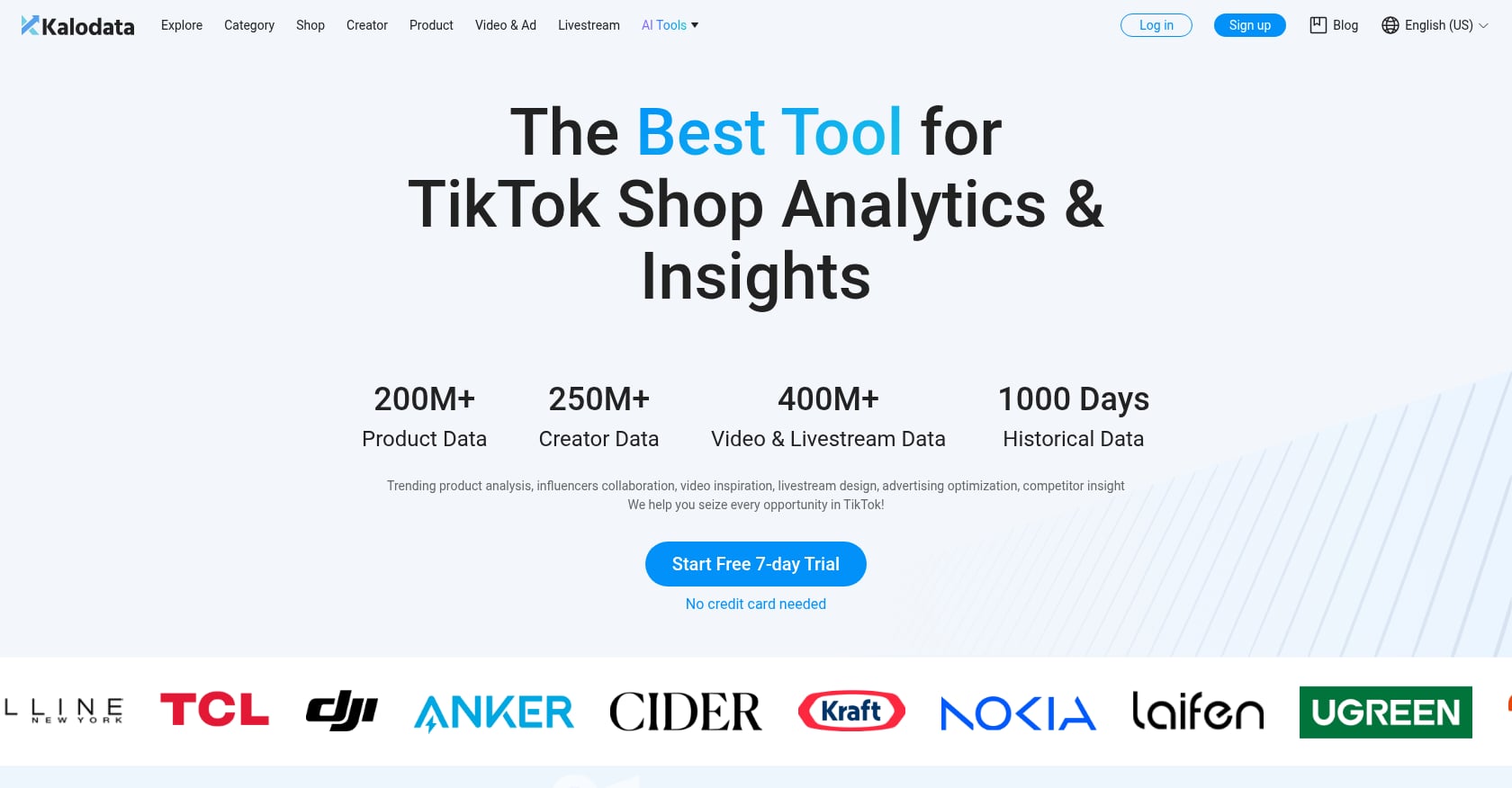
Kalodata is one of the “big four” TikTok Shop analytics platforms, and it’s both the most expensive and the most widely used in its category. It focuses squarely on discovery intelligence: trending products, creator performance, video analytics, and competitive benchmarking within TikTok Shop.
Key features:
Detailed product sales tracking with revenue estimates and trend timelines
Creator discovery with engagement and affiliate performance metrics
Trending video analysis showing hooks, formats, and content patterns that drive sales
Competitive analysis across shops and product categories
Tradeoffs:
TikTok-only. Zero cross-platform capability.
No content creation features. You still need a separate tool to produce videos, images, or scripts.
No publishing or scheduling. Kalodata tells you what’s working but can’t help you act on it.
The text-heavy interface and dense data presentation create a steep learning curve, particularly for newer sellers.
For a head-to-head breakdown, see this detailed comparison of Trenz, Kalodata, FastMoss, and PiPiAds.
3. FastMoss
Best for: Agencies managing five or more client shops who need LIVE shopping analytics, ad tracking, and broad competitive monitoring on TikTok.
Pricing: Basic at approximately $59 per month (28-day data window, 100 searches per day). Pro at approximately $109 per month (90-day window, 300 searches per day, AI suite). Ultimate at approximately $199 per month (full exports, team features, multi-country access).
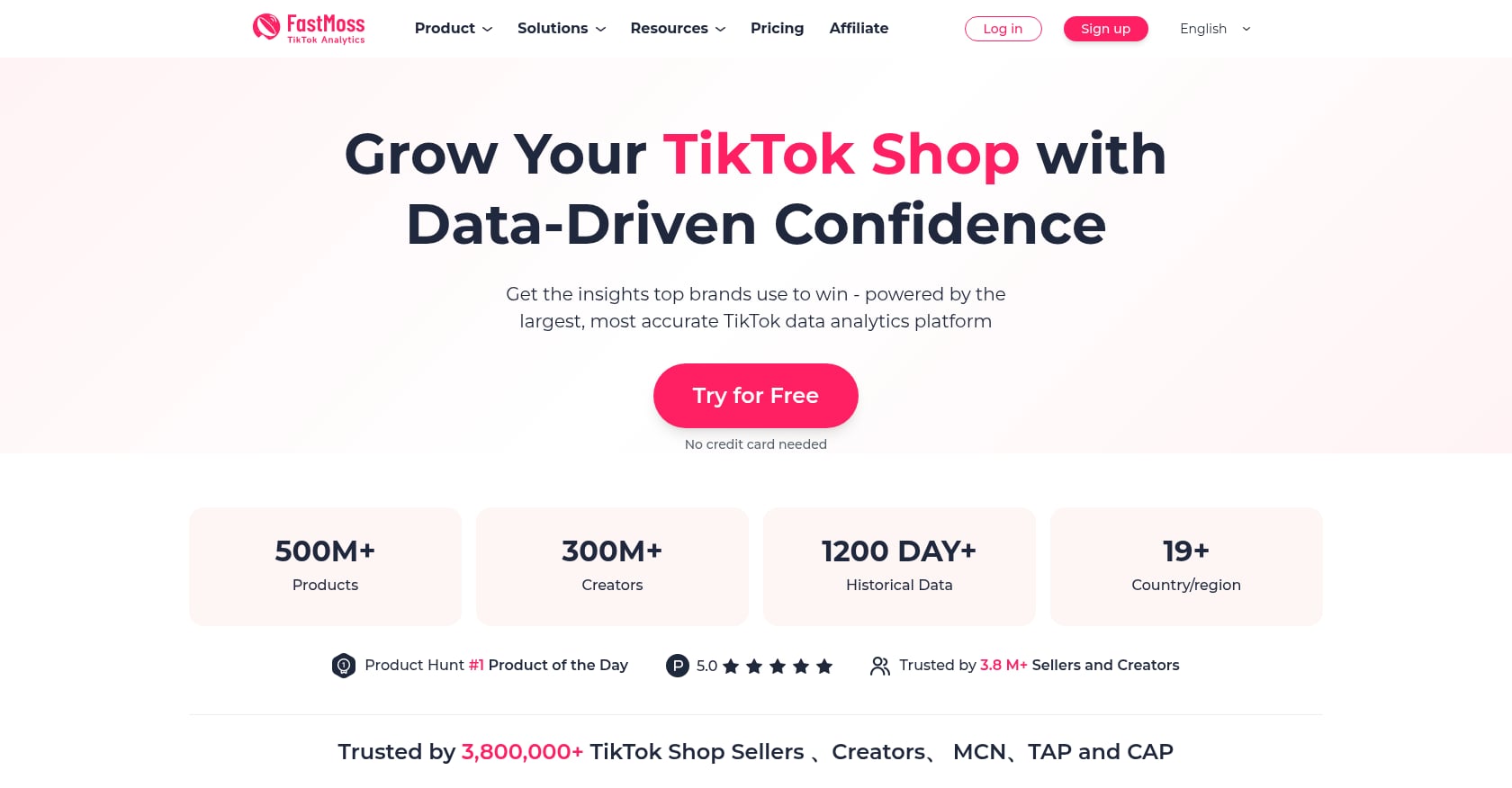
FastMoss goes wider than Kalodata in some ways, particularly around ad creative tracking and LIVE commerce analytics. It’s built more for teams that need to monitor multiple shops and campaigns simultaneously.
Key features:
Trending product discovery with category and country filters
Creator discovery and partnership analytics
Ad creative tracking across TikTok campaigns
LIVE commerce analytics including real-time sales monitoring
Tradeoffs:
TikTok-only, like Kalodata. No cross-platform publishing or analytics.
No content creation capability whatsoever.
Practitioners note that FastMoss dashboards show “what’s trending, not what’s profitable,” meaning you still need margin analysis elsewhere.
No scheduling or distribution features.
If you’re an agency weighing TikTok-specific tools against integrated platforms, the agency solutions page walks through the workflow differences.
4. Sprout Social
Best for: Enterprise marketing teams that need social listening, sentiment analysis, and cross-team reporting across major social platforms.
Pricing: Standard plan starts at $249 per month, limited to five social profiles. Professional and Advanced tiers increase profile limits and add features like competitive reports, paid promotion tools, and sentiment analysis.
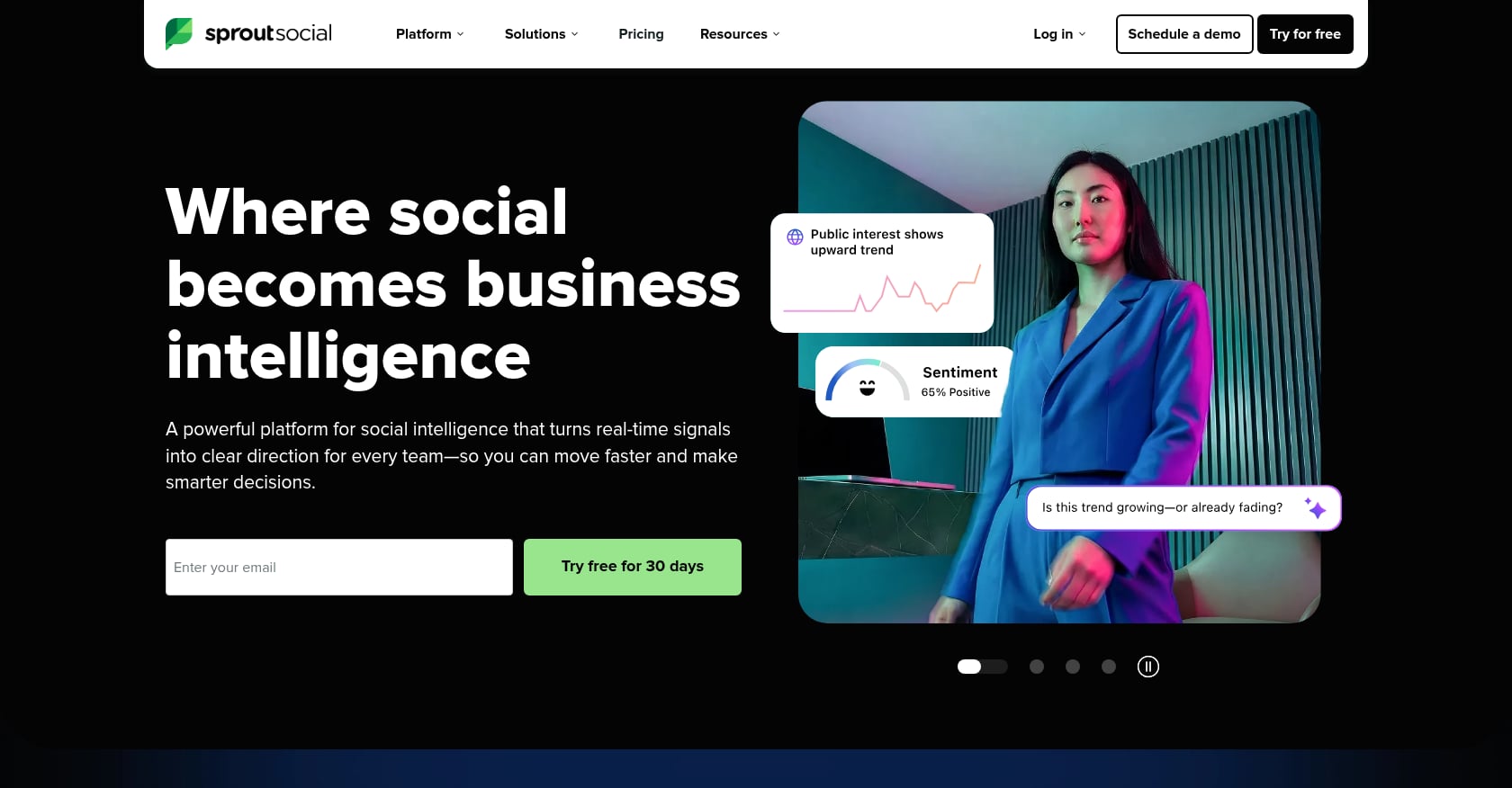
Sprout Social is the enterprise workhorse for social media management. Its distribution intelligence is strong: scheduling, engagement inboxes, automated reporting, and benchmarking against competitors. Its AI Assist provides real-time sentiment analysis across mentions and messages, plus automated response suggestions for customer service teams.
Key features:
Cross-platform scheduling and publishing (Instagram, TikTok, Facebook, LinkedIn, Pinterest, YouTube, X)
Social listening and sentiment analysis across mentions and keywords
Automated reporting with customizable dashboards and benchmarking
Team collaboration with approval workflows and task assignment
Tradeoffs:
Extremely expensive for small sellers or solo operators. At $249 per month minimum, it costs more than most TikTok Shop sellers’ entire tool budget.
No TikTok Shop native commerce data. It can publish to TikTok, but it can’t tell you which products to promote or what’s driving GMV.
No product discovery or market research capability.
No AI video or content generation.
5. Buffer
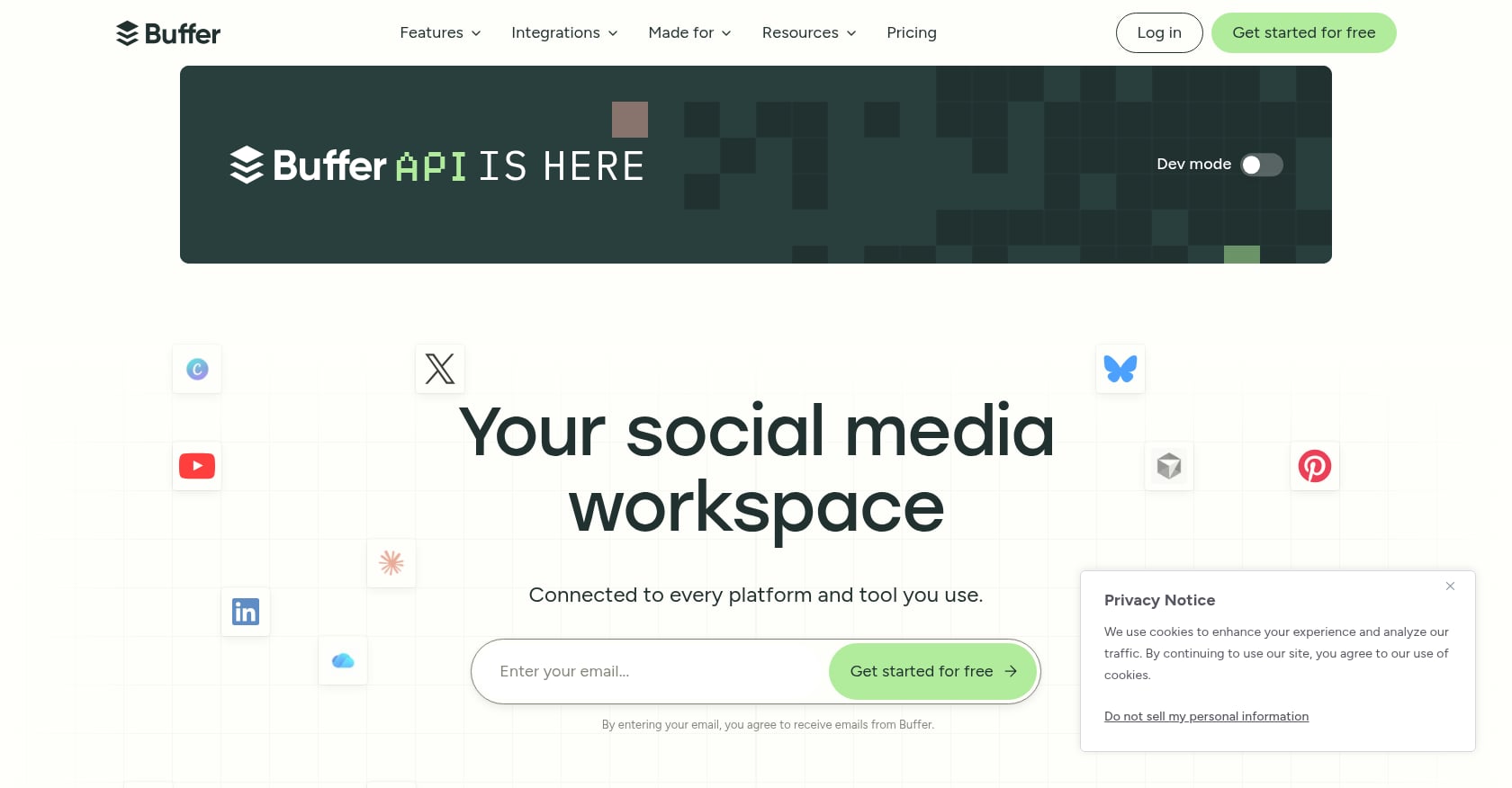
Best for: Solo creators and small teams who need affordable, no-fuss scheduling across 3 to 10 social channels.
Pricing: Free plan for up to 3 channels. Paid plans start at $6 per month per channel. Team features available on higher tiers.
Buffer is the opposite of an intelligence platform. It does one thing well: schedule posts across multiple channels with a clean, simple interface. For creators who already know what to post and just need it to go out on time, Buffer is cost-effective and reliable.
Key features:
Cross-platform scheduling for TikTok, Instagram, Facebook, LinkedIn, Pinterest, YouTube, and more
Basic analytics including engagement metrics and best-time-to-post suggestions
Link-in-bio landing page builder
Browser extension for quick content queuing
Tradeoffs:
No product research or discovery intelligence of any kind.
No commerce tracking. Buffer has no concept of GMV, revenue attribution, or even ecommerce.
No AI content creation (no video generation, no scripts, no images).
Users report that Buffer “has limitations with larger data sets and doesn’t provide analytics for all platforms.” Real-time engagement and platform-specific functionality are weak spots.
For teams that want scheduling combined with cross-platform publishing and commerce data, Buffer alone won’t get you there.
6. Triple Whale
Best for: DTC Shopify brands tracking ad attribution across Meta, Google, TikTok, and Klaviyo in one dashboard.
Pricing: Starts at $129 per month for stores under $1M in annual revenue. Pricing scales with store revenue.
Triple Whale built its reputation on solving the attribution problem for Shopify brands. Its Summary dashboard aggregates ad spend, revenue, and ROAS across Meta, Google, TikTok, Klaviyo, and Shopify into a single daily performance view. If you run paid campaigns across multiple ad platforms and need to understand which channel actually drove the sale, Triple Whale is purpose-built for that.
Key features:
Cross-channel ad attribution with first-party pixel data
Daily Summary dashboard aggregating all ad platform and Shopify data
Creative performance analysis showing which ad creatives drive conversions
Customer journey mapping across touchpoints
Tradeoffs:
Focused on paid attribution, not organic content intelligence. It doesn’t help you discover products to sell or create content.
TikTok Shop-specific features like payout reconciliation and fee-level profit tracking are less developed than purpose-built tools.
No content creation features of any kind.
Shopify-centric. If you’re not on Shopify, the value drops significantly.
7. Semrush
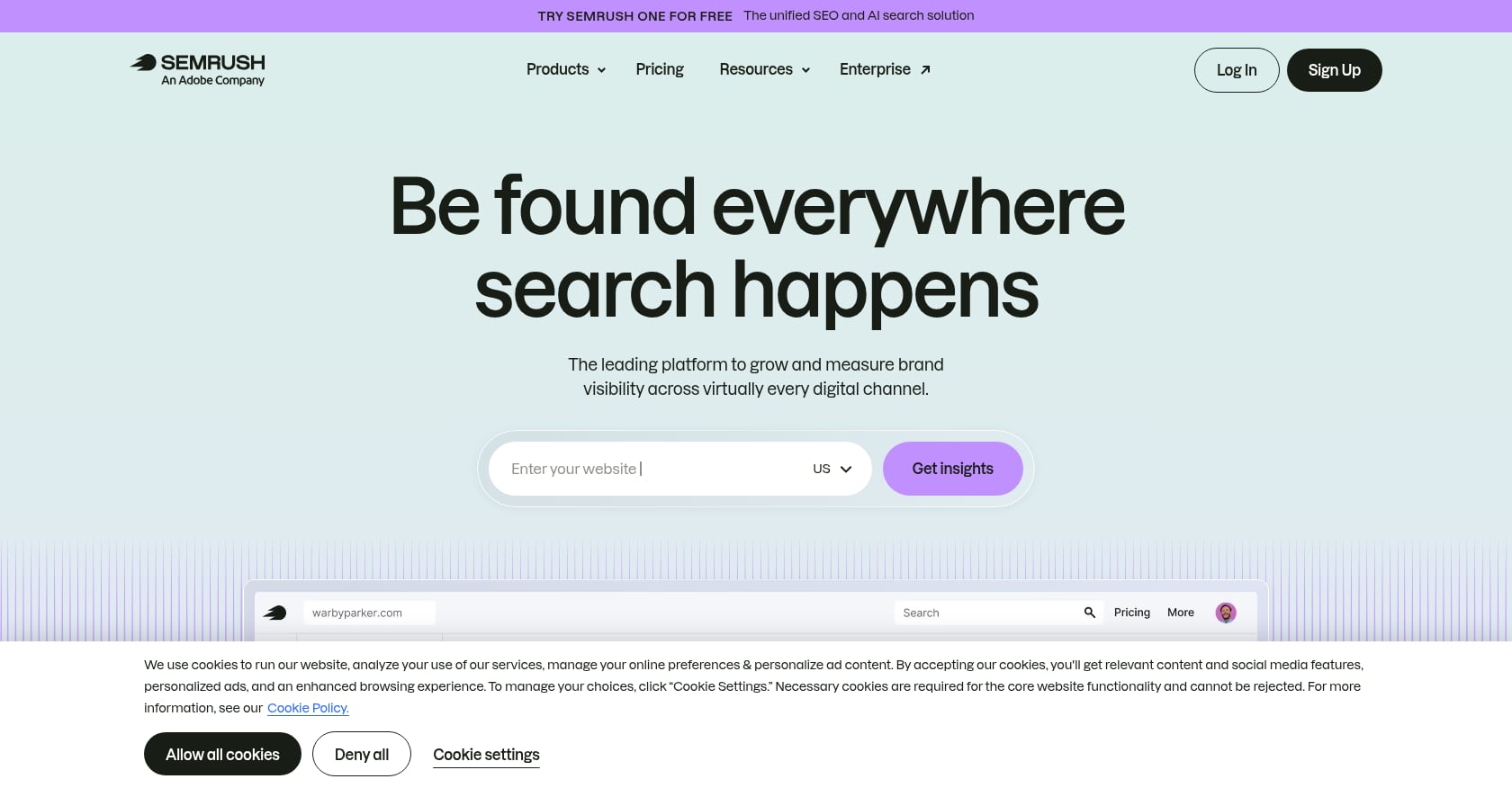
Best for: SEO-focused content teams doing blog and website optimization, topic research, and competitive content analysis.
Pricing: Pro tier at $139.95 per month. Guru at $249.95 per month. Business at $499.95 per month.
Semrush’s content intelligence module is powerful for written content strategy. It surfaces content gaps through competitive analysis, generates optimization templates with target keywords and readability scores, and audits existing content for improvement opportunities. It excels at answering “what should we write about next?” for blog and website teams.
Key features:
Topic research with question mining and content gap analysis
Content audit tools that score existing pages against competitors
SEO writing assistant with real-time optimization recommendations
Competitive content analysis showing top-performing pages by topic
Tradeoffs:
Not social-commerce-native. Semrush was built for search, not for TikTok or Instagram.
No TikTok Shop data, product discovery, or commerce analytics.
No video creation or social content generation.
No publishing or scheduling capabilities.
8. Conductor
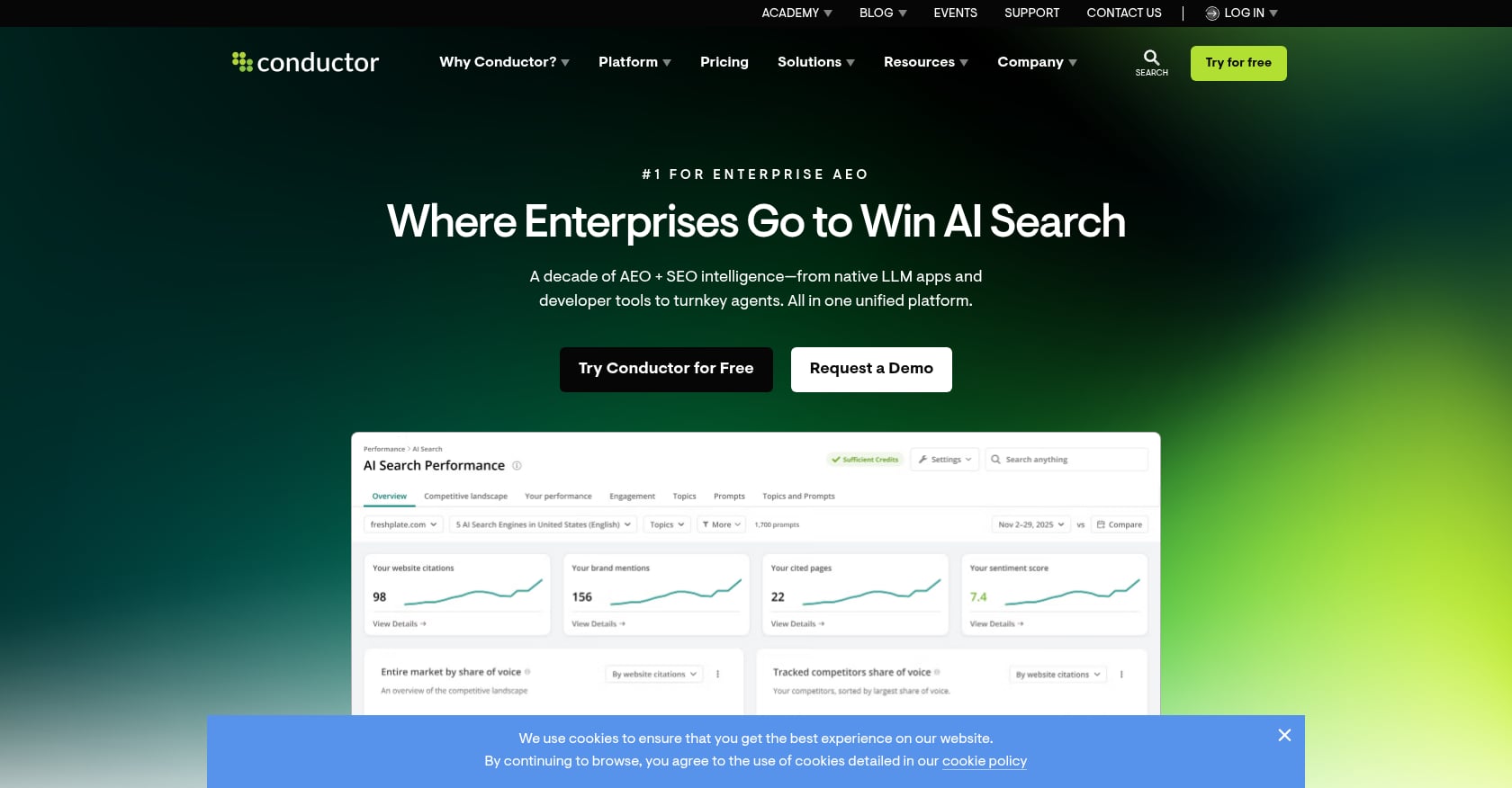
Best for: Large marketing organizations with complex content operations spanning multiple teams, regions, or brands.
Pricing: Custom enterprise pricing based on organization size. No self-serve plans.
Conductor occupies the enterprise end of content intelligence. It provides deep workflow integrations, cross-channel content auditing, and organic performance tracking for organizations managing hundreds or thousands of content assets. It’s the tool you need when your problem isn’t “what to post on TikTok” but “how to coordinate content strategy across 12 brand properties and 6 regional teams.”
Key features:
Enterprise content audit and performance tracking across web properties
Workflow management with team assignments and editorial calendars
Organic search visibility monitoring and competitive benchmarking
Integration with major CMS platforms and analytics tools
Tradeoffs:
Enterprise-only pricing and implementation. Not accessible to small or mid-size sellers.
No social commerce integration whatsoever. No TikTok Shop, no Instagram Shopping, no live commerce.
No content creation tools. No AI video, script, or image generation.
Focused entirely on web/search content, not social-first or video-first formats.
Which Type of Tool Do You Actually Need?
Business Type | Recommended Tool Type |
|---|---|
TikTok Shop Seller | Discovery + AI Content |
Shopify Brand | Attribution Platform |
Agency | Discovery + Scheduling |
Creator | Scheduling + Analytics |
Enterprise Brand | Social Listening Platform |
SEO Team | Content Intelligence Platform |
How to Choose the Right Tool
The “best” tool depends entirely on your business model. Here’s a quick decision framework.
If you sell on TikTok Shop and publish content across Instagram, YouTube, and Facebook, you want a platform that covers all three intelligence layers in one place. Trenz is designed for exactly this workflow: discover products, create content, publish everywhere, and track what drives revenue.
If you only need TikTok Shop product research and already have content creation and publishing handled, Kalodata or FastMoss will give you deep single-channel discovery intelligence. For a comparison of these tools, see this Kalodata vs. FastMoss guide.
If you need enterprise-grade social listening and team reporting, Sprout Social is the standard, though the price tag locks out smaller operators.
If you need Shopify ad attribution, Triple Whale is the specialist, but it won’t help with content creation or organic social strategy.
If you need SEO content optimization, Semrush or Conductor serve that need, though neither connects to social commerce.
The core question isn’t “which tool is best?” It’s “how many layers of content intelligence does my business need, and how many separate tools am I willing to manage?”
Businesses typically spend 6 to 10 hours per week per platform managing social content manually. Cross-platform tools can reduce that by up to 70%, and AI-powered social tools are saving teams 15 to 20 hours per week on content tasks. The math favors consolidation.
Start free with 50 credits to test whether a unified approach works for your team.
The Real Cost of Tool Fragmentation
Most TikTok Shop sellers building a cross-platform content intelligence stack from point solutions end up spending between $150 and $400 per month. A common setup: Kalodata for product research ($46 to $99), Buffer or Later for scheduling ($20 to $50), a separate AI video tool ($30 to $100), and maybe Triple Whale for attribution ($129). That’s $225 to $378 per month with no shared data layer.
The financial cost is only part of it. The real expense is time and context switching. When your product research tool doesn’t talk to your content creation tool, and your creation tool doesn’t talk to your publishing tool, you’re manually bridging every gap. You export a spreadsheet from one dashboard, open another tab, cross-reference with a third tool, and paste results into a calendar. Multiply that across four platforms and five days a week.
TikTok’s fee structure, affiliate commissions, payout bundling, and content-driven attribution are fundamentally different from Shopify or Amazon. Generic social tools that were built for a brand awareness era simply miss these mechanics. The optimal strategy is not choosing one platform. It is building a content system that serves all of them simultaneously, with intelligence flowing between each layer.
Key Takeaways
Cross-platform content intelligence combines analytics, AI, and automation across multiple social networks.
Most platforms specialize in discovery, creation, or publishing rather than all three.
Businesses should evaluate tools based on workflow, not feature count alone.
Consolidating multiple point solutions can reduce software costs and improve reporting efficiency.
The best platform depends on your business model, team size, and preferred social channels.
FAQ
What does “cross-platform content intelligence” mean?
It’s the practice of using data and AI to analyze what content performs best across multiple social platforms (TikTok, Instagram, YouTube, Facebook), then using those insights to inform product selection, content creation, and publishing strategy. It goes beyond analytics by telling you what to do next, not just what happened.
How is content intelligence different from content analytics?
Content analytics is backward-looking: views, clicks, engagement rates. Content intelligence is forward-looking: which products to feature, what hooks to use, when to publish, and which platform to prioritize. Analytics describes performance. Intelligence prescribes action.
Do I need a separate tool for each social platform?
Not necessarily. Single-platform tools like Kalodata and FastMoss provide deep TikTok-specific data, but they can’t help with Instagram, YouTube, or Facebook. If you’re selling across multiple channels, a unified platform eliminates the context switching and data silos that slow most teams down.
What are the three layers of cross-platform content intelligence?
Discovery intelligence (what products and trends are winning), creative intelligence (what content formats and hooks convert), and distribution intelligence (when, where, and how to publish for maximum revenue impact). Most tools cover only one layer.
How much does a typical multi-tool stack cost?
Assembling separate tools for product research, content creation, scheduling, and attribution typically runs $150 to $400 per month, with no data integration between them. Integrated platforms aim to reduce both the cost and the fragmentation.
Can AI-generated content actually drive TikTok Shop sales?
Yes, though quality and compliance matter. Video commerce accounts for over 43% of social commerce activity, and AI tools can now produce short-form videos in about 60 seconds. The key is pairing AI generation with data on what’s actually converting, so you’re not just producing content fast but producing content that sells. For guidance on finding the right products first, see this product validation guide.
Is cross-platform content intelligence only for TikTok Shop sellers?
No. The framework applies to any brand selling through social content across multiple platforms. That said, TikTok Shop’s content-driven commerce model (where a single viral video can generate six figures in sales) makes content intelligence especially critical there. DTC brands, agencies, and creator economy operators all benefit from the same approach.
What should I look for when evaluating content intelligence tools?
Start with the three layers. Does the tool help you discover opportunities? Does it help you create content informed by data? Does it help you distribute that content and track revenue? Any tool that covers only one layer will eventually force you to add another tool, and another, until you’re back to the Frankenstein stack problem.
Author


