
TL;DR
Agencies managing TikTok Shop need tools across six workflow stages: product research, competitor analysis, creator discovery, content creation, publishing, and analytics. Most tools cover only one or two stages, forcing agencies into expensive, fragmented stacks. Trenz is the strongest all-in-one option, combining product intelligence, AI video generation, scheduling, and GMV reporting in a single platform. For agencies that prefer point solutions, pair one market intelligence tool (Kalodata or FastMoss, not both) with a creative tool and a profit tracker.
TikTok Shop hit $66 billion in global GMV in 2025, nearly doubling the prior year. Projections for 2026 put it above $112 billion, with the US market alone expected to contribute $23.4 billion. There are roughly 475,000 TikTok shops in the US right now, and the affiliate program accounts for over 30% of GMV in categories like fashion and home goods.
For agencies, these numbers mean one thing: client demand is outpacing operational capacity. A typical TikTok Shop agency manages 50 to 500 creators simultaneously, handles commission structures and sample fulfillment, tracks performance across dozens of product listings, and needs to produce content at a pace that would have been unthinkable two years ago. Doing all of this with disconnected tools creates what practitioners call the “fragmentation tax,” where data lives in four or five dashboards, nothing connects content performance to actual revenue, and you’re spending $250 or more per month before you’ve even opened TikTok Seller Center.
This guide covers the best TikTok Shop agency tools organized by what they actually do, with honest pricing, real limitations, and stack recommendations by revenue stage. Not a 33-item dump. Nine tools, mapped to the six workflow stages agencies run daily.
Explore Trenz for agencies to see how one platform covers multiple stages.
If you’re choosing TikTok Shop agency tools in 2026, focus on covering six core workflows: product research, competitor analysis, creator management, content production, publishing, and reporting.
For most agencies:
– Trenz is best for agencies wanting an all-in-one platform.
– Kalodata is best for historical market research.
– FastMoss is strongest for creator discovery.
– PiPiAds excels at ad intelligence.
– Creatify is ideal for AI video production.
– Dashboardly is best for profit tracking.
Instead of buying multiple overlapping subscriptions, build a stack that covers every workflow without duplicating functionality.
Which TikTok Shop Agency Tool Should You Choose?
If You Need… | Best Tool |
|---|---|
Product research | Trenz |
Competitor research | Kalodata |
Creator discovery | FastMoss |
AI video creation | Creatify |
Affiliate outreach | Trendio |
Ad spy tool | PiPiAds |
Publishing | Buffer |
Profit reporting | Dashboardly |
Official first-party analytics | TikTok Seller Center |
At-a-Glance Comparison Table
Tool | Best For | Starting Price | Key Feature | Limitation | TikTok Shop Data? |
|---|---|---|---|---|---|
Trenz | All-in-one agency platform | Free (50 credits); Scale at $19/seat/mo | Product intel + AI video + publishing + GMV reporting | TikTok-first; credit budgeting needed | Yes, Official TikTok Shop Partner |
Kalodata | Deep market research | ~$38-45/mo | 500-day history, 200M+ creators | Research only; scraped data | Yes (scraped) |
FastMoss | Real-time creator & team ops | ~$14-46/mo | Fast data refresh, team workspaces | Expensive at higher tiers; scraped data | Yes (scraped) |
PiPiAds | Ad creative spying | $49/mo | 50M+ ad creatives database | Credit limits; support issues | Partial (ad-focused) |
Creatify AI | AI video ad volume | ~$33/mo | URL-to-video, 1,500+ avatars | Production only; credits expire monthly | No |
Trendio | Creator outreach automation | $149/mo | AI-powered affiliate matching + CRM | Not a research tool; high entry price | Partial |
TikTok Seller Center | Baseline analytics | Free | Official first-party data | Revenue only, not profit; no competitive intel | Yes (first-party) |
Buffer | Multi-platform scheduling | Free; ~$6/channel/mo | TikTok scheduling + basic analytics | No commerce data | No |
Dashboardly | Profit tracking | Free tier available | Verified order-level P&L via API | Not a research/discovery tool | Yes (API-connected) |
What Agencies Actually Need: The Six Workflow Stages
Before picking tools, understand the workflow. Every TikTok Shop agency runs six stages, whether they formalize them or not:
Product Research — finding what’s selling, spotting blue ocean opportunities, validating before committing inventory
Competitor Analysis — monitoring rival shops, pricing, ad spend patterns, and creator strategies
Creator Discovery & Analytics — sourcing affiliates, evaluating conversion rates (not just follower counts), and tracking per-creator ROI
Content Creation — scripts, hooks, video production, AI-generated UGC-style ads
Publishing & Scheduling — posting across TikTok, Instagram, YouTube, and Facebook at peak times
Analytics & Reporting — GMV tracking, profit attribution, client-facing dashboards
Most tools cover one or two of these stages. That’s why agencies end up with five subscriptions and still can’t answer the question every client asks: “Which creator is actually making us money?”
The tools below are organized by which stages they serve, starting with the only platform that spans nearly all six.
How We Evaluated These TikTok Shop Agency Tools
Every tool was evaluated using the same criteria:
Accuracy of TikTok Shop data
Agency workflow coverage
Ease of onboarding
Team collaboration
AI automation features
Reporting capabilities
Pricing transparency
Integration with TikTok Seller Center
Customer reviews
Overall value for agencies
Rather than ranking tools by popularity alone, this guide focuses on how well each platform supports real agency operations.
The Best TikTok Shop Agency Tools, Reviewed
1. Trenz
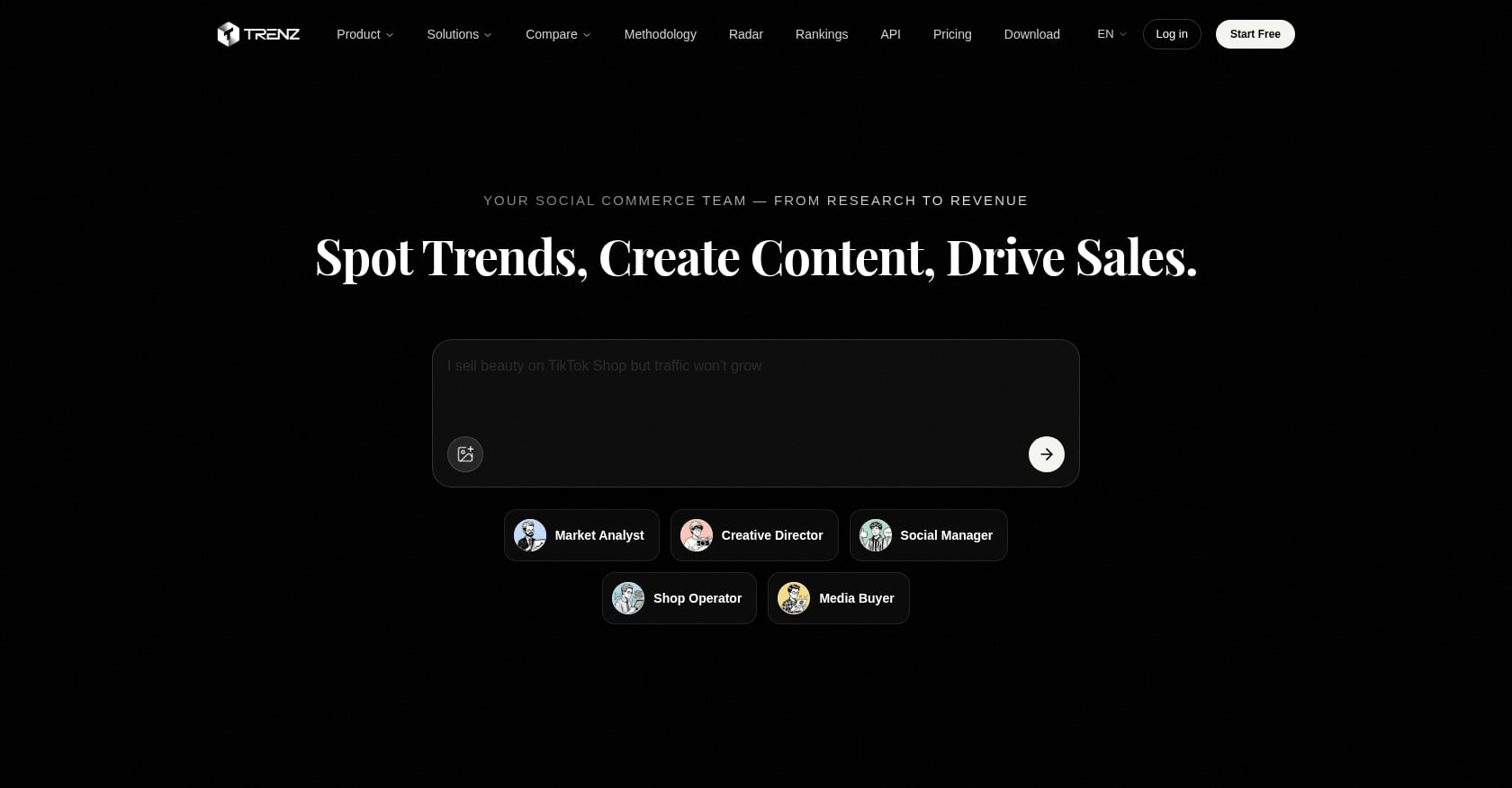
Best for: Agencies that want one platform covering product intelligence through content creation through publishing through GMV reporting
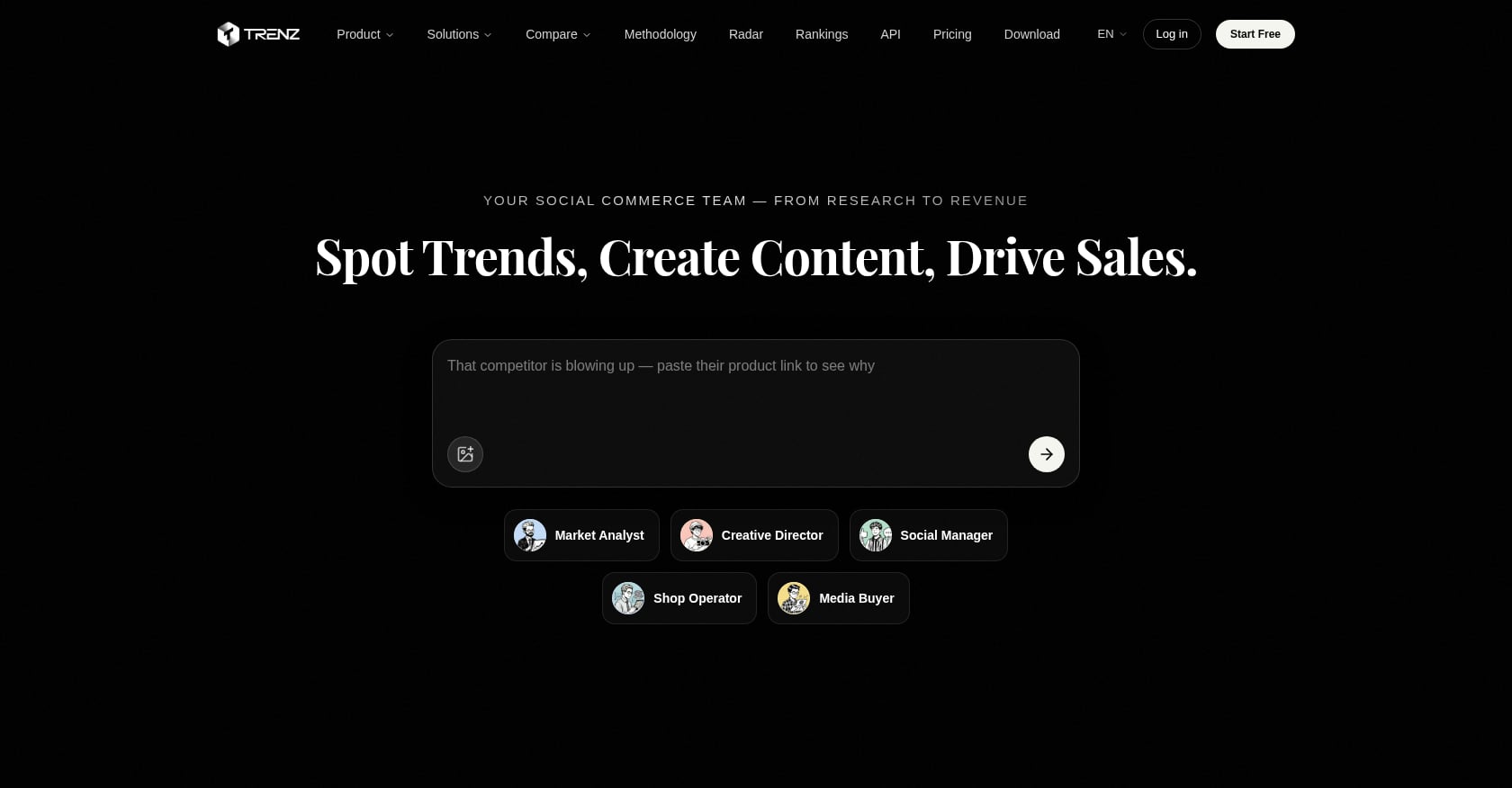
Trenz is an AI-native social commerce platform built around three AI agents (Market Analyst, Creative Director, Social Manager) coordinated by an orchestrator called Trenzer. It’s the only tool on this list that collapses multiple agency workflow stages into a single credit-based system.
Key features:
Product discovery and market intelligence: 50M+ TikTok products and 2M+ creators indexed, with daily Radar insights (GMV, growth trends, creator-concentration analysis) and monthly TikTok Shop Rankings by category and region
AI video and content generation: Integrated models including Seedance 2.0, Veo 3.1, and Wan 2.6, plus script templates, hooks, angles, and AI avatars, with average generation time around 60 seconds
Multi-platform publishing: Schedule and publish to TikTok, Instagram, YouTube, and Facebook from one calendar, with best-time-to-post insights and an engagement inbox
Open API: A single key for TikTok commerce data, AI content generation, social publishing, and ads management, useful for agencies building custom workflows
Team workspace: The Scale plan supports up to 50 social accounts with a shared credit pool and team members at $19/seat/mo
Pricing:
Free plan: 50 welcome credits, no card required
Growth: 250 credits/mo, 3 social accounts
Pro: 650 credits/mo, 10 social accounts, +20% bonus on top-ups
Scale: 1,800 credits/mo (shared pool), 50 social accounts, team workspace, $19/seat/mo, +50% bonus on top-ups
Top-up rate: $10 = 100 credits; purchased credits never expire
API: PAYG at $0.15/credit, Enterprise at $0.10/credit
Typical costs per output: a video generation runs about 12 credits, a product discovery task about 10, an AI image 1 credit.
Tradeoffs:
TikTok-first platform. Other platforms are supported for publishing and analytics, but the deepest commerce data is TikTok-specific
The credit model is transparent but requires planning. Video generation at 3 credits per second adds up for longer content
Base plan dollar prices for Growth, Pro, and Scale aren’t displayed on the website, so agencies need a test cycle to estimate total spend
Why it matters for agencies: The core value proposition is stack consolidation. An agency running Kalodata ($80/mo) plus PiPiAds ($99/mo) plus Creatify ($39/mo) plus Buffer ($30/mo) spends $248/mo minimum, with data scattered across four dashboards and no content-to-GMV attribution. Trenz claims Official TikTok Shop Partner status, which (if verified) means direct API access rather than the scraped data that every other market intelligence tool relies on. That’s a material difference for data reliability, a point we’ll return to later.
See Trenz pricing and credit details
2. Kalodata
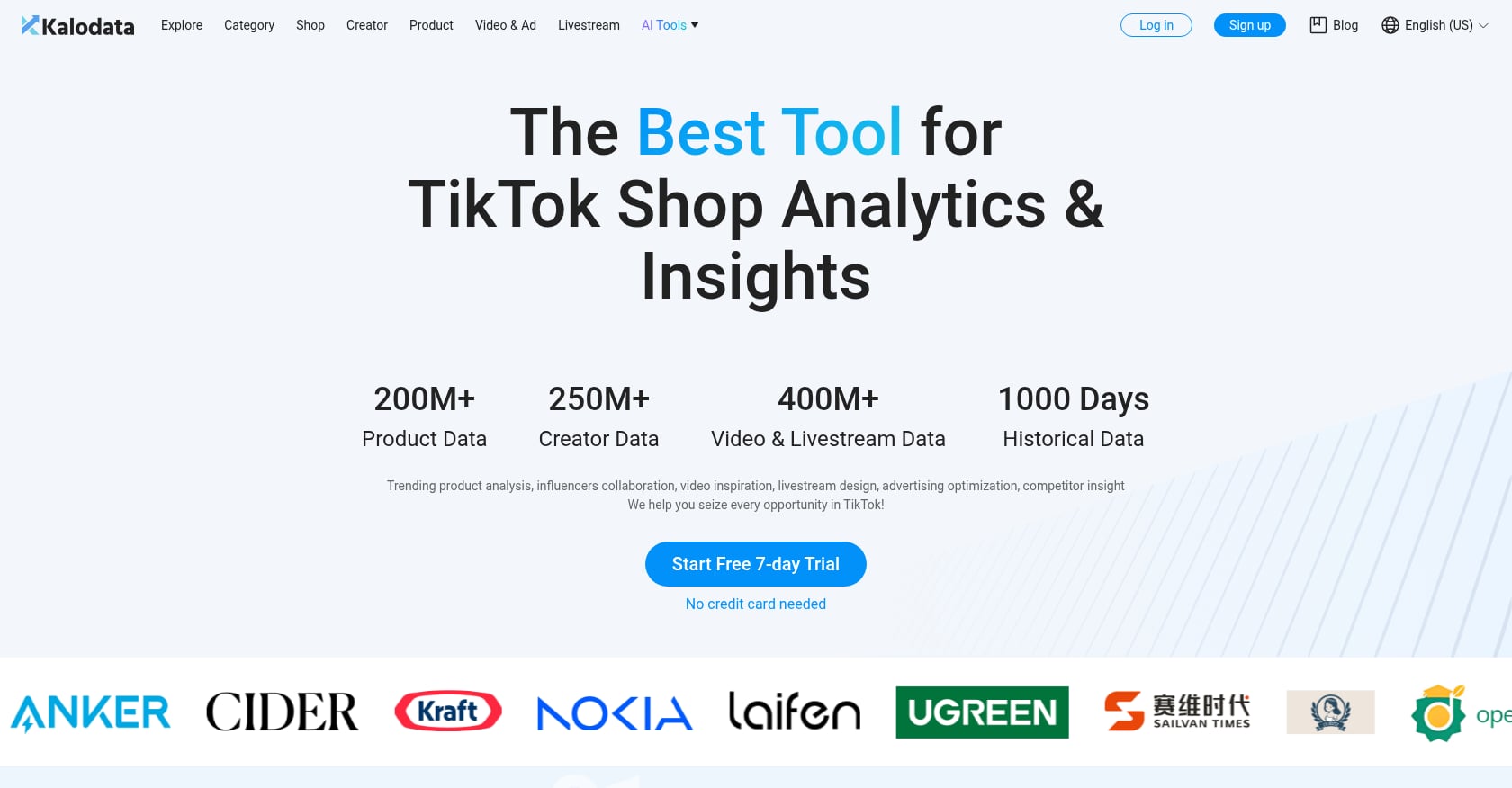
Best for: Deep TikTok Shop market intelligence with extensive historical data
Kalodata is a dedicated analytics platform for trending product discovery, creator performance tracking, competitor shop monitoring, and livestream analytics. It covers 200M+ creator profiles, 400M+ video records, and up to 500 days of historical data.
Key features:
Trending product lists with estimated sales volume and revenue
Creator performance tracking with engagement and conversion metrics
Competitor shop monitoring
Livestream analytics for evaluating live selling strategies
Category-level and product-level filtering
Pricing:
Starter: ~$38-45/mo
Professional: ~$83-99/mo
Annual billing saves up to 30%
7-day free trial, no card required
Tradeoffs:
Research only. No content creation, no publishing, no scheduling
All data is scraped, not sourced through an official TikTok API
Doesn’t connect to your store’s actual fees, ad spend, or refunds, so any “profit” estimate is a guess
User perspective: Practitioners on Reddit describe Kalodata as useful but expensive for sellers still testing their first product. A detailed post in r/TikTokShop raised concerns about data accuracy, noting discrepancies between Kalodata’s metrics and the user’s own TikTok Shop account performance, including units sold and leaderboard rankings. For agencies already generating revenue, the intelligence is valuable. For those still validating, the subscription cost may not make sense yet.
For a deeper comparison of analytics platforms, see our Kalodata vs. FastMoss breakdown.
3. FastMoss
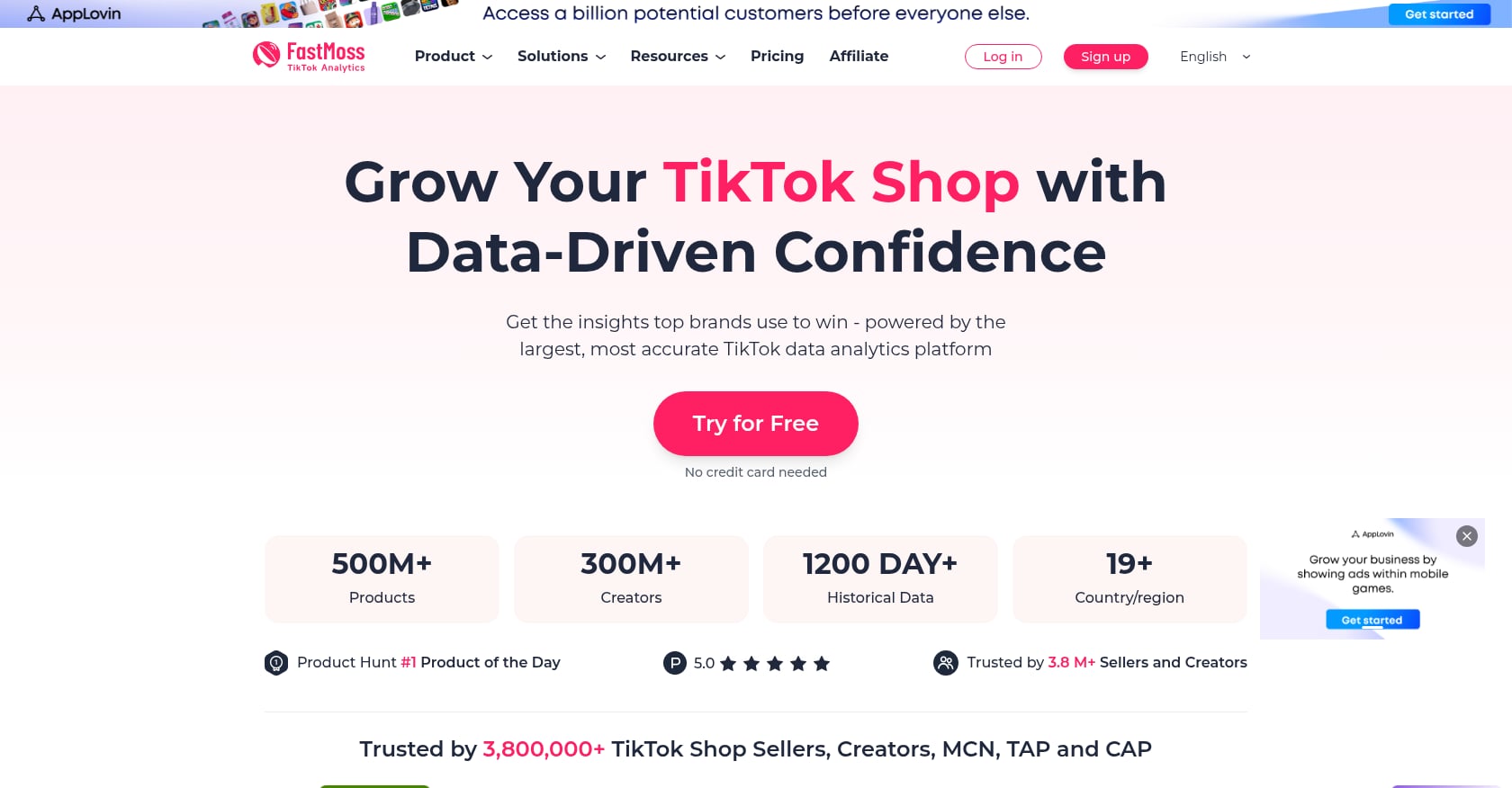
Best for: Real-time creator discovery and multi-client agency workspace management
FastMoss covers products, shops, creators, ads, and live activity with a focus on fast data refresh rates and team collaboration. It tracks over 500 million products and provides 1,200 days of historical data, the deepest backlog among the market intelligence tools.
Key features:
Real-time product and creator trending data
Team workspaces with role-based access and multi-shop tracking
Ad creative monitoring
Live selling analytics
Faster data refresh cycle than most competitors
Pricing:
Basic: $14/mo (after $3 trial)
Pro: $25/mo (after $7 trial)
Ultimate: $46/mo (after $12 trial)
Note: some user reports cite introductory pricing of $29 rising to $59/mo after the first month, so verify current rates
Tradeoffs:
The most useful features are locked behind higher-tier plans
Like Kalodata, all data is scraped. No official TikTok API access
No content creation or publishing capabilities
User perspective: Community discussions consistently note that FastMoss and Kalodata overlap about 80%. FastMoss wins on creator intel and UI. Kalodata wins on some niche data points. The team collaboration tools in FastMoss are genuinely useful for agencies managing multiple TikTok Shop clients simultaneously, with separate workspaces, different access levels, and simultaneous multi-shop tracking.
The practical advice from practitioners: pick one, not both. You’ll waste money paying for two tools that give you largely the same information.
4. PiPiAds
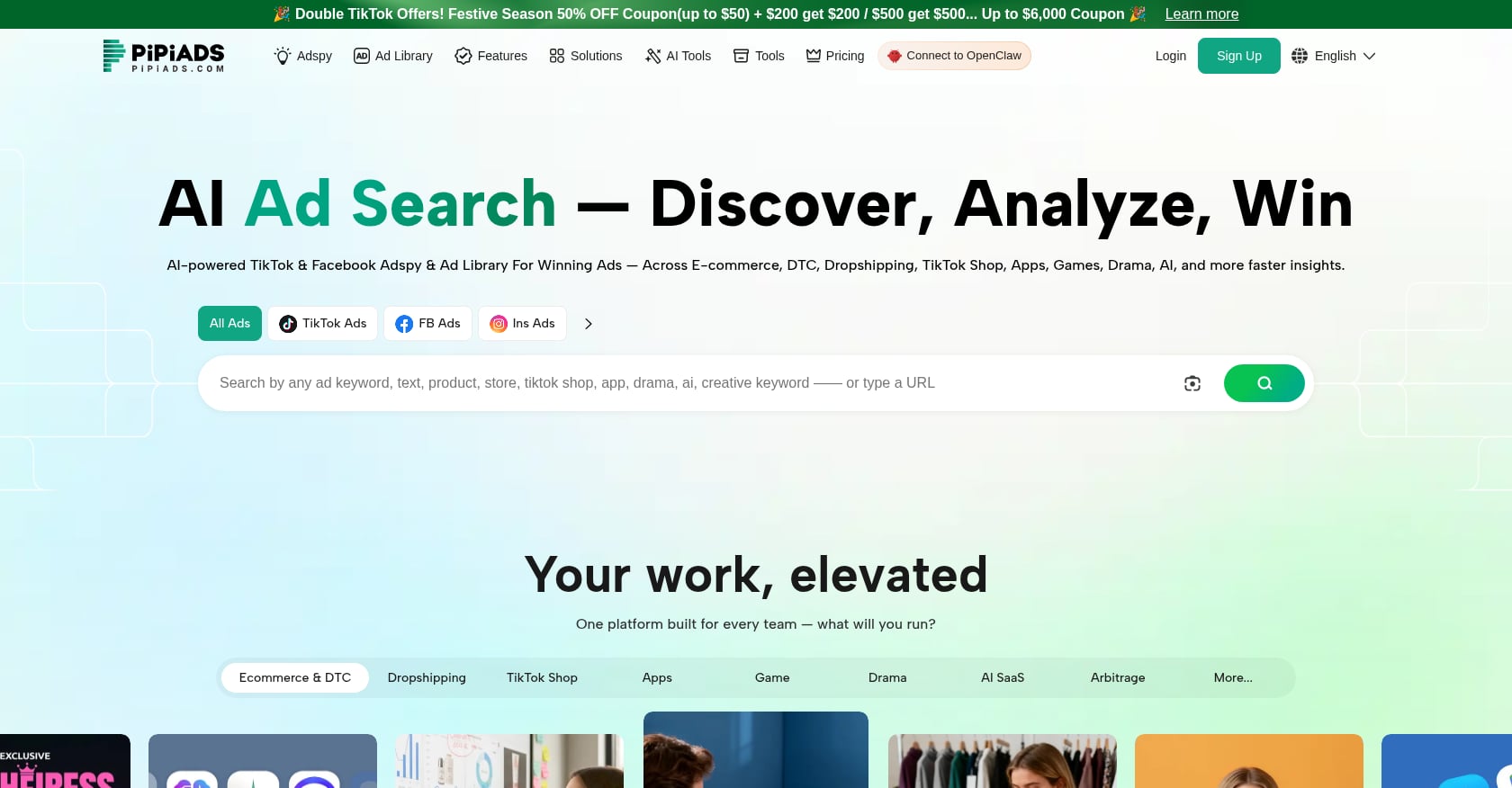
Best for: TikTok ad creative intelligence and competitor ad spying
PiPiAds is a TikTok and Meta ad spy platform with a searchable database of over 50 million ad creatives, adding 100,000 new ads daily. It’s purpose-built for agencies running paid campaigns who need to validate creative angles before spending budget.
Key features:
Searchable ad creative database with filtering by niche, engagement, duration, and recency
Winning product discovery based on ad spend patterns
Advertiser monitoring (track specific competitors’ ad activity)
TikTok Shop product tracking integration
Pricing:
Basic: $49/mo
Advanced: $99/mo (most popular)
Credit-based system; annual billing saves approximately 30%
Free trial with 500 credits
Tradeoffs:
Credit limits feel restrictive once research volume increases, and users report that exploration starts to feel rationed
TikTok-first; limited utility for agencies running multi-platform campaigns
Customer support is a known weak point. On Trustpilot, PiPiAds carries a 2.3 out of 5 rating, with several users describing slow responses and unresolved tickets
User perspective: G2 reviewers praise the time savings for ad research and competitive creative analysis. The consensus is that PiPiAds is strong for its specific job (finding what ads are working) but is not a substitute for market intelligence tools like Kalodata or FastMoss. For agencies that aren’t running paid TikTok campaigns, this tool offers limited value.
If you’re comparing ad intelligence platforms, our PiPiAds alternative analysis covers the key differences.
5. Creatify AI
Best for: High-volume AI video ad production for TikTok Shop products
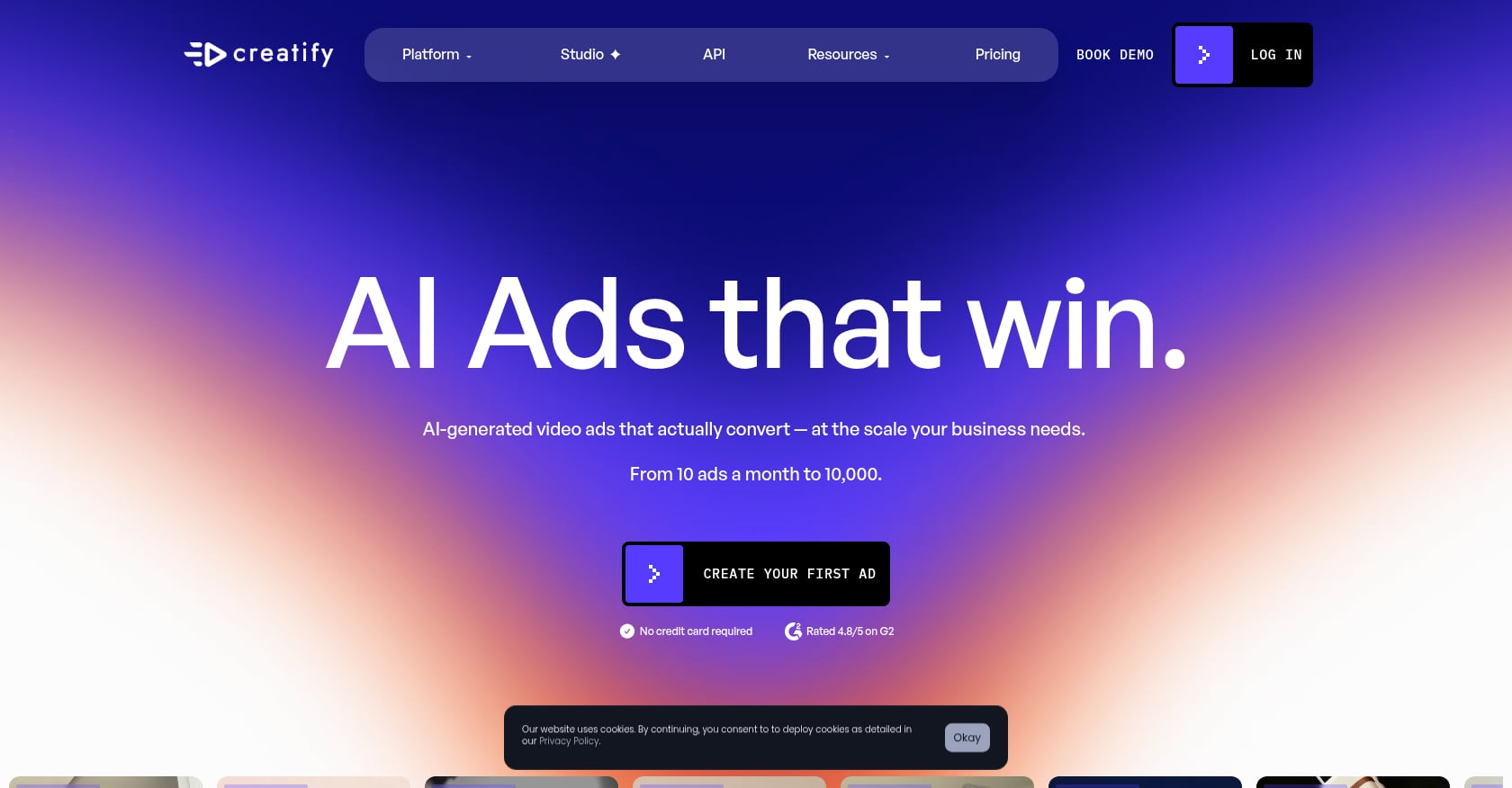
Creatify turns product URLs into short video ads using AI avatars (up to 1,500 on the Pro plan), auto-generated scripts, batch processing, and multilingual voiceovers. It’s a production tool, not a strategic one.
Key features:
URL-to-video generation (paste a product link, get a video ad)
1,500+ AI avatars across demographics and styles
Batch mode for producing multiple variants at once
Multilingual voiceover support
Script auto-generation with hook variations
Pricing:
Starter: ~$33/mo (100 credits)
Credits vary by video length, avatar type, and AI model
Unused credits do not roll over month to month
Tradeoffs:
No TikTok Shop data integration. It can’t tell you what to make videos about, only make videos you’ve already decided on
No competitive ad intelligence, landing page tracking, or performance scoring
Users on G2 report lip-sync glitches, a confusing credit system, and limited customization options
4.8/5 on G2 overall, but the high rating reflects speed and ease of use rather than strategic depth
User perspective: Agencies find Creatify useful for generating UGC-style video drafts quickly, at roughly $3-12 per clip depending on length. It replaces (or supplements) freelance editors for initial creative testing. But it works best paired with a research tool that tells you which products and angles to create content for.
6. Trendio
Best for: Automated creator outreach and affiliate CRM at scale
Trendio is an AI-powered platform for creator matching and relationship management, built for agencies that need to recruit and manage large affiliate programs. It automates the sourcing, outreach, and tracking workflow that most agencies currently run through spreadsheets and manual DMs.
Key features:
AI-powered affiliate matching based on niche, engagement quality, and conversion history
Built-in CRM for managing creator relationships
Outreach automation (templates, sequences, tracking)
Campaign performance tracking per creator
Pricing:
Starter: $149/mo (monthly) or $119/mo (annual)
Plus: $249/mo or $199/mo annual
Pro: $449/mo or $359/mo annual
Managed tier: custom pricing
Tradeoffs:
Not a research tool. No product discovery, no market intelligence, no content creation
Entry pricing at $149/mo is steep for smaller agencies
Value depends heavily on affiliate program scale. Agencies managing fewer than 20 creators may not need this level of automation
For agencies investing heavily in affiliate recruitment, understanding creator analytics and ROI metrics is essential context before committing to a CRM platform.
7. TikTok Seller Center + Creative Center
Best for: The free, non-negotiable baseline every agency starts with
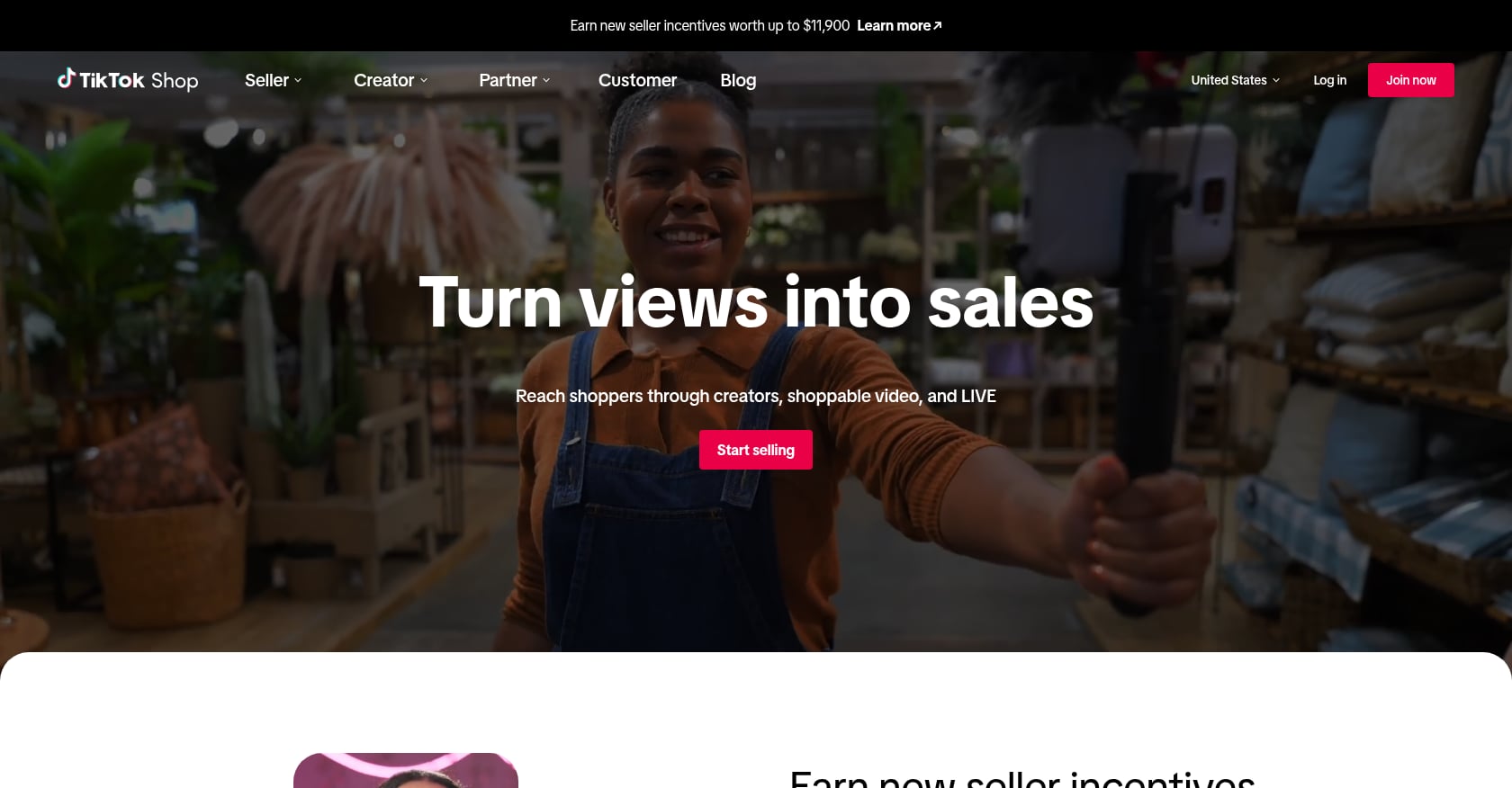
TikTok’s own Seller Center provides order data, revenue tracking, and traffic analytics. Creative Center offers free trend discovery for hashtags, sounds, and creative styles. Together, they form the foundation that every other tool builds on top of.
Key features:
Seller Center: orders, revenue, traffic sources, creator management dashboard
Creative Center: trending hashtags, sounds, creative formats, and ad inspiration
Both free, both directly connected to your actual shop data
Limitations:
Seller Center shows revenue, not profit. It doesn’t deduct fees at the order level, doesn’t reconcile against payouts, and doesn’t integrate ad spend data
Creative Center focuses on content trends, not shop performance data
No competitive intelligence. You can see your own numbers but not what competitors are doing
The “Manage Creators” dashboard shows GMV per creator but not profit per creator after samples, commissions, and returns
Every other tool on this list exists because of these gaps.
8. Buffer
Best for: Lightweight multi-platform scheduling when you don’t need commerce data
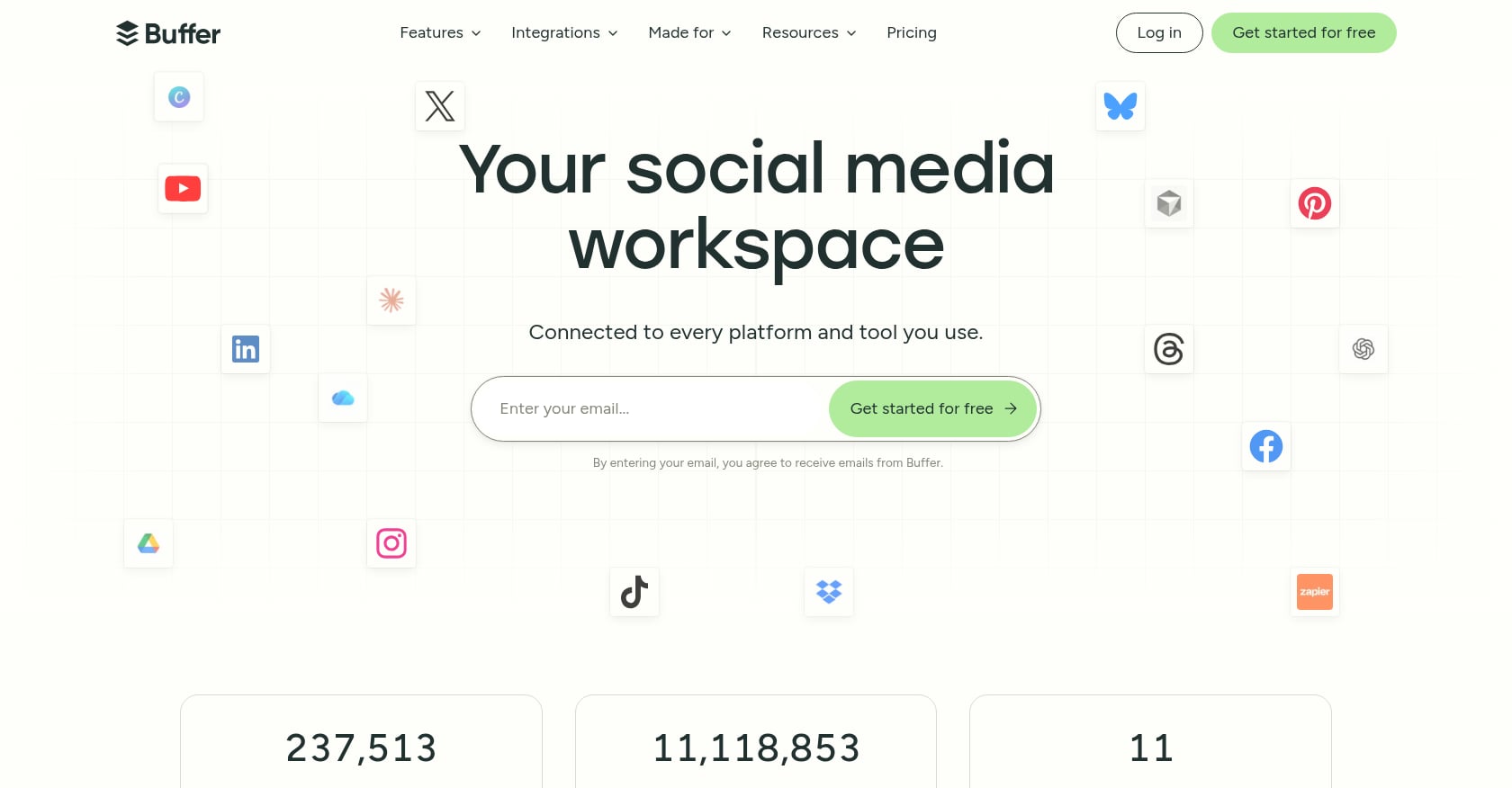
Buffer handles scheduling, publishing, and basic analytics across TikTok, Instagram, YouTube, and other platforms. Its free plan supports TikTok scheduling, making it the lowest-cost entry point for cross-platform posting.
Key features:
Multi-platform scheduling with visual calendar
Basic engagement analytics
Team collaboration on paid plans
TikTok Shop product tags can be attached to scheduled posts
Pricing:
Free plan available for basic scheduling
Paid plans start around $6/mo per channel
Tradeoffs:
No TikTok Shop commerce data, no product research, no AI video generation
It’s a publishing layer only, so it answers “when should I post?” but not “what should I post?” or “is it working?”
For agencies already using Trenz’s cross-platform scheduling, Buffer adds redundancy
9. Dashboardly
Best for: Verified TikTok Shop profit tracking and client ROI reporting
Dashboardly connects to TikTok Seller Center via API to provide order-level profit and loss data, deducting fees, ad spend, and refunds that Seller Center’s native reporting ignores.
Key features:
Verified order-level P&L (not estimates based on scraped data)
Fee reconciliation against actual payouts
Client-facing reporting dashboards
Pricing:
Free tier available
Paid plans not publicly detailed at time of writing
Tradeoffs:
Not a research or discovery tool. It tells you what happened, not what to do next
Narrowly focused on the financial reporting layer
Best paired with a market intelligence tool for a complete picture
How to Build Your Agency Stack by Revenue Stage
Not every agency needs all nine tools. Here’s how practitioners typically build their stack based on where they are.
Testing Stage (Under $50/mo)
You’re running your first TikTok Shop client or validating the channel for your agency.
TikTok Seller Center + Creative Center (free) for baseline data and trend ideas
Trenz Free plan (50 credits) for product discovery and initial AI video testing
Buffer Free for basic scheduling
Total: $0/mo. Enough to validate whether TikTok Shop is worth building a practice around.
Growth Stage ($100-400/mo)
You have 2-5 active clients and need real intelligence plus consistent content production.
Trenz Growth or Pro plan for product research, AI video generation, and scheduling in one platform
One market intelligence tool (Kalodata OR FastMoss, not both) for supplemental competitive data
Dashboardly for profit tracking and client reporting
Total: roughly $150-350/mo depending on plan choices and credit usage.
Scaling Stage ($500-2,500+/mo)
You’re managing 10+ clients with 50+ active creators across them.
Trenz Scale plan with team workspace and shared credit pool
Trendio for automated creator outreach and affiliate CRM
PiPiAds if running significant paid campaigns
Dashboardly for verified P&L reporting
Total: $700-1,500+/mo, but at this stage your agency should be managing enough GMV to justify the investment many times over.
The “collapse the stack” argument is straightforward: agencies using Trenz’s Scale plan can often eliminate separate subscriptions for product research, content creation, and scheduling. Whether that makes sense depends on how heavily you rely on the specific data advantages of point solutions like Kalodata’s 500-day history or PiPiAds’ ad creative database.
Compare tools head-to-head to see which combination fits your workflow.
What to Watch Out For
The Scraping Fragility Problem
Here’s the part nobody talks about openly: every market intelligence tool in this space (Kalodata, FastMoss, Shoplus, PiPiAds) runs on web scraping. None of them have official TikTok API access. That means the data you’re paying $38-100/mo for can break tomorrow if TikTok changes its frontend. One Reddit commenter summarized it well: the data “can break tomorrow if TikTok changes its frontend.” This is a meaningful differentiator for any platform claiming Official TikTok Shop Partner status with direct API integration.
Credit Systems That Punish Inconsistent Usage
Several tools on this list use credit-based pricing. The key differences: some credits expire monthly (Creatify), some never expire once purchased (Trenz top-ups). Agencies with uneven production cycles, heavy one week, light the next, should pay attention to rollover policies. A credit system that penalizes inconsistency is effectively a hidden cost.
AI Content Compliance
Agencies can now generate TikTok Shop videos for $3-12 per clip, which is transformative for testing velocity. But AI-generated affiliate content is facing growing brand safety pushback. Agencies that have “no policy on AI-generated affiliate content” present a real risk to their brand clients. The tools are essential, but agencies need internal guidelines on disclosure, quality floors, and platform compliance.
The 80% Overlap Trap
Multiple agency operators confirm this finding: Kalodata and FastMoss overlap roughly 80% in functionality. FastMoss wins on creator intel and UI. Kalodata wins on historical depth. Paying for both is almost never worth it. Pick one based on whether historical data or real-time creator discovery matters more to your workflow, and use our Kalodata vs. FastMoss comparison to decide.
Trenz vs Kalodata vs FastMoss
Feature | Trenz | Kalodata | FastMoss |
|---|---|---|---|
Product Research | ✓ | ✓ | ✓ |
Creator Discovery | ✓ | ✓ | ✓ |
AI Video | ✓ | No | No |
Publishing | ✓ | No | No |
Official API | Claimed | No | No |
Historical Data | Good | Excellent | Excellent |
Scheduling | ✓ | No | No |
Final Verdict
Different agencies need different software stacks, but the biggest opportunity in 2026 is reducing tool sprawl. Rather than subscribing to separate platforms for research, content creation, publishing, and reporting, agencies should prioritize tools that cover multiple workflow stages while avoiding unnecessary overlap.
For newer agencies, free and low-cost combinations are sufficient to validate the channel. As client volume grows, investing in specialized research or creator management tools becomes easier to justify. The best stack is the one that gives your team reliable data, efficient workflows, and clear visibility into profitability without paying twice for the same capability.
Frequently Asked Questions
What tools do TikTok Shop agencies use?
Agencies typically use a combination of market intelligence tools (like Kalodata or FastMoss), AI content creation tools, multi-platform schedulers, and profit tracking software. The most efficient agencies consolidate where possible, using platforms like Trenz that cover product research, content creation, scheduling, and analytics in one system.
How much do TikTok Shop analytics tools cost?
Costs range from free (TikTok Seller Center) to $450+/mo for enterprise creator management platforms. Market intelligence tools typically run $38-99/mo. AI video generators start around $33/mo. A full agency stack costs between $150-2,500/mo depending on scale and the number of point solutions versus consolidated platforms.
Is Kalodata or FastMoss better for agencies?
They overlap about 80%. FastMoss is stronger for creator discovery, UI speed, and team workspace features. Kalodata offers deeper historical data (500 days vs. FastMoss’s broader product coverage). Most practitioners recommend picking one, not both. For agencies prioritizing multi-client workspace management, FastMoss has an edge.
Can AI tools create TikTok Shop content?
Yes. Tools like Creatify and Trenz generate UGC-style video ads from product URLs in under a minute. Quality has improved dramatically, though lip-sync issues and “AI look” remain occasional problems. Agencies should establish internal policies on AI content disclosure and quality minimums before scaling production.
What’s the best free TikTok Shop tool?
TikTok Seller Center and Creative Center are the best free tools and should be every agency’s starting point. Trenz offers a free plan with 50 credits that includes product discovery and AI video generation. Buffer’s free tier covers basic TikTok scheduling.
Do TikTok Shop analytics tools use official data?
Most do not. Kalodata, FastMoss, Shoplus, and PiPiAds rely on web scraping rather than official TikTok API access. Trenz claims Official TikTok Shop Partner status, suggesting direct integration. TikTok Seller Center and Dashboardly use first-party or API-connected data. The distinction matters because scraped data can break or become inaccurate without warning.
How do agencies track creator profitability on TikTok Shop?
This remains the biggest unsolved pain point. TikTok’s native dashboard shows GMV per creator but doesn’t account for samples, commissions, returns, or per-creator ad spend. Practitioners on Reddit repeatedly flag this gap. Tools like Dashboardly provide order-level P&L, while Trenz’s Radar offers creator-concentration analysis. A combination of both gives the closest approximation to true per-creator ROI. You can also use Trenz’s creator ROI calculator to estimate returns before committing budget.
What’s the biggest mistake agencies make with TikTok Shop tools?
Buying overlapping tools. The most common waste is subscribing to both Kalodata and FastMoss (80% overlap), or paying for a standalone scheduler, video tool, and analytics platform separately when a consolidated platform would cost less and provide better data integration. Before adding any new subscription, map it to a specific workflow stage and confirm it doesn’t duplicate something you already have.
Ready to consolidate your agency’s TikTok Shop stack? Start free with Trenz, no credit card required, and test product discovery, AI video generation, and scheduling in one platform before committing to a paid plan.
Author


