
TL;DR
AI social commerce tools help sellers find trending products, create shoppable video with AI, match with creators, publish across social platforms, and track real profitability. This guide compares 10 tools across market intelligence, AI video generation, social publishing, and analytics, with honest pricing and practitioner feedback. For TikTok Shop sellers who need product discovery, content creation, and publishing in one workflow, Trenz is the strongest starting point. Specialist tools like Kalodata, Creatify, and OpusClip fill specific gaps once your operation outgrows a single platform.
Why AI Social Commerce Matters Now
Social commerce used to mean tagging products in Instagram posts. In 2026, it means running a content-led commerce operation where products, creators, videos, comments, ads, and checkout all move together. AI helps only if it connects those pieces.
The numbers make the shift hard to ignore. TikTok Shop reported US sales up 120% year over year in 2025, with brands like Fenty Beauty, Crocs, and Liquid I.V. treating the platform as a core sales channel. US social commerce sales are projected to surpass $100 billion in 2026, according to industry estimates citing EMARKETER and IAB data.
Meanwhile, Meta is reportedly developing AI shopping agents for Instagram that would let users tap items in Reels and complete purchases without leaving the app. TikTok itself launched an AI Fashion Video Maker for merchants. Both platforms are betting that AI-powered product discovery, not manual browsing, will drive the next wave of purchases.
But the opportunity creates a tool problem. Sellers now juggle separate subscriptions for product research, ad spy, AI video, social scheduling, creator outreach, and profit tracking. Spending hundreds of dollars a month on overlapping tools is easy. Building a stack that actually moves the needle is harder.
This guide compares 10 AI social commerce tools by what they do, what they cost, where they fall short, and which combinations make sense for solo sellers, DTC brands, creators, and agencies.
Best AI Social Commerce Tools for TikTok Shop (Quick Answer)
If you’re looking for the best AI social commerce tool for TikTok Shop in 2026, the answer depends on your workflow:
Use Case | Recommended Tool |
|---|---|
All-in-one TikTok Shop workflow | Trenz |
Product research | Kalodata |
Market intelligence | FastMoss |
AI video creation | Creatify |
Ad spy research | PiPiADS |
Video repurposing | OpusClip |
Social scheduling | Buffer |
Enterprise social management | Sprout Social |
Retail intelligence | Particl |
Native TikTok operations | TikTok Shop Seller Center |
For most TikTok Shop sellers, the best starting point is a platform that combines product discovery, AI content generation, publishing, and performance insights in one workflow. Specialized tools become valuable once a business develops deeper needs in areas such as ad research, creator sourcing, or enterprise social management.
What Is AI Social Commerce?
AI social commerce is the use of artificial intelligence across the full loop of selling through social platforms. That loop includes discovering products, understanding competitors and categories, matching with creators and affiliates, generating scripts and videos, publishing and engaging across channels, optimizing ads, and converting social attention into purchases.
The key distinction: social commerce is not just having a shop on Instagram or TikTok. It is commerce where content, creators, community, and checkout interact continuously. AI adds speed to each step, but strategy and execution still determine outcomes. As VML noted at a Shopify and TikTok Shop event, “technology alone isn’t the answer.”
In practice, a working AI social commerce stack needs to answer five questions:
What should we sell? Product discovery, trend velocity, category rankings.
Who can sell it for us? Creator discovery, affiliate performance, contact workflows.
What content will convert? Hooks, scripts, UGC-style videos, AI ad variants.
Where should we publish? TikTok, Instagram, YouTube Shorts, schedulers, engagement inboxes.
Did it make money? Revenue, profit, CAC, ROAS, creator ROI, returns, fees.
Most tools answer one or two of these. The best AI social commerce platforms try to connect the entire loop.
How AI Social Commerce Works
AI social commerce combines multiple technologies into a single selling workflow.
A typical process looks like this:
Identify trending products using marketplace intelligence.
Analyze competitors and category demand.
Discover creators and affiliates already selling similar products.
Generate scripts, hooks, and ad concepts using AI.
Create videos, images, and UGC-style creatives.
Publish across TikTok, Instagram, and YouTube.
Track engagement, conversions, and revenue.
Optimize content and offers based on performance data.
AI Social Commerce Workflow
Stage | AI Function |
|---|---|
Research | Product discovery and trend analysis |
Planning | Competitor and market intelligence |
Creation | AI video, images, scripts, and ad variants |
Distribution | Social publishing and scheduling |
Conversion | Creator and affiliate optimization |
Measurement | Revenue and profit analysis |
Businesses that connect all six stages typically outperform teams using disconnected tools.
How We Evaluated These Tools
Every tool in this list was assessed on ten criteria:
TikTok Shop relevance. Does it specifically support TikTok Shop workflows?
Product and market intelligence depth. Can it surface trending products and competitive signals?
AI content generation quality. Is the AI output usable, or does it need heavy editing?
Creator and affiliate usefulness. Can it help find, vet, and contact creators?
Publishing and engagement. Does it handle scheduling, posting, and comment management?
Pricing transparency. Are costs clear, or hidden behind credits, exports, and per-seat fees?
Data reliability. Is the data sourced from official APIs, public scraping, or statistical models?
User sentiment. What do actual users say on G2, Reddit, and in community forums?
Scalability. Does it work for solo sellers, teams, and agencies?
Tradeoffs and hidden costs. What does it not do well?
No tool was judged simply by having “AI” in the marketing copy. AI has to remove a real bottleneck in the commerce workflow to earn a spot.
At-a-Glance Comparison
Tool | Starting Price | Best For | Core AI Commerce Job | Main Limitation |
|---|---|---|---|---|
Trenz | Free plan available | TikTok Shop sellers and agencies | Product intelligence + AI content + publishing + insights | Credit planning required |
TikTok Shop Seller Center | Free (fees/commissions vary) | All TikTok Shop sellers | Native selling, affiliate, LIVE, AI video | Limited competitor intelligence |
Kalodata | ~$45.90/mo | TikTok Shop product/creator research | Historical marketplace intelligence | Estimated data only |
FastMoss | ~$59/mo | Broad TikTok Shop market intelligence | Product, creator, LIVE, ad research | Steep learning curve |
PiPiADS | ~$49/mo | Paid social creative research | TikTok/Facebook ad spy | Not profit data |
Creatify | ~$39/mo | AI video ad testing | URL-to-video AI ads | Credit burn, output QC |
OpusClip | Free plan; Pro ~$29/mo | Repurposing long-form video | AI clipping and captions | Context-blind clip selection |
Buffer | Free; Essentials $5/channel/mo | Small-team social publishing | AI-assisted scheduling | Not commerce-native |
Sprout Social | $199/user/mo (annual) | Enterprise social management | Publishing, listening, AI analytics | Expensive for small sellers |
Particl | $250/mo | DTC product intelligence | Retail pricing and SKU analysis | Not social creative |
Compare Trenz plans to see which credit tier fits your product discovery and content workflow.
The 10 Best AI Social Commerce Tools in 2026
1. Trenz
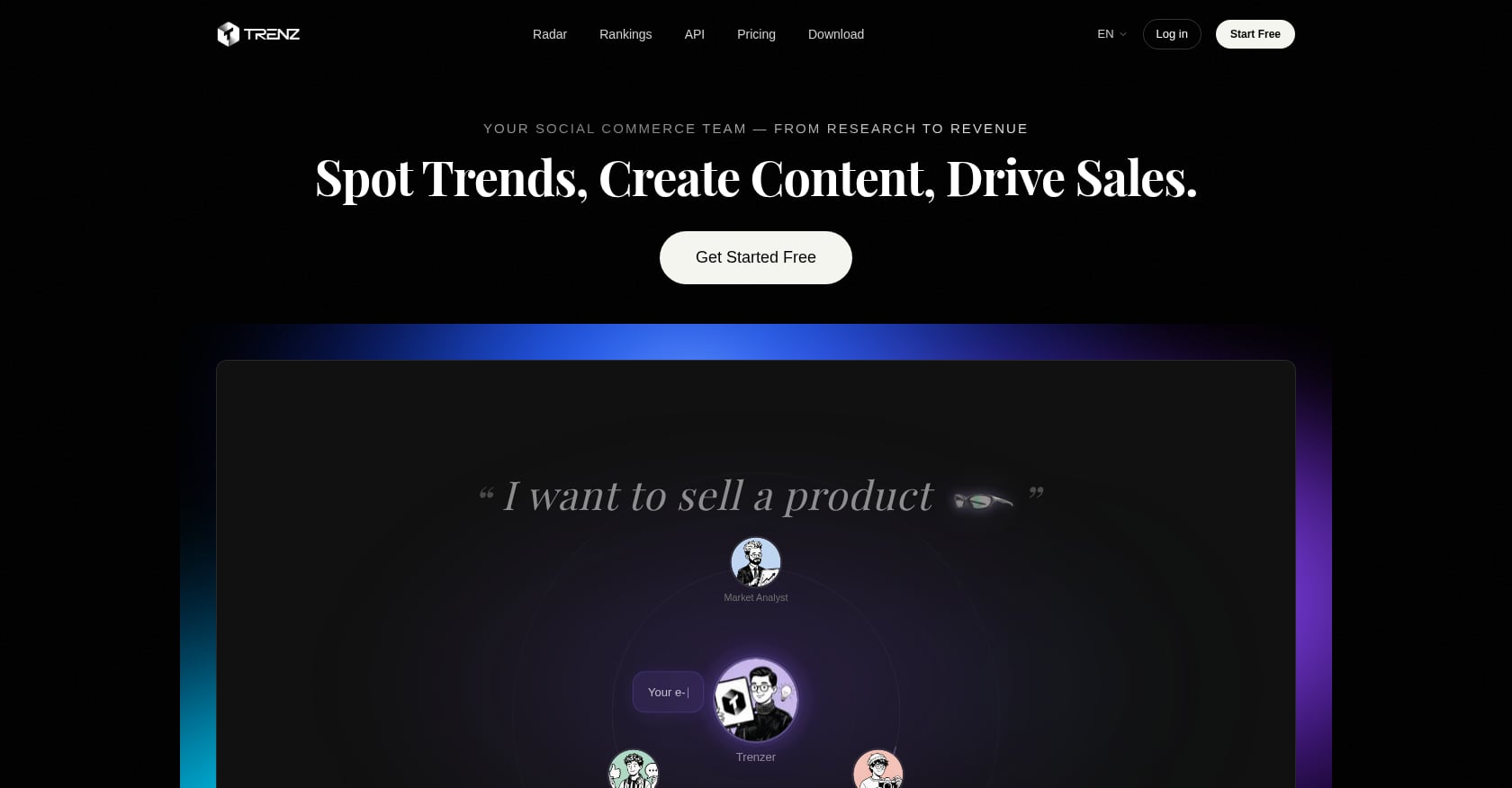
Best for: TikTok Shop sellers who want product discovery, AI content creation, and social publishing in one platform
Pricing: Free plan with 50 welcome credits, 1 social account, Top 10 data depth, 7-day history, and 10 exports per month (no card required). Paid tiers (Growth, Pro, Scale) increase credits, social accounts, data depth, history, exports, and storage. Growth offers 250 credits/month and 3 social accounts. Pro offers 650 credits/month, 10 social accounts, and a 20% bonus on credit top-ups. Scale offers 1,800 shared credits/month, 50 social accounts, team workspaces at $19/seat/month, and a 50% bonus on top-ups. API access starts at $0.15/credit on pay-as-you-go, with enterprise rates at $0.10/credit. Purchased credits never expire; monthly allocations reset each cycle. All plans share the same AI model quality.
Key features:
Market Analyst agent for product discovery and competitive intelligence
Creative Director agent for AI video, image, and script generation (supporting models like Seedance 2.0, Veo, and Wan)
Social Manager agent for multi-platform publishing and engagement
Trenzer as the coordinating team leader agent that connects research, creative, and publishing
Daily Radar insights for fresh product and category signals
Monthly category Rankings for TikTok Shop verticals across US and UK markets
Open Platform/API with endpoints for TikTok commerce data, AI content generation, social publishing, and ads
Example credit costs: Quick Q&A (1 credit), AI Image (1), Content Ideas (1), Market Analysis (5), Competitor Report (~8), Product Discovery (~10), Video Generation (~12).
Tradeoffs:
Heavy video generation consumes credits faster than research tasks, so budget planning matters.
TikTok Shop focus is a strength for the target audience but not a fit for teams that need a generic all-channel enterprise social suite.
Base plan pricing amounts (beyond the free tier) are not publicly displayed on the site.
Why it leads this list: The agent-based architecture, where a Market Analyst feeds insights to a Creative Director who hands content to a Social Manager, addresses a real pain. Most sellers today run these jobs in four or five disconnected apps. The value is in the loop, not any single feature.
For a practical look at the intelligence layer, check US skincare rankings to see how category-level product data can guide what to test next.
Start using Trenz with 50 free credits to run your first product discovery and content workflow.
2. TikTok Shop Seller Center and Native AI Tools
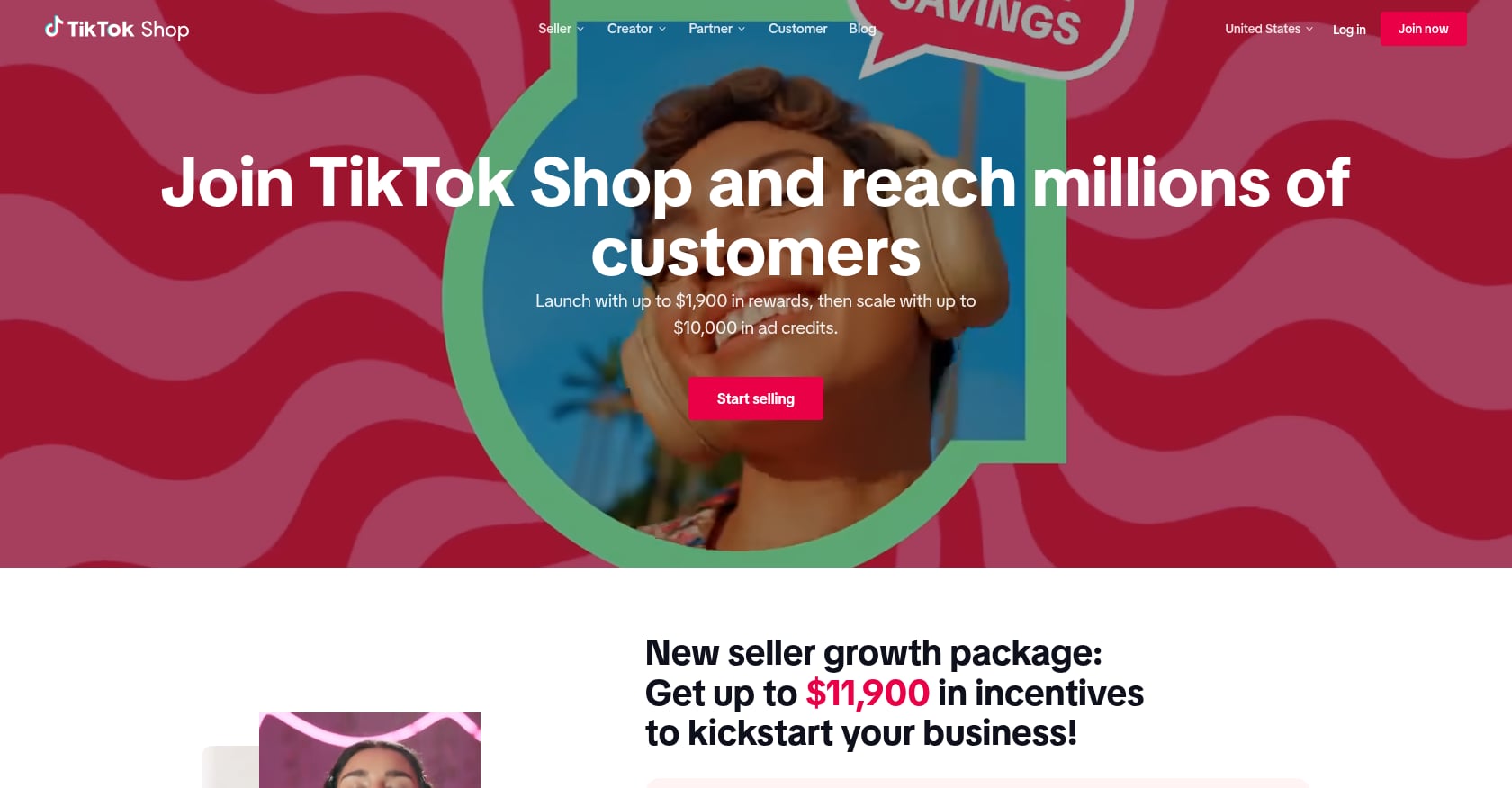
Best for: Every TikTok Shop seller as the free operational baseline
Pricing: Free to access for eligible sellers. Marketplace fees, commissions, ads costs, and affiliate commissions vary by category and market. Verify current fee structures directly, as they change.
Key features:
Order, product, and store operations management
Native analytics for shop and product performance
Affiliate and creator marketplace workflows
Shoppable videos and LIVE commerce integration
AI Fashion Video Maker for generating shoppable videos without models or photoshoots
Tradeoffs:
Seller Center analytics cover your own store only. No competitor or broad market intelligence.
Not a full AI content studio, cross-platform publisher, or market intelligence engine.
Platform policy enforcement is aggressive. TikTok Shop’s safety report for the first half of 2025 shows it declined 1.4 million seller applications and rejected over 70 million product listings before they went live.
Practitioner perspective: Sellers on Reddit report that TikTok’s Seller Center API is mainly useful for managing your own store’s data. For competitor research, sellers typically turn to third-party intelligence tools because the official API does not publicly expose detailed competitor metrics.
Every seller should understand the native platform before paying for additional tooling. But expecting Seller Center alone to drive product discovery and competitive insight is unrealistic.
3. Kalodata
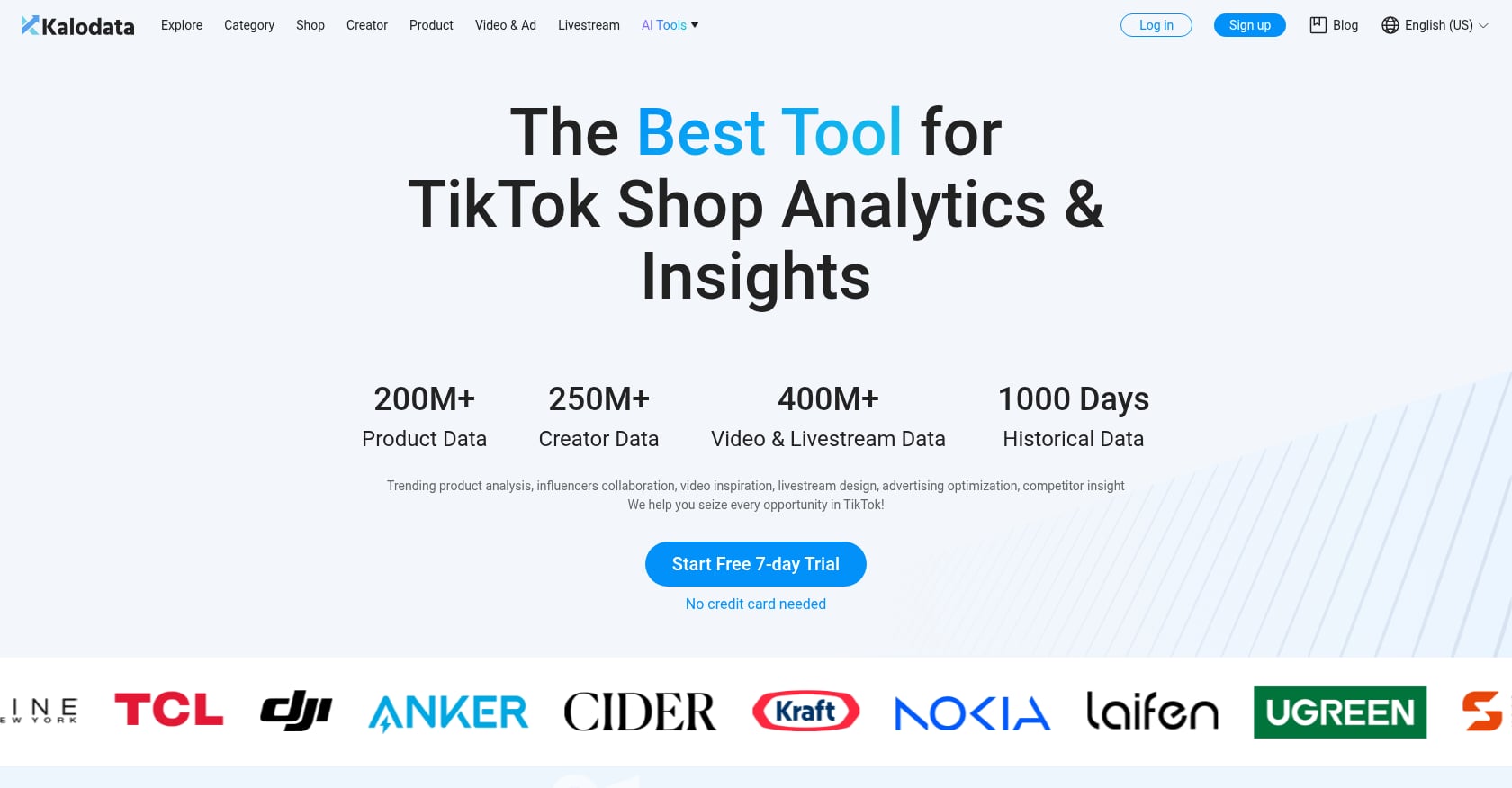
Best for: Historical TikTok Shop product and creator research with deep trend analysis
Pricing: Starter at approximately $45.90/month ($38.30/month billed annually). Professional at approximately $99.90/month ($83.20/month annually). Enterprise pricing is custom. A 7-day free trial is commonly available.
Key features:
Product discovery and trend tracking across TikTok Shop
Creator intelligence and contact workflows
Competitor shop tracking
Livestream analytics
Historical data reportedly extending up to 500 days on higher tiers
Tradeoffs:
Data is estimated, not audited financial data. Do not treat it as accounting truth.
Starter plan limits on daily searches, tracking, and exports may frustrate active sellers.
TikTok-only. No cross-platform product or creative intelligence.
Practitioner perspective: Reddit discussions describe Kalodata as useful for structured product and creator visibility. But accuracy concerns come up regularly. One commenter warned that chasing already-trending products through these tools can push sellers into saturated markets with rising customer acquisition costs. The tool is best for building a research shortlist, not for making inventory commitments.
4. FastMoss
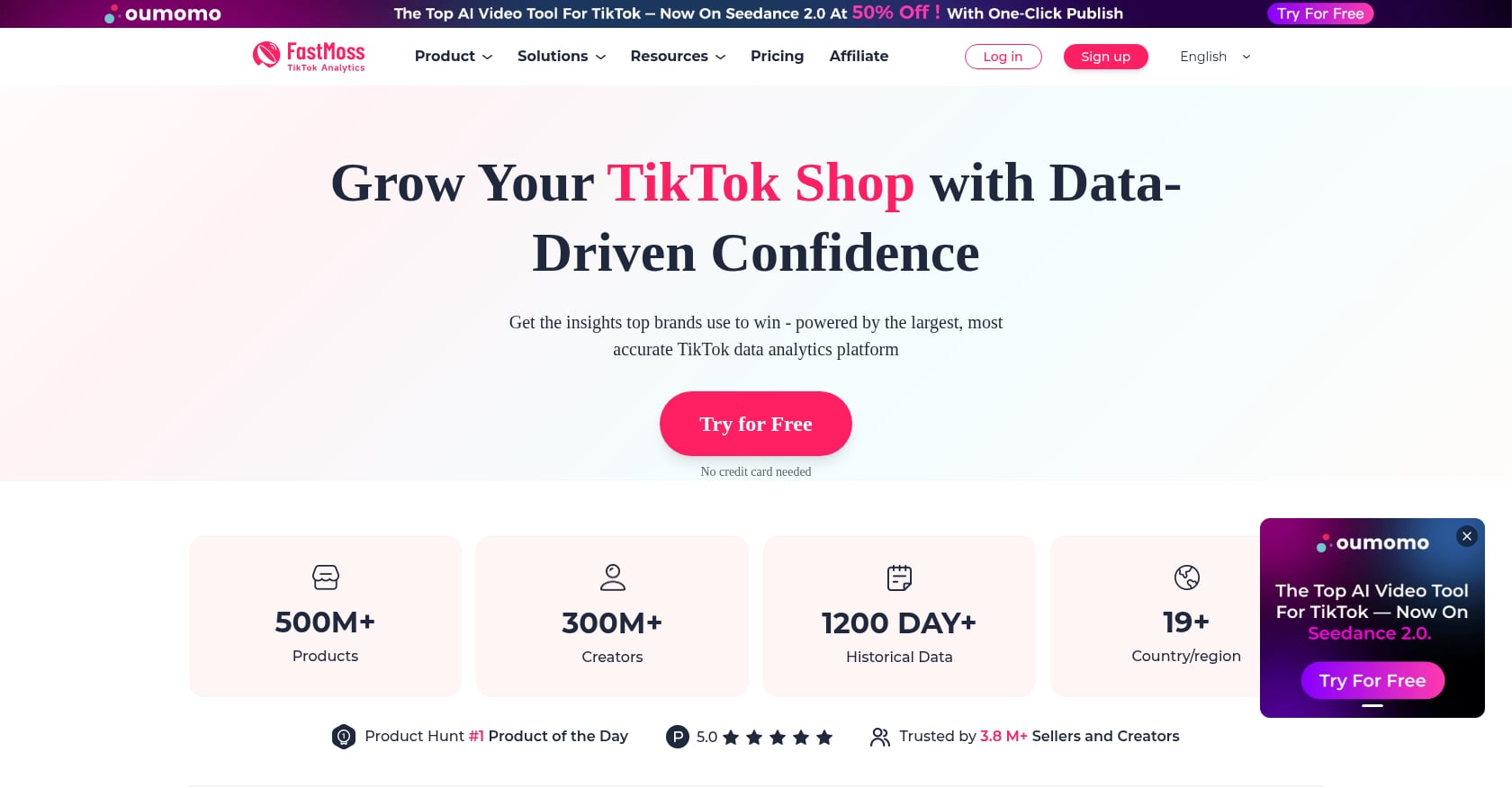
Best for: Broad TikTok Shop market intelligence across products, creators, LIVE shopping, and ads
Pricing: Basic at approximately $59/month ($47/month annually). Pro tiers range from roughly $109 to $179/month depending on billing. Team plan at approximately $399/month. Enterprise and API pricing is custom. Free trial options are available.
Key features:
Product leaderboards and category rankings
Competitor shop analytics
Creator and affiliate research
LIVE shopping analytics
TikTok ad creative library
Chrome extension for in-platform research
Daily-updated data across multiple TikTok Shop markets
Tradeoffs:
Not a verified profit tracker. Estimates are directional, not financial.
Steep learning curve for new users, with limited ROI transparency on higher tiers.
Significant feature overlap with Kalodata. Most sellers do not need both.
Practitioner perspective: Reddit feedback on FastMoss is split. Some users recommend it for breadth of product sourcing, creator research, and LIVE analytics. Others say the data can be stale or saturated-signal-driven, meaning by the time a product appears as trending, the window may have closed.
Choosing between Kalodata and FastMoss: Pick FastMoss when you need breadth across creators, shops, ads, and LIVE. Pick Kalodata when historical product research is the primary job. Pick Trenz when you want intelligence plus AI content creation and publishing in one workflow.
5. PiPiADS
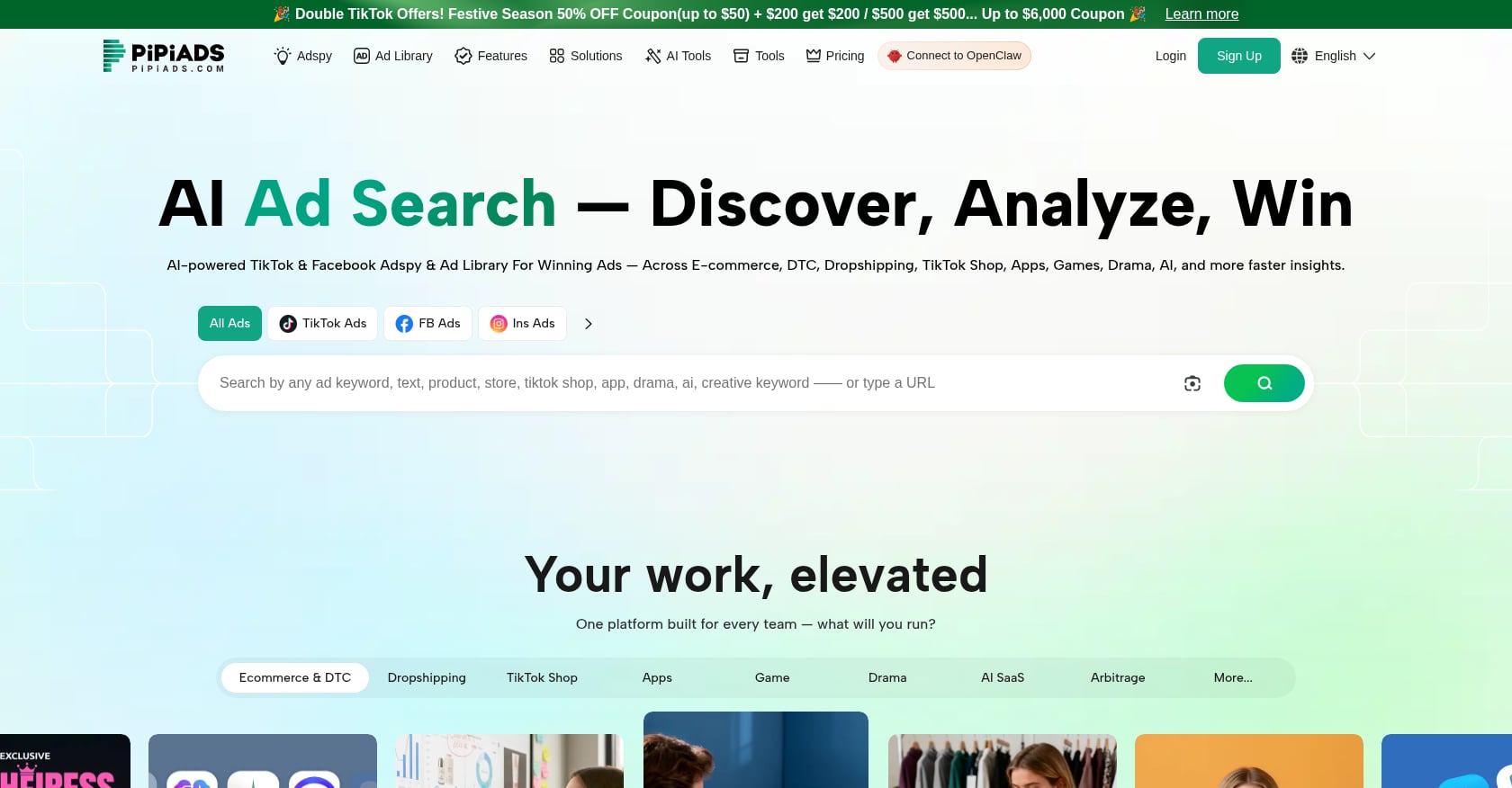
Best for: TikTok ad spy and paid creative research
Pricing: Basic at approximately $49/month ($34/month annually). Advanced at approximately $99/month ($69/month annually). PiPiADS moved to a credit-based system in August 2025, with credit top-ups ranging from $29 for 10,000 credits to $239 for 100,000 credits.
Key features:
TikTok ad library and ad spy research
Facebook ad intelligence
Competitor ad tracking
Product research through ad performance signals
Export options for creative analysis
Tradeoffs:
Ad spy data shows what others are running, not what is profitable for your account. Inspiration is useful, but copying someone else’s ad does not copy their margin.
Does not replace product intelligence, creator analytics, or publishing workflows.
Credit-based pricing can become unpredictable for heavy researchers.
Practitioner perspective: Reddit users describe PiPiADS as more TikTok-focused than broader ad spy alternatives. The recurring debate in ad spy discussions is whether any ad library tool provides enough signal to justify the cost, since running profitable ads depends on your product, margin, and creative execution, not just seeing what competitors posted.
6. Creatify
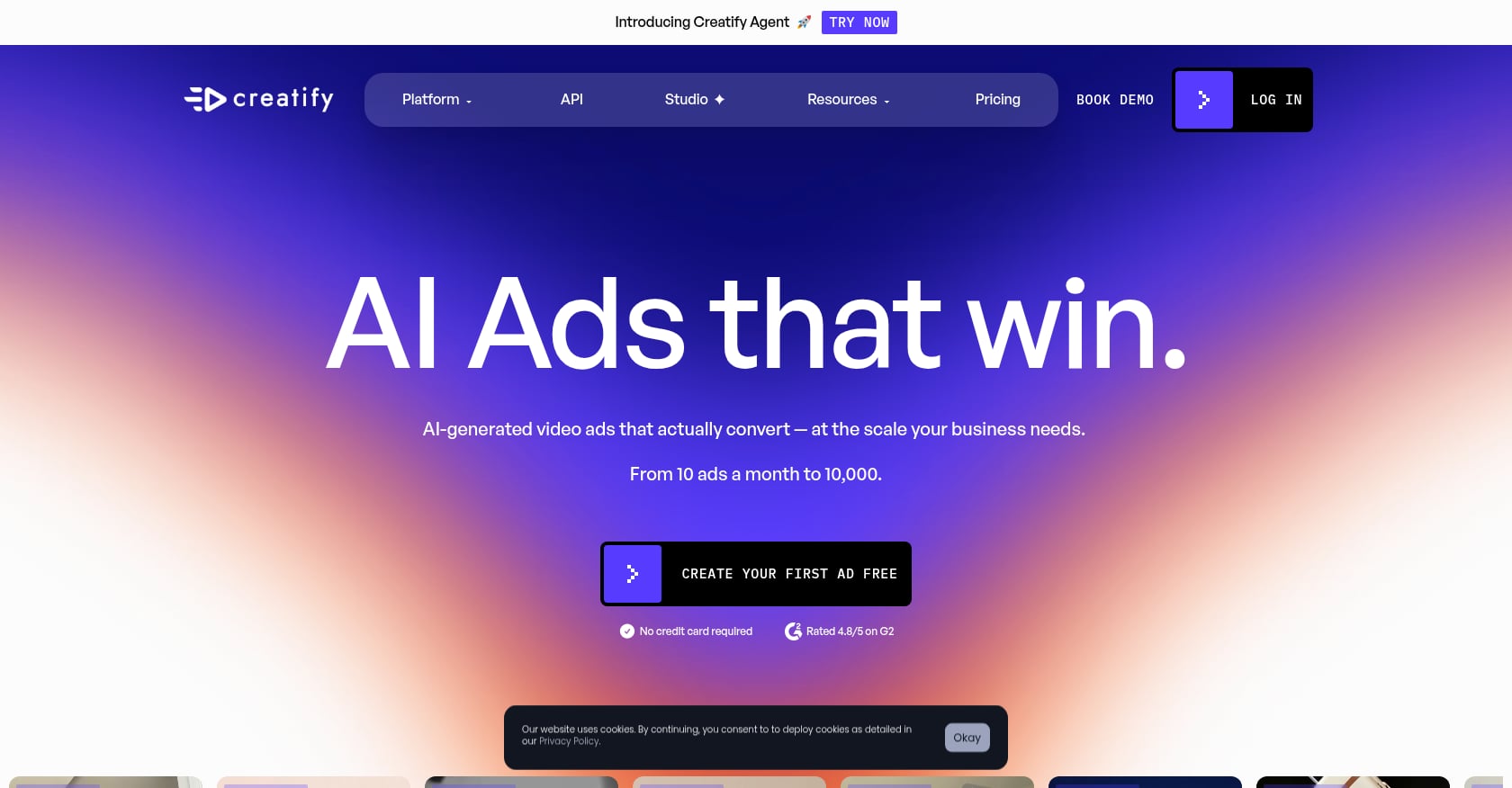
Best for: Fast AI-generated UGC-style video ads for testing multiple creative angles
Pricing: Public sources commonly cite plans starting around $39/month, with higher tiers around $99/month. Plan credits and inclusions change, so verify current pricing before committing.
Key features:
URL-to-video workflow that turns product pages into video ads
AI avatars with multiple language and voice options
Automatic hook and selling point extraction
Music, B-roll, and template options
Export for Meta, TikTok, YouTube, LinkedIn, and CTV
Tradeoffs:
Credit systems make cost unpredictable. Failed renders can consume credits without producing usable output.
AI avatar quality varies. Some output looks obviously synthetic, which can hurt performance on authenticity-driven platforms like TikTok.
This is a creative tool, not a market intelligence or publishing platform.
Practitioner perspective: G2 users praise the speed of URL-to-video workflows. But complaints about billing friction, credit burn, and quality inconsistency are common. Reddit users in ecommerce forums say AI creative tools work best when the team already knows what a good ad looks like. Otherwise, the tool produces more bad ads faster. This is an important point for any AI social commerce workflow: AI video generation is for rapid iteration and testing, not guaranteed performance.
7. OpusClip
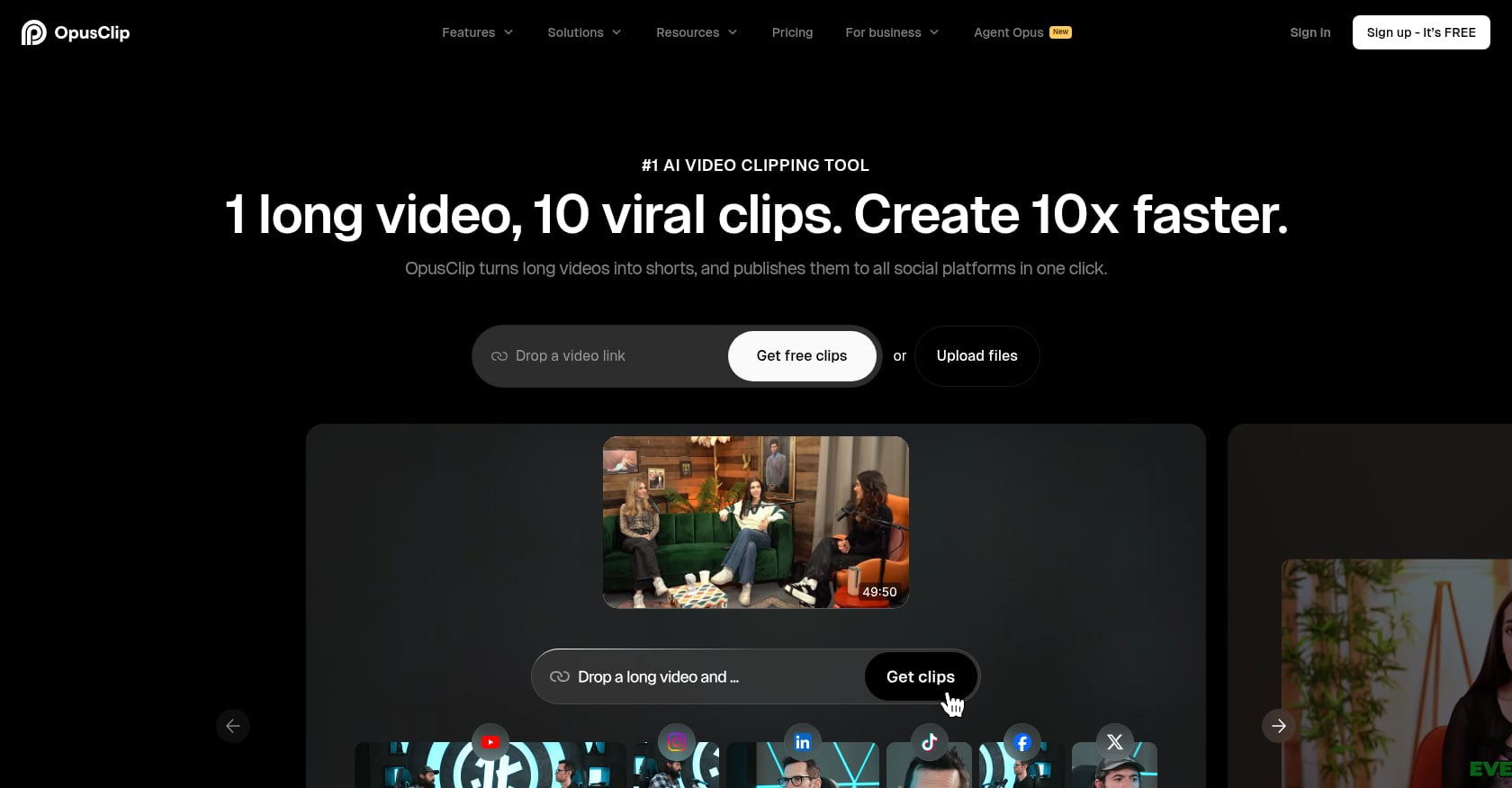
Best for: Repurposing long-form video (livestreams, podcasts, demos) into short social clips
Pricing: Free plan with 60 credits/minutes per month (watermarks apply). Starter at approximately $15/month. Pro at $29/month on monthly billing, with annual discounts available. Business plans are custom.
Key features:
AI clipping from long-form videos into short-form clips
Virality scoring to predict clip performance
Auto-captions
Auto-posting to YouTube Shorts, TikTok, and Instagram Reels
Brand templates and AI B-roll on higher tiers
Tradeoffs:
AI clip selection does not always understand context. Clips may cut mid-thought or miss key setup, requiring manual review.
Not built for TikTok Shop product discovery, creator analytics, or affiliate workflows.
Free plan has watermark and storage limitations.
Practitioner perspective: OpusClip holds a 4.6/5 rating from over 100 G2 reviews. Users praise time savings for turning podcasts and long videos into shorts. But both G2 and Reddit feedback flag that clip selection can be hit or miss, especially for nuanced content where the AI does not grasp the broader argument being made. For social commerce teams, OpusClip is most useful when you already have long-form content and need volume of short clips without hiring dedicated editors.
8. Buffer
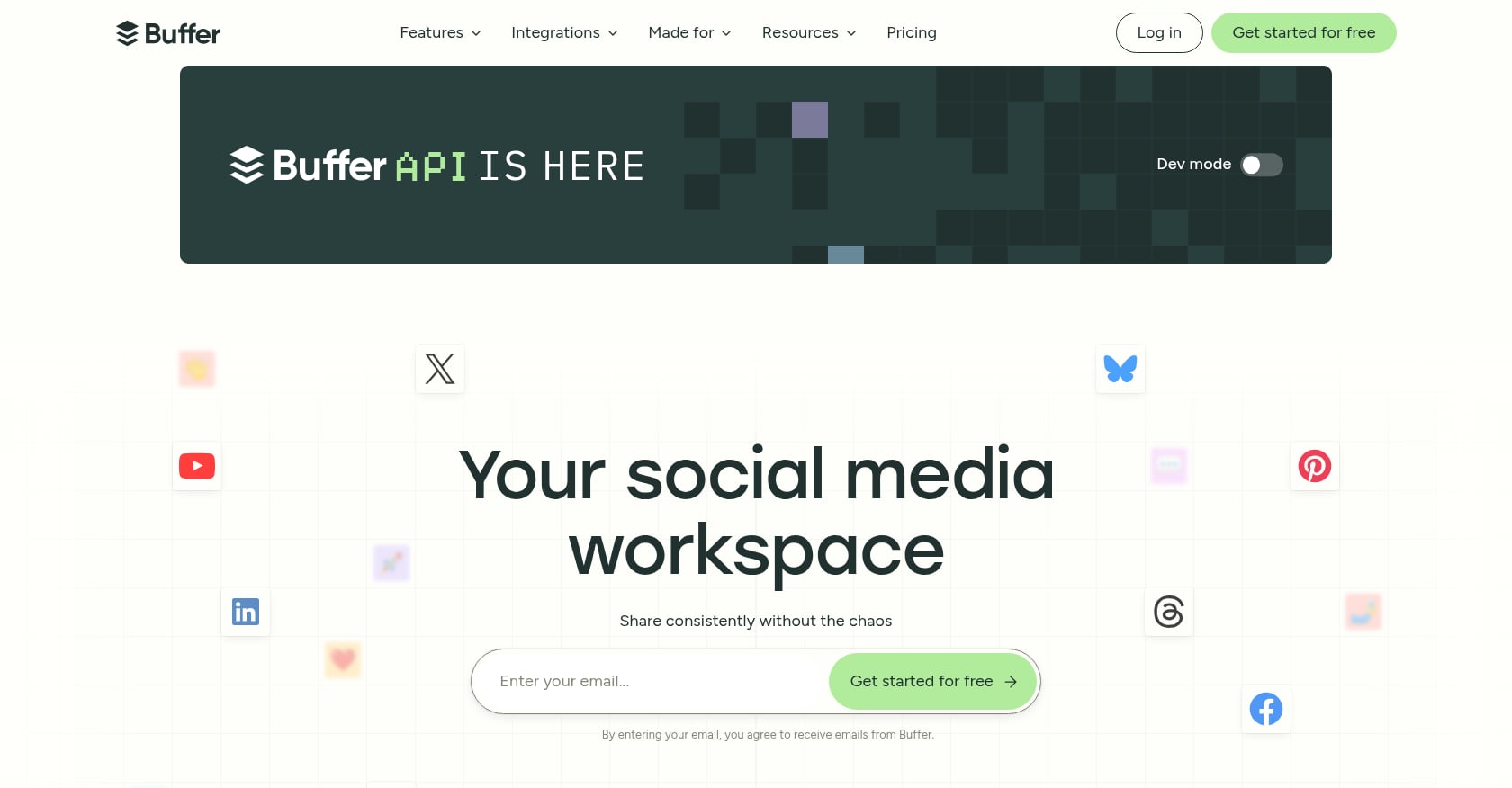
Best for: Affordable AI-assisted social publishing for small teams on tight budgets
Pricing: Free plan with up to 3 channels, basic scheduling, a landing page, and AI assistant. Essentials plan at $5/month per channel with unlimited post scheduling, analytics, and engagement tracking.
Key features:
Social media scheduling across major platforms
AI assistant for caption ideas, content refinement, and channel-aware suggestions
Landing page builder
Basic analytics and engagement tracking on paid plans
Tradeoffs:
Not commerce-native. Buffer has no TikTok Shop product intelligence, creator matching, or marketplace analytics.
AI assistant helps with captions and ideas but does not generate images, videos, or full content systems.
Per-channel pricing adds up as you scale beyond a few accounts.
Practitioner perspective: TechRadar praises Buffer’s affordability and practical AI toolkit for small businesses. Reddit users in scheduling tool discussions note that Buffer’s AI assistant is helpful for refinement but limited compared to purpose-built AI content generators. It is a publishing tool, not a commerce intelligence tool.
9. Sprout Social
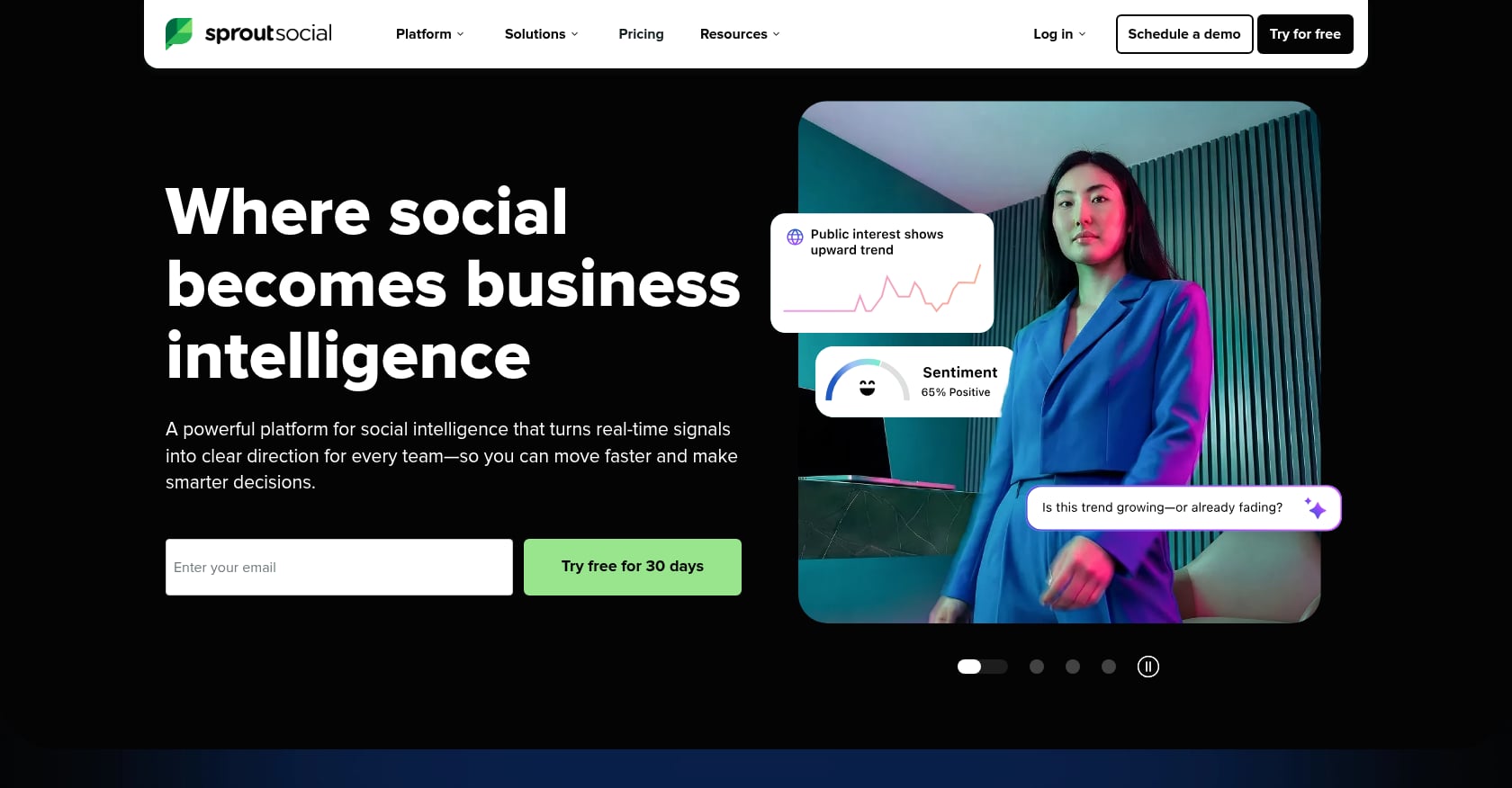
Best for: Enterprise social teams that need governance, listening, and AI-powered analytics at scale
Pricing: Standard at $199/user/month (annual) or $249/user/month (monthly). Professional at $299/user/month (annual). Advanced at $399/user/month (annual). Enterprise pricing is custom. 30-day free trial available.
Key features:
Social publishing, scheduling, engagement, analytics, and reporting
AI Assist for copy generation, alt text, and subtitles
Trellis agentic AI for navigating social data and surfacing recommendations
Social listening, influencer marketing, and customer care tools on higher tiers
Team governance and approval workflows
Tradeoffs:
Pricing is prohibitive for solo TikTok Shop sellers or small brands.
Generic social management suite, not a commerce-native marketplace tool. Social listening intelligence is different from TikTok Shop product or creator data.
Best paired with commerce data tools rather than used as the only AI social commerce system.
Practitioner perspective: Sprout Social holds a 4.4/5 rating across over 6,400 G2 reviews. Users praise scheduling, analytics, and centralized management. The most common complaints center on pricing and feature gaps in specific areas. For teams that need enterprise-grade social operations (approvals, reporting, customer care), Sprout is a serious option. For TikTok Shop sellers focused on product discovery and creator-led selling, it is overkill.
10. Particl
Best for: DTC brands that need retail assortment, pricing, and competitor intelligence beyond TikTok
Pricing: Starter at $250/month. Essential at $500/month. Growth at $1,000/month. Custom plans available. Annual billing saves approximately 40%. 14-day free trial for standard tiers.
Key features:
SKU-level pricing and discount cadence tracking
Assortment changes and launch timing intelligence
Estimated sales velocity across a reported 20,000+ online retailers
Benchmarking and white-space analysis
Marketing event and promotional timing data
Tradeoffs:
Expensive for solo TikTok Shop sellers. This is a category management and merchandising tool.
Sales velocity estimates are modeled, not audited. Treat them as directional signals.
Does not cover TikTok ad hooks, creator performance, AI video generation, or social publishing.
Reviewer perspective: Independent reviewers note Particl is strongest for high-SKU brands in apparel, beauty, supplements, and home goods that make actual assortment and pricing decisions. If your primary concern is what products to sell on TikTok Shop and what content to create, Particl is not the right starting point. If you also compete in broader DTC retail and need pricing intelligence, it fills a gap no TikTok-focused tool covers.
Trenz vs Kalodata vs FastMoss
One of the most common questions among TikTok Shop sellers is whether they should choose Trenz, Kalodata, or FastMoss.
Feature | Trenz | Kalodata | FastMoss |
|---|---|---|---|
Product Discovery | Yes | Yes | Yes |
Creator Research | Yes | Yes | Yes |
AI Content Creation | Yes | No | No |
Publishing Tools | Yes | No | No |
Social Management | Yes | No | Limited |
API Access | Yes | Limited | Limited |
AI Agents | Yes | No | No |
Best For | Full workflow | Research | Research |
Choose Trenz if you want a single workflow covering research, content, and publishing.
Choose Kalodata if historical product research is your primary need.
Choose FastMoss if you want the broadest visibility across products, creators, ads, and livestreams.
How to Choose the Right AI Social Commerce Tool
The right tool depends on where your bottleneck sits, not on which product has the longest feature list.
Solo TikTok Shop seller
Start with TikTok Shop Seller Center for operations. Add Trenz on the Free or Growth plan for integrated product discovery, AI content, and publishing. Only add Kalodata or FastMoss if you need research depth beyond what a single platform provides.
Creator or affiliate
Prioritize product trend data, commission visibility, AI scripts, fast content production, and clip repurposing. Trenz handles product discovery and AI content. Add OpusClip if you have long-form content to repurpose into shorts.
DTC brand entering TikTok Shop
Prioritize product validation, creator matching, AI video production, publishing workflow, and performance feedback. Use Trenz as the central workflow. Add Creatify for additional paid ad variant volume if needed. Consider Particl only if you also need broader retail pricing intelligence outside TikTok.
Agency managing multiple clients
Prioritize multi-account support, exports, data depth, team workspaces, API access, and repeatable reporting. Trenz Pro or Scale covers the central workflow. Add FastMoss or Kalodata for supplemental research, Sprout Social for enterprise social listening, and PiPiADS for paid creative research.
Talk to Trenz about team workflows, API access, and Scale plan options for agencies managing multiple TikTok Shop accounts.
Estimated Data vs. Verified Data: A Critical Distinction
This is the most under-discussed topic in AI social commerce tool reviews, and ignoring it leads to bad decisions.
Most TikTok Shop analytics tools provide estimated data: aggregated, modeled, or scraped information about product sales, creator performance, and market trends. This data is useful for spotting opportunities. It is not useful for financial decisions.
The distinction matters because sellers make real inventory, creator spend, and ad budget decisions based on these numbers. Practitioners on Reddit have repeatedly questioned how TikTok analytics tools gather detailed competitor data when the official Seller Center API primarily covers a seller’s own store. One guide that gets this right makes a sharp distinction between aggregated intelligence and API-connected verified profit data.
The practical rule: use estimated data to decide what to test; use first-party store data to decide what to scale.
If a tool shows a product category growing 300% month over month, that is a signal worth investigating. But do not order $10,000 of inventory based on estimated sales figures from a third-party dashboard. Cross-reference with your own store data, supplier conversations, and profit calculations that account for fees, returns, COGS, and TikTok Shop commissions.
You can browse the Radar archive to see how trend signals change day by day, which helps distinguish short-lived spikes from sustained category movement.
Common Mistakes When Building an AI Social Commerce Stack
Buying duplicate research tools. Kalodata and FastMoss overlap significantly for product and creator intelligence. Unless you have a large research team with distinct workflow needs, paying for both is usually waste.
Treating AI-generated videos as finished ads. AI video tools speed up iteration, but human review is still required. Practitioners on Reddit consistently report that AI creative tools are most useful when the team already knows what effective creative looks like. Without that judgment, AI just produces bad content faster.
Ignoring platform compliance. TikTok Shop is not a passive marketplace. Its safety report shows the platform removed 200,000 products after listing and reviewed over 900,000 user reports in the first half of 2025 alone. Before publishing AI-generated content, check product claims, before/after language, trademark use, category requirements, and creator disclosure obligations.
Confusing views with profit. A video with 2 million views and a 0.1% conversion rate at negative margin is worse than a video with 50,000 views and healthy unit economics. Virality and profitability are different metrics.
Mass creator outreach without personalization. As TikTok Shop scales, creator inboxes are getting noisy. LinkedIn practitioners note that only a small share of outreach messages lead to real partnerships. Use creator data to personalize outreach, and track actual sales contribution, not follower count.
Choosing enterprise social tools too early. Sprout Social is powerful, but at $199/user/month it is overkill for solo sellers or small brands just entering social commerce.
Not tracking true margin. Creator commissions, ad spend, returns, platform fees, samples, and COGS can destroy apparent gross merchandise value. A tool that shows revenue without subtracting all these costs gives you an incomplete picture.
AI Social Commerce Statistics for 2026
The growth of AI-powered commerce continues to accelerate.
Metric | 2026 Estimate |
|---|---|
US Social Commerce Sales | $100B+ |
TikTok Shop US Growth (2025) | 120% YoY |
Short-Form Video Share of Social Commerce Content | Growing Majority |
AI Content Adoption Among Ecommerce Brands | Increasing Across Major Platforms |
Creator-Led Commerce Spending | Continuing Double-Digit Growth |
These trends explain why businesses are investing heavily in AI-driven product discovery, creator partnerships, and automated content generation.
Final Recommendation
AI social commerce is not a single tool category. It is a workflow spanning product discovery, creator matching, content creation, publishing, engagement, and measurement. The best approach is to start with your bottleneck, not with the longest feature list.
For TikTok Shop sellers, brands, and agencies who want one platform covering the full loop from market intelligence through AI content creation and social publishing, Trenz is the strongest starting point. Its agent-based architecture (Market Analyst, Creative Director, Social Manager, coordinated by Trenzer) is designed to connect the steps that most sellers currently run in four or five disconnected apps.
Add specialist tools only when a specific gap appears: Kalodata or FastMoss for deeper TikTok Shop research, PiPiADS for paid ad creative analysis, Creatify for additional AI video volume, OpusClip for repurposing long-form content, Buffer for affordable scheduling, Sprout Social for enterprise social governance, or Particl for broader retail intelligence.
The fastest way to test whether an AI social commerce workflow fits your business is to run one loop: find a product signal, create content, publish it, and review the result.
See Trenz pricing options to find the right plan for your workflow.
FAQ
What does AI social commerce mean?
AI social commerce refers to using artificial intelligence across the full cycle of selling through social platforms. This includes product discovery, competitor analysis, creator matching, AI-generated content (video, images, scripts), social publishing and engagement, ad optimization, and converting social attention into purchases. It goes well beyond tagging products in social posts.
Which AI social commerce tool is best for TikTok Shop sellers?
For TikTok Shop sellers who need product discovery, AI content creation, and social publishing in one workflow, Trenz offers the most integrated approach. It combines market intelligence, AI agents for content and publishing, daily Radar insights, and monthly category Rankings. Specialist tools like Kalodata and FastMoss are worth adding when deeper research is the primary need.
Are TikTok Shop analytics tools accurate?
Most third-party TikTok Shop analytics tools provide estimated data based on aggregated or modeled information, not verified financial data. Sellers on Reddit frequently question the accuracy of these tools, particularly for competitor research. Use estimated data to identify opportunities worth testing, but rely on your own Seller Center data for financial decisions like inventory purchases and scaling.
Can AI-generated video actually convert on TikTok Shop?
AI video tools speed up creative testing, but conversion depends on product fit, hook quality, and audience targeting. Community feedback is consistently clear: AI-generated content works best as a testing mechanism when the team understands what effective creative looks like. Expecting AI to produce winning ads without strategic input leads to wasted credits and bad content at scale.
How much do AI social commerce tools cost?
Costs range widely. Trenz offers a free plan with 50 credits. Buffer starts at $5/channel/month. Kalodata begins around $45.90/month. Full enterprise suites like Sprout Social start at $199/user/month. The biggest cost risk is tool overlap, where sellers subscribe to multiple tools covering the same job.
What is the difference between estimated and verified TikTok Shop data?
Estimated data comes from aggregated, scraped, or statistically modeled sources and helps identify trends, products, and creators worth investigating. Verified data comes from first-party sources (your own Seller Center, financial records, and official API connections) and is required for profit calculations, inventory commitments, and scaling decisions. Treating estimated data as financial truth leads to bad outcomes.
Should I use separate tools for product research, content creation, and publishing?
It depends on budget and team size. An integrated platform like Trenz covers product discovery, AI content creation, and social publishing in one workflow, reducing overlap and keeping costs predictable. Separate specialist tools make more sense for large teams with specific, high-volume needs in one area, like paid ad research or enterprise social management.
How do I avoid getting my TikTok Shop account flagged when using AI content?
TikTok Shop’s safety systems are aggressive. Always review AI-generated product descriptions, video claims, and images for compliance with the platform’s listing policies. Pay attention to health and beauty claims, before/after language, trademark usage, restricted product categories, and creator disclosure requirements. AI creates content faster, but it does not check compliance for you.
What is the best AI tool for TikTok Shop?
The best AI tool for TikTok Shop depends on the workflow you need to automate. Some tools specialize in product research, while others focus on creator discovery, AI video creation, or publishing. Platforms that combine multiple functions can reduce software costs and workflow complexity.
Can AI find winning TikTok Shop products?
AI can identify trending products, category momentum, creator activity, and competitive signals. However, no tool can guarantee a winning product. Validation through testing, supplier analysis, and profitability calculations remains necessary.
Are AI social commerce tools worth it?
For sellers producing content consistently, AI social commerce tools can significantly reduce research and production time. The biggest return typically comes from faster product validation, creator sourcing, and content generation rather than complete automation.
What is the difference between social commerce and ecommerce?
Ecommerce focuses on transactions through online stores. Social commerce integrates product discovery, content, creators, community engagement, and checkout directly within social platforms such as TikTok, Instagram, and YouTube.
Author


