
TL;DR
TikTok Shop affiliate recruitment is the process of finding, vetting, inviting, and activating creators to promote your products through TikTok’s affiliate program. Affiliate-driven content accounts for 60 to 70% of all US TikTok Shop GMV, making recruitment the single most important growth lever for sellers. This glossary covers every term you need to know, from Open Collaboration to Creator Fulfillment Rate, with benchmarks and practical context for each.
Tarte Cosmetics generates 88% of its TikTok Shop revenue through affiliates. That number is not an outlier. Across the platform, affiliate-driven content accounts for 60 to 70% of US TikTok Shop GMV, and the US market alone is projected to hit $23.4 billion in 2026.
The brands winning on TikTok Shop are not running better ads. They are running better affiliate recruitment programs. But the terminology around this process is dense, poorly explained across most guides, and constantly changing as TikTok rolls out new features.
This glossary breaks down every key term in TikTok Shop affiliate recruitment, organized by category, with the benchmarks and context you need to make decisions. Whether you are a seller launching your first affiliate program, an agency scaling creator partnerships, or an operator trying to decode your Seller Center dashboard, this is the reference you will keep coming back to.
To evaluate creators and products before recruiting, tools like Trenz’s TikTok Shop creator analytics platform can surface the performance data that makes recruitment decisions sharper.
TikTok Shop affiliate recruitment is the process of finding creators, inviting them to promote your products, sending samples when appropriate, setting commission rates, and managing ongoing creator relationships.
For most sellers in 2026, the highest-performing strategy is:
– Run Open Collaboration to attract new affiliates
– Use Targeted Collaboration to recruit proven creators
– Offer product samples before requesting content
– Increase commissions for creators who consistently generate sales
– Measure Creator Fulfillment Rate (CFR), GMV, Video GPM, and contribution margin—not follower count alone
Successful affiliate recruitment is an ongoing system rather than a one-time campaign.
TikTok Shop Affiliate Recruitment at a Glance
Goal | Best Approach |
|---|---|
Find new creators | Open Collaboration |
Recruit proven sellers | Targeted Collaboration |
Increase posting rate | Sample Seeding |
Reduce wasted samples | Track Creator Fulfillment Rate |
Improve profitability | Measure Contribution Margin |
Grow monthly GMV | Increase Content Velocity |
How TikTok Shop Affiliate Recruitment Works
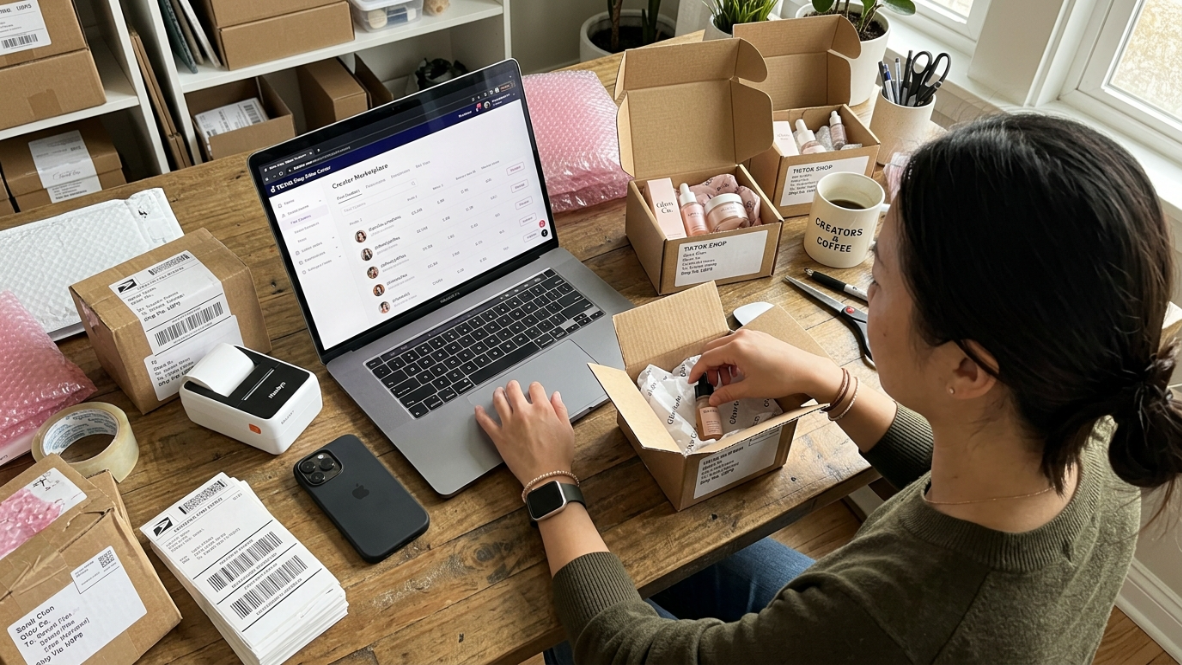
Most sellers follow a repeatable five-step workflow:
List products inside TikTok Shop Affiliate Center.
Set commission rates.
Recruit creators through Open Collaboration or Targeted Collaboration.
Send product samples to qualified creators.
Measure performance and scale successful partnerships.
Rather than focusing on recruiting the largest creators, many successful brands prioritize creators with higher posting consistency, stronger conversion rates, and better Creator Fulfillment Rates.
Program Structure Terms
TikTok Shop Affiliate Program
The TikTok Shop Affiliate Program is TikTok’s native marketplace connecting sellers with creators. Sellers list products and set commission rates. Creators browse those products, choose what to promote, and earn commissions on sales generated through their shoppable content (videos, LIVEs, and product cards). The platform takes a 6% referral fee on top of the creator’s commission.
The program operates as a three-party system: the seller provides inventory and commission budget, the creator provides audience and content, and TikTok provides the storefront infrastructure and payment processing.
Affiliate Recruitment
The process by which TikTok Shop sellers identify, contact, vet, and onboard creators to promote their products through the affiliate program.
Most brands list products and wait for creators to apply. That passive approach leaves revenue on the table. The highest-performing brands actively recruit affiliates using a combination of sample seeding, targeted invitations, and tiered commission structures. Recruitment is not a one-time event. It is an ongoing operational function, because the best programs are constantly refreshing their creator roster.
Open Collaboration
Open Collaboration is the broad, passive approach to TikTok Shop affiliate recruitment. A seller sets a commission rate, lists products, and any eligible creator on TikTok Shop can pick them up and start promoting without prior negotiation or approval. Think of it as a discovery engine where creators self-select into your program.
Key benchmarks:
Typical commission rates: 10 to 15%
Conversion rates on creator content: 2 to 4%
90-day churn rate: 58%
Accept-to-active-post rate: 12 to 18%
That last number is the one that stings. For every 100 creators who accept your Open Collaboration, only 12 to 18 will actually publish a shoppable video. The rest accept and go silent. This is why serious sellers treat Open Collaboration as a top-of-funnel discovery mechanism, not a growth strategy by itself.
Targeted Collaboration
Targeted Collaboration is invite-only. Sellers recruit specific creators based on audience fit, content quality, niche relevance, and sales track record. Commission rates are negotiable and typically run 18 to 25%, sometimes reaching 50% for top performers.
The performance difference over Open Collaboration is dramatic. Targeted Collaboration with well-matched creators hits 8 to 12% conversion rates, roughly triple the Open Collaboration average. Activation rates jump to 75% or higher, compared to the anemic 12 to 18% from Open plans.
TikTok allows bulk invites of up to 50 creators per send, with a daily cap of 1,000 invitations. Commission rates can be set anywhere from 1% to 80%.
Shop Ads Commission Rate (Dual-Rate System)
This is the concept most guides skip entirely, and it directly affects your affiliate economics.
A seller can set two separate commission rates: a standard commission (say, 15%) and a lower Shop Ads commission (say, 5%). If a buyer clicks an affiliate’s product link and purchases directly from the creator’s content, the full 15% standard commission applies. But if the conversion comes through a paid Shop Ad that happens to feature the affiliate’s content, the lower 5% rate kicks in, because the brand is already paying for the ad placement.
Understanding this dual-rate system matters for budgeting. If you run heavy Shop Ads alongside your affiliate program, a meaningful portion of your affiliate-attributed GMV may settle at the lower rate.
Commission Protection (30-Day Grace Period)
When a seller changes the commission rate on an Open or Targeted Collaboration plan, creators who already accepted the original terms are protected for 30 days. They continue earning at the previously agreed rate during that grace period. This prevents sellers from slashing commissions after creators have already invested effort in content creation.
Tiered Commission Structure
A framework where different affiliates earn different commission rates based on their performance tier. The recommended structure in 2026 looks like this:
Base tier (Open Collaboration): 5 to 15% for all affiliates
Elevated tier (Targeted Collaboration): 15 to 25% for proven, high-converting creators
Hybrid tier (macro-influencers): Flat fee ($300 to $500+) plus 10 to 20% commission
The average US TikTok Shop affiliate commission rate is 13.02% as of 2026, and it has been trending upward, not downward, which reflects growing competition among brands for top-performing creators. A case study from SellerApp illustrates why: a beauty brand offering 12% commission averaged 1 to 2 test videos per creator, with most being posted once and then abandoned. When the same brand increased to 25% for a targeted cohort of 30 creators, average output per creator jumped to 4.6 videos over 21 days. Commission is a recruitment signal, not just a cost.
For a deeper look at which products and categories command the highest affiliate interest, TikTok Shop Rankings by category and region can help you benchmark.
Creator Types and Eligibility
Understanding creator types is essential for TikTok Shop affiliate recruitment because each type has different eligibility requirements, restrictions, and strategic uses. Most guides conflate these categories. Here is the clear breakdown.
Affiliate Creator
The standard creator type. Must have a minimum of 1,000 followers to self-apply. Affiliate Creators get full access to the Product Marketplace, where they browse products from any participating seller, choose what to promote, and earn commissions. No seller bind is required. They can promote products from dozens of different brands simultaneously.
This is the most common creator type and the one you will encounter most during recruitment.
Creator Pilot Program
Creators with 1,000 to 5,000 followers enter the Affiliate Creator Pilot Program. This is essentially a probation period with significant restrictions:
Maximum 3 shoppable videos per day
Maximum 3 shoppable LIVE sessions per week
Can only access products with a Shop Performance Score of 95% or higher
To graduate and lift these caps, creators must hit 5,000 followers, achieve a Creator Health Rating above 176, and complete tasks like generating 10 organic orders. For sellers, the implication is clear: if your SPS is below 95%, you are invisible to this entire tier of emerging creators.
Marketing Creator
A Marketing Creator is bound to a specific seller account through a formal marketing creator bind. This creates a semi-exclusive relationship. The creator can promote products from their bound shop and also access the broader Product Marketplace for other brands.
This is useful when you want a creator to function almost like an in-house content team member while still allowing them the freedom to work with other brands. The bind does not prevent them from promoting competitors, but it does create a tighter operational relationship.
Official Shop Creator
The official voice of a specific shop. If the creator account shares the same name as the shop, there is no follower minimum. However, Official Shop Creators are restricted to promoting only that shop’s products. This is the most restrictive creator type but also the most brand-safe.
Creator Health Rating
A trust score TikTok assigns to each creator account, affecting their access to platform features and their eligibility to graduate from the Pilot Program. A rating above 176 is required for graduation. Factors include content quality, policy compliance, order fulfillment behavior, and audience engagement patterns.
If you are recruiting and evaluating creators, the Creator Health Rating is one of the pre-outreach signals worth checking. Low ratings often correlate with unreliable posting behavior. For a full framework on evaluating creators before outreach, see this guide on TikTok Shop creator analytics metrics and ROI.
Recruitment Tactics and Concepts
Sample Seeding
Sending free product samples to potential affiliates before asking them to post. This is the single most effective TikTok Shop affiliate recruitment tactic by a wide margin. Creators who receive and physically use a product create more authentic, higher-converting content than creators promoting products they have never touched.
Key benchmarks:
40 to 60% of sample recipients will post, compared to much lower rates for cold outreach without product
Budget $500 to $2,000 for your first 20 to 50 creators
Expected ROI: 5x to 10x
A case study from Blissim puts this in concrete terms: 700 sample shipments yielded roughly 1,000 videos, a ratio of about 1.4 videos per sample. That is a useful planning number for brands budgeting their seeding programs.
Content Velocity
The total volume of shoppable videos and LIVEs produced across your entire creator roster over a given period. This is arguably the most important leading indicator of TikTok Shop revenue.
Brands generating approximately $1 million monthly on TikTok Shop typically produce over 1,000 videos per month. TikTok’s own internal data shows a near-straight-line correlation between video volume and gross merchandise value. Practitioners on forums note that the platform has gotten significantly more competitive, with many creators now posting 10 videos per day. The recommended floor for a serious program is 200 to 300 videos per month across your creator roster.
This is where cross-platform post scheduling tools become operationally necessary, especially if your creators are publishing across TikTok, Instagram, and YouTube simultaneously.
Content Posting Limits (CPL)
A 2026 platform update that most guides have not caught up to yet. TikTok’s automated Content Posting Limit system dampens low-tier creator accounts that spam the feed with excessive shoppable content. This directly affects recruitment strategy: onboarding dozens of micro-creators who each post 10 shoppable videos per day may trigger throttling. Quality and account maturity now matter more than raw volume from any single creator.
Creator Roster vs. Active Creator Pool
“Active” is the key word. Recruitment numbers mean nothing without activation rates. One practitioner in a short-form content strategy community put it bluntly: “Brand: ‘We recruited 200 creators last month.’ Me: ‘How many posted?’ Brand: ‘…twelve.’”
This gap between nominal recruitment and actual activation is the central challenge of TikTok Shop affiliate recruitment. Track your accept-to-post ratio obsessively. If it is below 30%, your outreach messaging, commission structure, or sample seeding process needs work.
Shop Performance Score (SPS)
A metric TikTok assigns to each product based on shipping speed, customer ratings, and return rates. It matters for recruitment because creators in the Pilot Program (1K to 5K followers) can only access products with an SPS of 95% or higher. If your score drops below that threshold, you lose access to an entire tier of emerging affiliates without any notification.
Creator Fulfillment Rate (CFR)
The percentage of times a creator actually posts shoppable content after receiving a product sample or accepting a collaboration invite. This is a newer data point tracked by third-party tools and increasingly used by brands to avoid wasting samples on creators who accept products but never follow through.
Filter your recruitment prospects by CFR before sending samples. A creator with a 70% CFR and 15K followers will generate more value than a creator with a 20% CFR and 100K followers.
Typical Affiliate Recruitment Timeline
Time | Activity |
|---|---|
Day 1–3 | Recruit creators |
Day 4–10 | Ship samples |
Week 2 | First videos published |
Week 3–4 | Measure CTR and GMV |
Month 2 | Scale top creators |
Month 3 | Remove inactive creators and recruit replacements |
Timelines often rank well because they directly answer “how long does it take” queries.
Common TikTok Shop Affiliate Recruitment Mistakes
Many sellers struggle with affiliate recruitment because they optimize for the wrong metrics.
Common mistakes include:
Recruiting based only on follower count.
Offering commissions below market averages.
Skipping product samples.
Tracking only GMV instead of profit.
Keeping inactive creators in the roster.
Ignoring Shop Performance Score.
Sending identical outreach messages to every creator.
Measuring invitations instead of activation rates.
Avoiding these mistakes usually produces larger improvements than simply recruiting more creators.
Key Metrics for Evaluating Affiliates
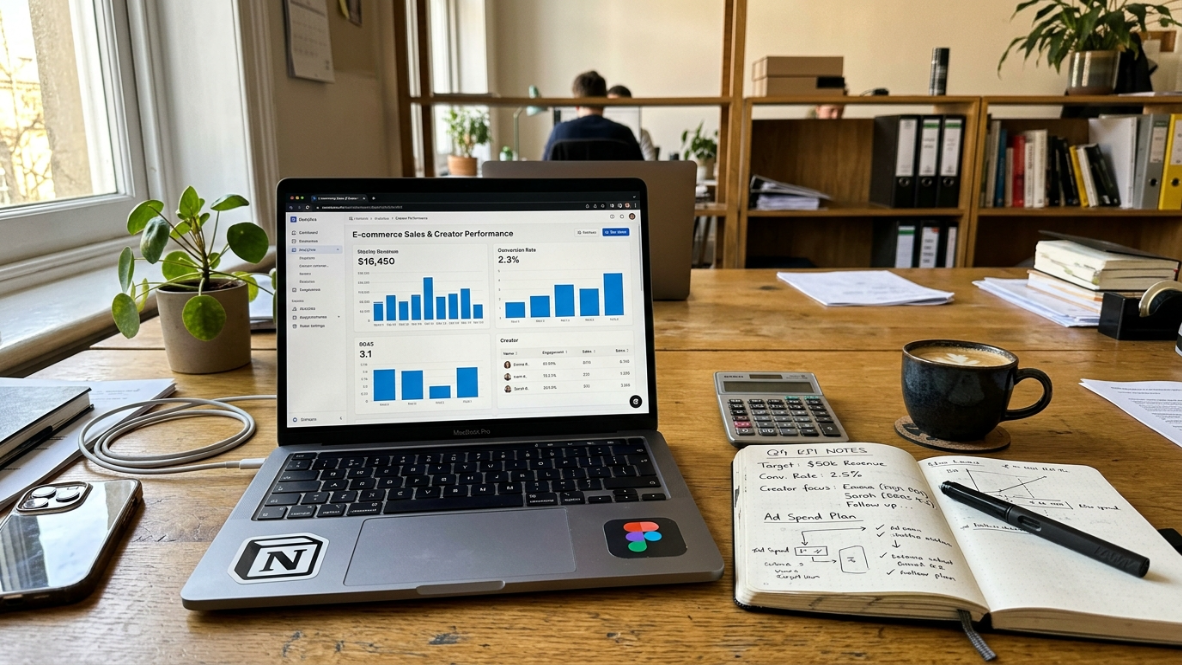
GMV (Gross Merchandise Value)
The total dollar value of all orders attributed to a creator, including orders placed on non-content channels (like the Shop Tab) within 14 days of clicking the product in the creator’s content. GMV is the broadest revenue metric and the one TikTok surfaces most prominently in Seller Center.
To see what is actually selling across the platform, TikTok Shop Rankings track GMV by category and region on a monthly basis.
Direct GMV
A narrower version of GMV that counts only orders placed directly from the creator’s content (LIVE, video, or product card), based on content-type last click. Direct GMV excludes orders that came through the Shop Tab or other indirect channels. This gives you a cleaner read on how effective a creator’s content is at driving immediate purchases.
Video GPM (GMV Per Mille)
GPM measures the gross merchandise value generated per 1,000 views of a LIVE session or video. It is the single best efficiency metric for comparing creators across different audience sizes and stream lengths. A LIVE with 500 viewers and $200 GPM outperforms one with 5,000 viewers and $15 GPM, even though the second session looks more impressive in raw view counts.
When evaluating affiliate prospects, GPM tells you who converts attention into revenue, not just who attracts eyeballs.
CTR (Click-Through Rate)
The percentage of viewers who tap the product link in a creator’s video or LIVE. CTR sits between views and conversions in the funnel and helps diagnose content quality issues. High views but low CTR usually means the product integration feels forced or the call-to-action is weak. High CTR but low conversion rate usually points to a product page problem, not a creator problem.
Contribution Margin Per Creator
GMV per creator tells you who drives volume. But net profit per creator, after subtracting their commission, product samples, and any flat fees, tells you who actually makes you money. This is the metric that separates sophisticated affiliate programs from ones that grow GMV while bleeding margin.
Most native TikTok tools do not surface this number directly. You need to calculate it by combining Seller Center commission data with your own cost-of-goods and fulfillment numbers. For deeper analytics beyond what native tools provide, a TikTok Shop analytics tool can help fill the gaps.
Cross-Platform Halo Effect
When a creator promotes your product on TikTok, the resulting brand awareness often drives additional sales on Amazon, your DTC site, and other channels. This halo effect has been measured at 30 to 50% incremental revenue beyond the direct TikTok Shop attribution. Most brands undercount the true value of their affiliate program by only measuring TikTok Shop GMV.
Platform Tools and Partner Ecosystem
Find Creators Tool
An in-platform tool within TikTok Shop Seller Center that helps sellers search for and invite specific creators to collaborate. You can filter by category, audience demographics, performance history, and relevance to your product. This tool powers the Targeted Collaboration workflow and is the starting point for most active recruitment efforts.
Product Marketplace
The browsable catalog where affiliate creators discover products to promote. Your products appear here automatically when you set up an Open Collaboration. Creators filter by category, commission rate, price point, and performance metrics. Your listing’s visibility in the Product Marketplace depends heavily on your commission rate and Shop Performance Score.
For guidance on choosing which products to list for affiliates, a product research tool can help identify items with strong market fit and creator appeal.
TikTok Creator Marketplace (via TikTok One)
A separate discovery platform from the affiliate program, focused on paid influencer collaborations rather than commission-based partnerships. Requires creators to have 10,000+ followers to be listed. Brands use it to find creators for sponsored content campaigns, but it is increasingly being used alongside affiliate recruitment for hybrid deals (flat fee plus commission).
TAP (TikTok Affiliate Partner)
TAP stands for TikTok Affiliate Partner. It refers to a certified agency that helps brands run and scale creator affiliate campaigns on TikTok Shop. TAP is not a software feature or a tool. It is an agency certification. TAP partners recruit creators, manage campaigns, and track sales performance on behalf of brands.
TikTok’s own documentation states that partner campaigns unlock creators with a 75 to 80% fulfillment rate and accelerate total GMV for local merchants by 150%.
A word of caution: Creator communities are vocal about predatory TAP agencies. Multiple creators report receiving spam-like outreach from agencies that take up to 60% of commissions while providing minimal value. One widely shared warning from a TikTok creator named Chelsea specifically flagged an agency called TAP Talk for disproportionate commission splits. Vet any TAP partner carefully before onboarding. For agencies building their own TikTok Shop operations, agency solutions that provide direct data access can reduce dependence on third-party intermediaries.
Creator Matchmaking Tool (Formerly TAP Tool)
This is the in-platform tool that connects sellers with TAP agency partners. Previously called the TAP tool (which caused widespread confusion with the TAP agency certification), TikTok rebranded it as the Creator Matchmaking Tool. Sellers use it to run partner campaigns with different agency partners, who then handle the operational work of matching merchants with appropriate creators.
Partner Campaigns
Structured affiliate campaigns run through the Creator Matchmaking Tool, where a TAP agency manages the recruitment, briefing, and performance tracking on behalf of the seller. These campaigns typically offer higher fulfillment rates than self-managed recruitment because the agency has existing creator relationships and operational processes.
Affiliate Center
The seller-side dashboard within TikTok Shop Seller Center where you manage all collaborations (both Open and Targeted), track creator performance, set commission rates, review pending applications, and monitor GMV attribution. This is your operational hub for TikTok Shop affiliate recruitment.
Cost and Economic Terms
Referral Fee
TikTok’s platform fee, currently 6% in the US, charged on every transaction. This is separate from and in addition to the affiliate commission. If you set a 15% affiliate commission, your total creator-related cost per order is 21% before accounting for anything else.
Payment Processing Fee
An additional ~1.02% fee that TikTok charges for processing the payment transaction. Small in isolation, but it compounds when stacked with referral fees, commissions, and other costs.
Settlement Window
The period between order delivery confirmation and when the creator receives their commission payout. Typically 15 to 31 days. Creators generally receive their commission 15 days after the order delivery date. For sellers, this is important context for recruitment conversations, as new creators often ask when they will get paid.
Attribution Window
When a viewer taps an affiliate’s product tag, TikTok creates a 7-day attribution session. Any purchase of that product within those 7 days is attributed to that creator, even if the buyer comes back through a different channel. This is more generous than some affiliate platforms and worth highlighting in your recruitment pitch.
True Effective Platform Cost
The true cost of an affiliate conversion is 5 to 7x higher than the headline commission rate. Here is the full stack:
Affiliate commission: 10 to 25%
TikTok referral fee: 6%
Payment processing: ~1%
Returns and chargebacks: varies (5 to 15% of orders in many categories)
Fulfillment and shipping: varies
When you add it all up, total platform cost typically lands at 35 to 45% of revenue. Sellers who only budget for the commission rate get blindsided by the actual economics.
Return Rate Impact
Returns erode affiliate economics disproportionately because the referral fee is not always fully refunded, fulfillment costs are sunk, and the returned inventory often cannot be resold at full price. Categories with high return rates (apparel, electronics) need to factor this into their commission calculations or risk negative contribution margins on affiliate sales.
Open vs. Targeted Collaboration: Side-by-Side Comparison
Factor | Open Collaboration | Targeted Collaboration |
|---|---|---|
Access | Any eligible creator can join | Invite-only, seller selects creators |
Commission Range | 10 to 15% typical | 18 to 25% typical (up to 80%) |
Conversion Rate | 2 to 4% | 8 to 12% |
Accept-to-Post Rate | 12 to 18% | 75%+ |
90-Day Churn | 58% | Significantly lower |
Daily Invite Limit | N/A (creators self-select) | Up to 1,000 per day, 50 per batch |
Best Use Case | Discovery, casting a wide net | Performance, building a reliable roster |
Commission Override | Creator gets the listed rate | Can override Open rate with higher Targeted rate |
The override rule is worth emphasizing: if a creator is already in your Open Collaboration plan and you send them a Targeted Collaboration invite with a higher rate, the higher rate applies. You do not need to remove them from Open first.
US TikTok Shop: Key Data Points for 2026
Metric | Figure |
|---|---|
Projected US GMV | $23.4B |
Projected Global GMV | $87B+ |
Affiliate share of US GMV | 60 to 70% |
Average US commission rate | 13.02% |
Active US sellers | ~475,000 (up from 4,450 in 2023) |
TikTok influencers actively selling | Only 5.57% |
Top 5% of creators: share of GMV | 60 to 70% |
Mid-tier creators (10K to 100K): share of GMV | 29% |
Video volume for $1M/month GMV | 1,000+ videos/month |
That last statistic about only 5.57% of TikTok influencers actively selling anything underscores the opportunity gap. The vast majority of creators have never been recruited for affiliate work, and active outreach can tap an enormous pool of untouched talent. For competitive intelligence on what categories and products are driving the most affiliate activity, competitor analysis tools can show you what your rivals’ affiliate programs look like.
FAQ
How many followers does a creator need to join TikTok Shop’s affiliate program?
The standard threshold is 1,000 followers. Creators with 1,000 to 5,000 followers enter the Creator Pilot Program with posting restrictions. Official Shop Creators who are explicitly bound to a merchant’s store have no follower minimum.
Can a seller run Open and Targeted Collaboration at the same time?
Yes. Most successful sellers run both simultaneously. Open Collaboration serves as a discovery mechanism that attracts a wide range of creators, while Targeted Collaboration lets you build a curated roster of high-performing affiliates with better commission rates and activation expectations.
What is a good commission rate for recruiting TikTok Shop affiliates?
The US average is 13.02%. For Open Collaboration, 10 to 15% is standard. For Targeted Collaboration aimed at proven creators, 18 to 25% drives significantly higher content output and conversion. Going below 10% on Open plans makes your listing nearly invisible in the Product Marketplace, where creators sort by commission rate.
What does TAP stand for in TikTok Shop?
TAP stands for TikTok Affiliate Partner. It is a certification for agencies, not a software tool. The tool previously called “TAP” has been renamed to the Creator Matchmaking Tool. This distinction matters because many sellers confuse the two.
How long does it take for affiliate commissions to be paid out?
Creators typically receive their commission 15 days after the order delivery date. The full settlement window ranges from 15 to 31 days depending on the order status and any return period considerations.
What is the real cost of selling through TikTok Shop affiliates?
The headline commission rate is only part of the picture. When you add the 6% referral fee, ~1% payment processing, returns, and fulfillment costs, the true effective cost typically lands at 35 to 45% of revenue. Budget accordingly.
Why do most recruited creators never post?
The accept-to-active-post rate for Open Collaboration is only 12 to 18%. Creators accept collaborations with good intentions but get distracted, lack motivation at low commission rates, or never receive a product sample. Sample seeding and higher commissions are the two most effective levers for closing this activation gap.
What is Creator Fulfillment Rate and why should I track it?
Creator Fulfillment Rate (CFR) measures how often a creator actually follows through with posting after accepting a collaboration or receiving a sample. It is the best pre-outreach filter for avoiding wasted samples and is increasingly available through third-party analytics platforms. A creator with a high CFR is worth recruiting even if their follower count is modest.
TikTok Shop affiliate recruitment is not getting simpler. The seller base has grown from 4,450 to 475,000 in three years, and every one of those sellers is competing for the same pool of high-performing creators. The brands that win are the ones that understand the terminology, know their numbers, and use data to recruit smarter rather than just louder.
If you are ready to move from learning the terms to acting on them, explore Trenz’s pricing to see how creator analytics, product research, and competitive intelligence can power your recruitment program.
Author


