
TL;DR
Finding TikTok Shop creators means understanding three creator types (Affiliate, Marketing, and Official Shop), mastering native tools like the Find Creators tool and Affiliate Center, and running both Open and Target collaborations simultaneously. The average US commission rate sits at 13.02%, but strategic sellers use tiered commission structures and data-driven creator evaluation to recruit effectively. Most new sellers struggle because they chase high-GMV creators instead of starting with micro-creators willing to take a chance on unproven products.
TikTok Shop generated $15.1 billion in US GMV in 2025, up 68% year-over-year. That growth is overwhelmingly creator-driven. The affiliate program is the engine behind it, and roughly 475,000 active US shops are competing for attention from a pool of creators where only about 54,000 earn $10K or more annually.
If you’re a seller trying to find TikTok Shop creators, the challenge isn’t that creators don’t exist. It’s that the terminology is confusing, the native tools have real limitations, and most guides skip the strategic context that actually matters. This glossary fixes that.
Explore Trenz TikTok Shop rankings to see which categories have the most active creators and highest GMV right now.
How to Find TikTok Shop Creators Quickly
If you want to find TikTok Shop creators in 2026, follow this process:
1. Launch an Open Collaboration with a commission rate of at least 15%.
2. Offer free product samples to creators.
3. Use the Find Creators tool inside Affiliate Center to identify creators with proven GMV.
4. Prioritize micro-creators (5,000–20,000 followers) before targeting larger affiliates.
5. Track GMV, conversion rate, content volume, and return rate instead of follower count.
6. Upgrade top performers into Target Collaborations with higher commissions.
7. Develop one or two creators into long-term VIP partnerships.
Most successful TikTok Shop sellers use Open Collaboration for discovery and Target Collaboration for scaling revenue.
What Is a TikTok Shop Creator?
A TikTok Shop creator is any TikTok account that has been approved to promote and sell products through TikTok Shop. But not all creators are the same. According to TikTok’s official Creator Eligibility Policy, there are three distinct types, each with different access levels, requirements, and relationships to sellers.
Affiliate Creator
The most common type. Affiliate creators operate independently and have access to the full Product Marketplace without being tied to any specific seller. They browse products, pick what they want to promote, and earn commissions on sales. This is the creator type most sellers are trying to find and recruit.
Marketing Creator
Marketing creators represent specific brands on TikTok. They maintain a close relationship with a brand’s TikTok Shop through a marketing creator bind, but they also retain the flexibility to promote other brands’ products from the Product Marketplace. Think of them as brand ambassadors who can still freelance.
Official Shop Creator
An official shop creator is a creator account with a direct bind to a seller account. The creator account shares the same name as the bound TikTok Shop. This is essentially the seller’s own content arm, useful for brands that want to publish shoppable content directly from their shop identity.
Creator Type Comparison
Feature | Affiliate Creator | Marketing Creator | Official Shop Creator |
|---|---|---|---|
Independence | Fully independent | Brand-affiliated but flexible | Bound to one seller |
Marketplace Access | Full Product Marketplace | Full Product Marketplace + brand priority | Seller’s own products |
Bind Required | No | Marketing creator bind | Official creator bind |
Best For | Broad affiliate recruitment | Brand ambassador programs | Seller-generated content |
Creator Recruitment Strategy by Seller Stage
Many sellers make the mistake of using the same recruitment strategy regardless of store maturity. The ideal creator acquisition approach changes as your shop grows.
Seller Stage | Monthly Orders | Recommended Creator Type | Primary Goal |
|---|---|---|---|
New Shop | 0–100 | Micro-creators (5K–20K followers) | Generate first sales |
Growing Shop | 100–1,000 | Mid-tier creators (20K–100K followers) | Scale content volume |
Established Shop | 1,000–10,000 | Proven GMV creators | Maximize efficiency |
Category Leader | 10,000+ | VIP creators and ambassadors | Defend market position |
For most new TikTok Shop sellers, recruiting dozens of smaller creators generates better results than chasing a handful of celebrity influencers.
Follower Thresholds by Region
To find TikTok Shop creators who can promote products from the Product Marketplace, they need to meet minimum follower requirements. These vary significantly by region:
Region | Minimum Followers | Additional Requirements |
|---|---|---|
United States | 5,000 | Good standing account |
United Kingdom | 1,000 | Recent post, good standing |
Southeast Asia | 1,000 | Varies by country |
The US threshold is notably higher, which means the pool of eligible creators is more constrained. For sellers in the UK fragrance category or other UK verticals, the lower barrier creates a larger potential creator base to recruit from.
The Affiliate Creator Pilot Program
Creators with fewer than 5,000 followers in the US can still participate, but with restrictions. After verification, they’re automatically enrolled in the Affiliate Creator Pilot Program for at least 30 days. During this period, they can only access products with a Shop Performance Score of 95% or higher, post up to 3 shoppable videos per day, and go live with products only 3 times per week.
This matters for sellers because it means your Shop Performance Score directly affects whether newer creators can even see your products.
Where to Find TikTok Shop Creators
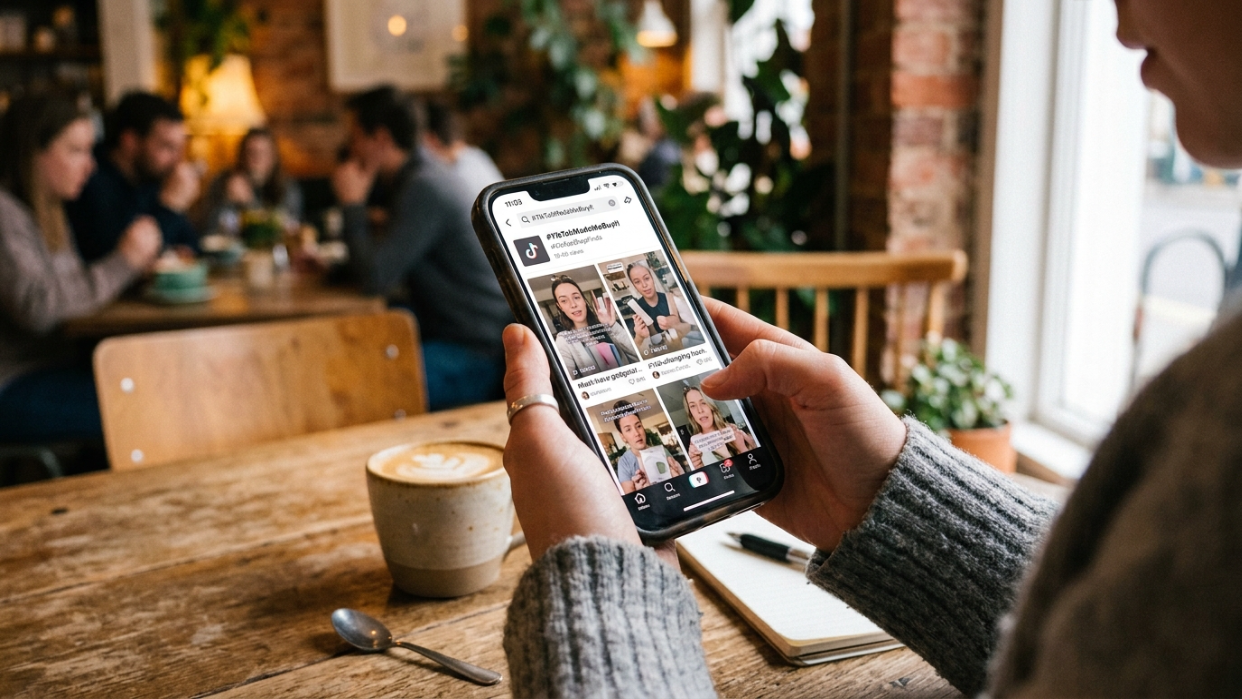
TikTok Shop creators can be discovered through several channels:
Native TikTok Tools
Find Creators Tool
Affiliate Center
Product Marketplace
TikTok Creator Marketplace (TTCM)
Competitor Research
Review products already generating strong affiliate sales in your category. Analyze which creators consistently promote similar products and add them to your outreach pipeline.
Social Search
Search TikTok using:
#TikTokMadeMeBuyIt
#TikTokShopFinds
#TikTokShopCreator
#AmazonFinds
#Unboxing
Creators posting shoppable content regularly are often more valuable than creators with larger audiences but limited shopping activity.
Third-Party Analytics Platforms
Creator analytics platforms provide:
Historical GMV
Product-level performance
Creator growth trends
Category specialization
Collaboration history
Native Discovery Tools
TikTok provides several built-in tools for sellers looking to find TikTok Shop creators. Each serves a different purpose, and confusing them is one of the most common mistakes sellers make.
The Find Creators Tool
This is most brands’ starting point. Located inside TikTok’s Affiliate Center within Seller Center, the Find Creators tool lets you browse potential creators and sort them by filters including individual Shop products sold and their GMV.
It sounds straightforward. In practice, it frustrates many sellers at scale. Practitioners on forums and in communities consistently report that the native tool creates limited traction by itself. Invitations often go unanswered. Getting ghosted is, as one industry analysis put it, “par for the course.”
One new seller on Reddit described raising their commission from 20% to 30%, posting 80+ organic videos, and still struggling to attract affiliates willing to be first movers on an unproven listing. The tool surfaces creators, but it doesn’t solve the underlying trust problem.
TikTok Creator Marketplace (TTCM)
This is TikTok’s official hub for brand-creator partnerships, and it is not the same thing as the Find Creators tool. TTCM was originally built for paid brand deals, not commission-based affiliate partnerships. Sellers frequently confuse the two, expecting TTCM to function as an affiliate recruitment platform. It doesn’t.
Use TTCM when you want to run paid collaborations with specific creators (think sponsored content deals). Use the Find Creators tool and the Affiliate Center when you’re building commission-based affiliate relationships.
Affiliate Center
This is the hub where all collaboration management happens. From here, sellers create Open and Target collaborations, manage commission rates, track creator performance, and monitor affiliate analytics. If you’re serious about finding TikTok Shop creators, you’ll spend most of your operational time here.
Product Marketplace (Creator-Facing)
The Product Marketplace is the demand side of the equation. Once approved, creators browse it inside Creator Center, filtering by category, commission rate, or Shop Performance Score. Sellers need to understand that this is where creators shop for their next product to promote. Your listing competes with thousands of others for creator attention, which is why competitive commissions, strong product images, and free samples matter so much.
For a sense of what categories are generating the most creator activity, check the US makeup category rankings or US skincare rankings.
Collaboration Types Explained
Understanding how collaborations work is essential for any seller trying to find TikTok Shop creators and actually convert them into active promoters.
Open Collaboration
Open Collaboration makes your products visible to all eligible creators. You set a commission rate (anywhere between 1% and 80% of GMV per order), and creators can apply to promote your products. You can also let TikTok automatically set an optimized commission rate.
When to use it: Always. Open Collaboration should run continuously as your baseline recruitment channel. It casts the widest net.
The reality check: The typical accept-to-active-post rate for Open Collaborations is only 12-18%. That means for every 100 creators who accept your product, only 12 to 18 will actually create and post content. Most of the volume is dead weight.
Target Collaboration
Target Collaboration lets you invite specific creators to promote selected products, with commission rates set individually or for groups. You can structure the deal as commission-based or use a flat fee, where you make a one-time payment to TikTok Shop, and the platform pays the creator after their videos are approved.
When to use it: When you’ve identified high-performing creators through Open Collaboration or external research and want to deepen the relationship.
Why it matters: One well-documented case study from a home goods seller illustrates this clearly. The seller allowed Open Collaboration year-round but capped Target partnerships at 40 creators. Those 40 creators produced only 22% of total affiliate videos yet generated 61% of total affiliate GMV over a 60-day window. Target creators convert at dramatically higher rates.
Commission hierarchy note: If your products have both an Open and Target Collaboration active, the Target commission rate always supersedes the Open rate for that creator.
VIP Collaboration
An emerging tier that industry strategists like Micah Whitehead at Zeroto1 have identified. A VIP Collaboration represents a partnership with just one or two creators that’s highly exclusive. Think co-branded content, early product access, and significantly higher commission rates. Most glossary content misses this tier entirely, but it’s becoming a critical part of how top sellers structure their creator relationships.
The Collaboration Progression
The smart approach looks like this:
Launch with Open Collaboration to cast a wide net
Identify top performers using GMV and conversion data
Upgrade the best to Target Collaboration with higher commissions
Develop one or two into VIP partnerships with exclusive terms
This progression turns creator recruitment from a one-time search into an ongoing pipeline.
Key Metrics for Evaluating Creators
When you find TikTok Shop creators, follower count is the worst way to evaluate them. Here are the metrics that actually predict performance.
GMV (Gross Merchandise Value)
The total dollar value of products a creator has sold through TikTok Shop. This is the single most important metric because it directly measures revenue generation. TikTok’s Affiliate Analytics dashboard in Seller Center shows per-creator GMV, conversion rate, content volume, and return rate.
A creator with 15,000 followers and $50,000 in lifetime GMV is almost always more valuable than one with 500,000 followers and $2,000 in GMV. The first knows how to sell. The second knows how to entertain.
Shop Performance Score
A quality metric assigned to your shop that affects which creators can promote your products. During the Pilot Program phase, creators with fewer than 5,000 followers can only access products from shops scoring 95% or above. Even outside the Pilot Program, a low score signals to experienced creators that your shop may have fulfillment or quality issues.
Creator Concentration
This concept describes how evenly (or unevenly) creator activity is distributed within a product category. In some categories, a handful of mega-creators generate the vast majority of sales, making it extremely difficult for new sellers to recruit because those creators are locked into existing relationships. In other categories, creator activity is distributed across hundreds of smaller creators, making recruitment much more accessible.
Understanding creator concentration before entering a category can save months of wasted outreach. The Trenz daily Radar surfaces creator concentration data alongside GMV and growth metrics for trending products and categories.
Conversion Rate
The average TikTok Shop conversion rate across all tiers is roughly 4.7%. But this varies enormously by creator quality, content format, and product category. Target Collaboration creators typically convert at 2-3x the baseline rate of Open Collaboration creators.
Content Format Performance
Short-form video contributes nearly 60% of total US TikTok Shop GMV. Online store traffic accounts for roughly 30%, and live streaming makes up about 10% (though it’s growing). Among influencers specifically, over 63% focus on video content, 29% use both video and live streaming, and less than 8% rely solely on live streaming.
Creator Vetting Checklist
Before inviting a creator, evaluate the following:
Metric | Good Benchmark |
|---|---|
GMV History | Consistent sales over multiple months |
Engagement Rate | 3%+ minimum |
Video Consistency | 3+ posts per week |
Product Relevance | Similar products promoted previously |
Comment Quality | Genuine buyer questions |
Return Rate | Lower than category average |
Content Style | Demonstration-focused |
Audience Match | Aligns with target customer |
A creator with modest reach and strong buying intent often outperforms a larger creator with weak commercial engagement.
Sample Outreach Message for TikTok Shop Creators
This section targets long-tail searches and improves practical usefulness.
Initial Creator Invitation Template
Hi [Creator Name],
We’ve been following your content and believe our product would be a strong fit for your audience.
We’re currently offering:
Free product sample
Competitive commission rate
Potential long-term partnership opportunities
We would love to collaborate and hear your feedback.
Looking forward to working together.
Best,
[Brand Name]
Many sellers focus exclusively on commission rates, but creators frequently cite product quality, fulfillment reliability, and communication responsiveness as equally important factors.
Commission Structures and True Costs
Setting the right commission rate is where most sellers either overpay or, more commonly, underpay and wonder why nobody promotes their products.
Commission Tier Framework
Tier | Commission Range | Creator Profile | Expected Performance |
|---|---|---|---|
Open Baseline | 10-15% | Maximum volume, mixed quality | Accept-to-post rate: 12-18% |
Target Tier 1 | 15-18% | 10K-100K followers, 3-5% engagement | Moderate conversion lift |
Target Tier 2 | 20-25% | 100K-500K followers, 4-7% engagement, proven track record | Conversion rates 2-3x baseline |
VIP | 25%+ or flat fee | Top 1-2 performers | Highest GMV contribution per creator |
The average US commission rate across all TikTok Shop categories is 13.02%, which falls squarely in the Open Baseline range. If you’re offering 10% and wondering why creators ignore you, that’s your answer.
The True Cost of Affiliate Sales
Commission rate alone doesn’t capture the full picture. Stack the numbers:
Creator commission: 13-25%
TikTok platform referral fee: ~6%
Free samples/shipping: 3-8% of revenue (varies)
Content amplification (Spark Ads): variable
The true cost of an affiliate-driven sale often lands between 35-45% of revenue. This is still profitable for many product categories, especially those with high margins, but sellers need to model it accurately before setting commission rates.
The 30-Day Commission Lock
Once a creator accepts a collaboration, the commission rate is locked for 30 days. This prevents sellers from baiting creators with high rates and dropping them, but it also means you can’t quickly adjust rates downward if performance disappoints. Plan your commission tiers carefully before launching.
Why Creators Ghost You (And What to Do About It)
This is the pain point nobody in the official documentation addresses, but it shows up constantly in practitioner communities. Sellers on Reddit describe sending hundreds of invitations through the Find Creators tool and getting single-digit responses.
The Structural Reasons
Your product is unproven. High-GMV creators have limited time and established relationships. Promoting an unproven product is risky for them. If the product has poor reviews, slow shipping, or low conversion rates, the creator wastes content on something that doesn’t sell.
Your commission is below market. One Reddit practitioner described offering 20% commission and getting zero responses, then raising to 30% and seeing marginal improvement. The issue wasn’t just the rate; it was the combination of low commission plus unproven product.
You’re not sending samples. Creators who sell effectively need to actually use or demonstrate the product. If you’re not offering free samples, you’re asking creators to spend their own money to make you money. Most won’t.
You’re targeting the wrong tier. Another practitioner on Reddit advised new shops to target lower-GMV creators first, because high-GMV affiliates rarely respond to unproven products. Start with creators in the 5,000-20,000 follower range who are still building their portfolios and more willing to experiment.
What Works Instead
Start with Open Collaboration at competitive rates (15%+) and free samples
Post your own organic content to build social proof (even 10-20 videos helps)
Target micro-creators who have posted shoppable content but don’t yet have huge GMV
Once you have 3-5 creators actively posting, use those results to recruit the next tier
Move your best performers to Target Collaboration with better terms
To identify which products in your category already have strong creator ecosystems (and which represent gaps), browse past Radar reports for historical trend patterns.
How Many TikTok Shop Creators Should You Contact?
Creator recruitment is a numbers game.
Goal | Recommended Outreach |
|---|---|
First Affiliate Sale | 50–100 creators |
Consistent Weekly Content | 100–300 creators |
Category Expansion | 300–500 creators |
Large Affiliate Program | 500+ creators monthly |
Typical recruitment funnel:
100 invitations sent
20–40 accepts
12–18 active posters
3–5 meaningful sales contributors
1–2 top performers
This funnel explains why high-volume outreach remains essential even when using data-driven creator discovery.
Third-Party Tools for Finding Creators
TikTok’s native tools get you started, but sellers operating at scale quickly hit their limits. A growing ecosystem of third-party platforms helps fill the gap.
Analytics-First Platforms
Tools like FastMoss and Kalodata focus on TikTok Shop data, breaking down creator GMV across shoppable videos and live sessions. They help sellers evaluate creator performance before reaching out, which is far more effective than cold inviting based on follower count alone.
Influencer Marketing Platforms
Broader platforms like Aspire and Upfluence offer creator discovery across multiple social platforms. Practitioners on Reddit comparing these platforms report that Aspire and Upfluence quoted roughly $1,400 to $1,800 per month with annual contracts. That’s a significant commitment for smaller sellers.
Bulk Outreach Tools
Superfiliate, for example, integrates with TikTok Shop and lets sellers bulk invite up to 400 creators at once to a Target Collaboration. This addresses the volume problem but doesn’t solve the quality problem.
What to Look For in Any Tool
The most useful creator discovery tools share a few characteristics: they show actual GMV data (not just followers), they offer category-level filtering, they surface historical performance trends, and they help you understand creator concentration within your niche.
Trenz indexes over 2 million TikTok Shop creators and 50 million products, combining creator analytics with product intelligence and daily trend data. If you want to find TikTok Shop creators using data rather than guesswork, see Trenz pricing plans for credit-based access to the full analytics suite.
Common Confusion Points
Based on community discussions, forum threads, and practitioner feedback, these are the terms and concepts that trip sellers up most often.
Find Creators Tool vs. TikTok Creator Marketplace (TTCM). The Find Creators tool lives inside Affiliate Center and is designed for commission-based affiliate partnerships. TTCM is a separate platform built for paid brand deals. They serve different purposes.
Affiliate Creator vs. Marketing Creator. Affiliate creators are independent and pick products freely. Marketing creators have a formal bind to a specific brand. If you want broad affiliate recruitment, you’re looking for affiliate creators. If you want a dedicated brand representative, you want a marketing creator bind.
Creator Rewards Program vs. Affiliate Program. These are separate monetization paths. The Creator Rewards Program pays creators based on content performance (views, engagement). The Affiliate Program pays based on product sales. Sellers sometimes see creators with large followings enrolled in the Rewards Program and assume they’re also selling products. Often they’re not.
Open vs. Target Collaboration. Open is passive (creators come to you). Target is active (you go to them). Run both simultaneously. Target always overrides Open commission rates for the same creator.
Quick-Reference Glossary
Term | Definition |
|---|---|
Affiliate Center | Hub within TikTok Seller Center for managing all creator collaborations, commissions, and analytics |
Affiliate Creator | Independent creator with full Product Marketplace access, not bound to any specific seller |
Creator Bind | The linking mechanism between a seller account and a creator account (used for Marketing and Official Shop creators) |
Creator Concentration | Analysis of how evenly creator activity is distributed within a product category |
Find Creators Tool | Native discovery tool inside Affiliate Center for browsing and inviting creators |
Flat Fee | Alternative to commission-based payment in Target Collaborations; seller pays a fixed amount |
GMV | Gross Merchandise Value; total dollar value of products sold through a creator or shop |
Marketing Creator | Creator formally affiliated with a specific brand through a marketing creator bind |
Official Shop Creator | Creator account bound to a seller account, sharing the same name as the TikTok Shop |
Open Collaboration | Collaboration type making products visible to all eligible creators |
Pilot Program | 30-day probationary period for US creators with fewer than 5,000 followers |
Product Marketplace | Creator-facing marketplace where affiliates browse and select products to promote |
Shop Performance Score | Quality metric affecting which creators can access your products |
Spark Ads | Paid amplification of creator-generated content; seller boosts a creator’s organic video |
Target Collaboration | Collaboration type where sellers invite specific creators with customized terms |
TTCM | TikTok Creator Marketplace; official hub for paid brand-creator partnerships (distinct from affiliate tools) |
VIP Collaboration | Emerging exclusive tier with one or two top-performing creators |
Ready to find TikTok Shop creators using data instead of guesswork? Download the Trenz app to access creator analytics, daily trend insights, and category-level intelligence from your phone.
Frequently Asked Questions
How many followers does a creator need to promote TikTok Shop products in the US?
Creators need at least 5,000 followers to access the full Product Marketplace in the US. Those with fewer followers can still join through the Affiliate Creator Pilot Program, but they face restrictions: only products with a 95%+ Shop Performance Score, a cap of 3 shoppable videos per day, and 3 shoppable LIVEs per week.
What is the difference between the Find Creators tool and the TikTok Creator Marketplace?
The Find Creators tool sits inside the Affiliate Center in Seller Center and is built for commission-based affiliate recruitment. The TikTok Creator Marketplace (TTCM) is a separate platform originally designed for paid brand deals and sponsored content. Most sellers looking to find TikTok Shop creators for affiliate promotions should use the Find Creators tool and Open/Target Collaborations, not TTCM.
What commission rate should I offer to attract TikTok Shop creators?
The average US commission rate is 13.02%. For Open Collaborations, 10-15% is standard but expect low activation rates. For Target Collaborations with proven mid-tier creators (100K-500K followers), 20-25% is more competitive. New and unproven products typically need higher commissions plus free samples to attract any creators at all.
Why do creators ignore my collaboration invitations?
The most common reasons are unproven products (no reviews, no social proof), below-market commission rates, no free samples, and targeting creators who are too large for your current stage. Practitioners consistently recommend starting with micro-creators in the 5,000-20,000 follower range who are still building their portfolios.
What is the difference between Open and Target Collaboration?
Open Collaboration makes your products visible to all eligible creators and functions as passive recruitment. Target Collaboration lets you invite specific creators with customized commission rates or flat fees. Run both simultaneously. If a creator has both an Open and Target rate on the same product, the Target rate always takes priority.
How do I evaluate a creator’s potential before inviting them?
Focus on GMV over follower count. TikTok’s Affiliate Analytics dashboard shows per-creator GMV, conversion rate, content volume, and return rate. Third-party tools can provide deeper historical data. A creator with modest followers but strong GMV has proven they can sell, which is what matters.
What is creator concentration and why should I care?
Creator concentration measures how evenly sales activity is spread among creators in a product category. High concentration means a few mega-creators dominate sales, making it hard for new sellers to recruit because those creators are locked into existing relationships. Low concentration means many smaller creators are active, making recruitment more accessible. Understanding this before entering a category can save significant time and money.
What percentage of affiliate creators actually post content after accepting a collaboration?
The typical accept-to-active-post rate for Open Collaborations is 12-18%. That means roughly 82-88% of creators who accept your product will never create content for it. This is normal and expected, which is why volume matters and why Target Collaborations with committed creators are so much more valuable per creator.
How do I find TikTok Shop creators for free?
You can find creators using TikTok’s native Find Creators tool, Affiliate Center, Product Marketplace, hashtag searches, competitor analysis, and organic outreach. While third-party analytics tools provide deeper data, many sellers successfully recruit affiliates using only TikTok’s built-in tools.
Are micro-creators better than large TikTok influencers?
For many new sellers, yes. Micro-creators often respond more frequently, accept lower minimum requirements, and are willing to test unproven products. Large creators typically prioritize established products with proven conversion history.
How long does it take to recruit TikTok Shop creators?
Most sellers begin receiving creator applications within a few days of launching an Open Collaboration. Building a reliable creator network usually takes 30–90 days of continuous outreach, testing, and optimization.
Can TikTok Shop creators promote multiple brands?
Yes. Affiliate creators can promote products from multiple sellers simultaneously. Marketing Creators maintain a closer relationship with specific brands but may still promote products from other shops depending on their agreements.
Author


