
TL;DR
The best social media management software for agencies depends on your client mix and budget. For TikTok Shop and social commerce workflows, Trenz offers the only end-to-end pipeline from product discovery to GMV tracking. For enterprise reporting, Sprout Social leads but costs $24K+ annually for a small team. Budget agencies should look at SocialPilot ($200/month for 50 accounts and unlimited users). And if approval workflows are your bottleneck, Planable gives you unlimited users with multi-level approvals. This guide models real team costs, not just sticker prices, because a “$249/month” plan can quietly become $647/month once you add two seats.
Quick Answer: Best Social Media Management Software for Agencies (2026)
The best social media management software for agencies depends on your focus:
– Best overall for TikTok Shop agencies: Trenz (only platform connecting content to GMV and TikTok Shop revenue)
– Best for enterprise agencies: Sprout Social (advanced reporting and CRM integration, but expensive per user)
– Best budget option at scale: SocialPilot ($200/month for 50 accounts and unlimited users)
– Best for approval workflows: Planable (multi-level approvals with unlimited users)
– Best for white-label reporting: Sendible (fully branded client dashboards)
Most agencies overpay by choosing per-seat tools too early or underestimating hidden costs from add-ons and user scaling.
Key Takeaways for Agencies
Per-seat pricing models (Sprout Social, Agorapulse) can double or triple costs as your agency scales.
Flat-rate or unlimited-user tools (SocialPilot, Planable) are more cost-stable for growing teams.
Most tools focus only on publishing and engagement—not revenue tracking.
TikTok Shop and social commerce workflows are still underserved by legacy tools.
Approval workflows are now a core agency requirement, not a “nice to have.”
Why Agencies Need Different Software Than Solo Marketers
The social media management market hit $40.24 billion in 2026 and is projected to reach $160.64 billion by 2032 at a 25.35% CAGR, according to industry research. That growth is attracting a flood of new tools, but most are built for individual creators or in-house brand teams, not agencies.
Agencies face problems solo marketers never encounter. You need client-separated workspaces so one client’s team member can’t see another client’s content. You need approval workflows that let clients review posts without logging into your operational dashboard. You need pricing that doesn’t punish you for having a 10-person team.
There’s also a blind spot most agencies haven’t addressed yet: social commerce. TikTok Shop now works with over 12 million active merchants and processes over 5 million daily U.S. orders. Yet every major social media management tool treats social as a publishing and engagement channel, ignoring the content-to-revenue connection entirely.
This guide covers 12 tools across every agency type, with real cost modeling and honest tradeoffs. If your agency runs TikTok Shop clients, you’ll want to pay special attention to the social commerce gap that legacy tools leave wide open.
Explore Trenz for agency workflows →
How We Evaluated These Tools
Every tool was assessed against criteria that matter specifically to agencies, not individual users:
Real team cost: What does a 5-person and 10-person team actually pay? Per-seat billing traps are the biggest hidden cost in this category.
Client separation: Can you create isolated workspaces per client?
Approval workflows: Does the tool support multi-level content approvals?
Analytics depth: Are reports white-labelable? Is social listening included or an add-on?
AI capabilities: Text-only AI suggestions, or actual video and image generation?
Social commerce: Can you connect content to revenue outcomes like GMV?
API access: Can your dev team build custom integrations?
Platform breadth: Which social networks and commerce platforms are supported?
Feature Comparison: Agency Requirements at a Glance
Tool | Client Workspaces | Unlimited Users | Approval Workflows | Social Listening | White Label | Social Commerce |
|---|---|---|---|---|---|---|
Trenz | ✅ | ⚠ | ⚠ | ❌ | ❌ | ✅ Full GMV |
Sprout Social | ✅ | ❌ | ✅ | ⚠ Add-on | ❌ | ❌ |
Hootsuite | ✅ | ❌ | ⚠ | ⚠ Add-on | ❌ | ❌ |
Buffer | ❌ | ✅ | ⚠ | ❌ | ❌ | ❌ |
Agorapulse | ✅ | ❌ | ✅ | ✅ | ❌ | ❌ |
Sendible | ✅ | ⚠ | ✅ | ⚠ | ✅ | ❌ |
SocialPilot | ✅ | ✅ | ⚠ | ❌ | ⚠ | ❌ |
Planable | ✅ | ✅ | ✅ | ❌ | ❌ | ❌ |
Cloud Campaign | ✅ | ⚠ | ✅ | ❌ | ⚠ | ❌ |
Loomly | ⚠ | ❌ | ✅ | ❌ | ❌ | ❌ |
Sprinklr | ✅ | ❌ | ✅ | ✅ | ❌ | ❌ |
Vista Social | ✅ | ⚠ | ✅ | ✅ | ❌ | ❌ |
Real Cost Reality: What Agencies Actually Pay
Most social media management tools advertise base pricing that does not reflect real agency costs.
Hidden cost factors:
Per-user pricing (Sprout Social, Agorapulse)
Add-ons for social listening or analytics
Limits on social profiles forcing plan upgrades
White-label features locked behind higher tiers
API or integration fees for enterprise workflows
Example cost escalation:
A “$249/month” plan can realistically become:
$199 base plan
+$199 per additional user (2 users = +$398)
+$50–$200 in add-ons
= $647–$800/month actual cost
This is why agencies should model pricing at:
Current team size
+12-month projected team size
Quick Comparison Table
Tool | Best For | Starting Price | Social Accounts | Users | G2 Rating | AI Content Gen | Social Commerce |
|---|---|---|---|---|---|---|---|
Trenz | TikTok Shop agencies | Free / credit-based | Up to 50 (Scale) | Team @ $19/seat | New platform | ✅ Video, image, scripts | ✅ Full GMV tracking |
Sprout Social | Enterprise agencies | $199/user/mo | 5 (Standard) | Per-seat | 4.4/5 | Basic AI | ❌ |
Hootsuite | Mature agencies | $99/mo | 10 (Standard) | 1 (Standard) | ~4.1/5 | Basic AI | ❌ |
Buffer | Budget small agencies | $6/channel/mo | Pay per channel | Unlimited (Team) | 4.3/5 | Text only | ❌ |
Agorapulse | Inbox-heavy agencies | $49/user/mo | Tiered | Per-seat | 4.6/5 | Basic | ❌ |
Sendible | White-label agencies | $29/mo | Tiered | Bundled per plan | 4.6/5 | Basic | ❌ |
SocialPilot | Budget agencies at scale | $30/mo | Up to 50 | Unlimited (top tier) | 4.4/5 | Basic | ❌ |
Planable | Approval workflows | $33/workspace/mo | Per workspace | Unlimited | ~4.5/5 | Basic | ❌ |
Cloud Campaign | Small content agencies | $49/mo | 10 (Agency) | Varies | 4.9/5 | Basic | ❌ |
Loomly | Content ideation teams | $65/mo | 12 (Base) | 3 (Base) | 4.6/5 | Basic | ❌ |
Sprinklr | Fortune 500 agencies | $2,800/user/yr | 30+ channels | Per-seat | 4.1/5 | AI-powered | ❌ |
Vista Social | Mid-market full-feature | $79/mo | 15 (Professional) | 3 (Professional) | 4.8/5 | Basic AI | ❌ |
Now, the detailed breakdowns.
1. Trenz
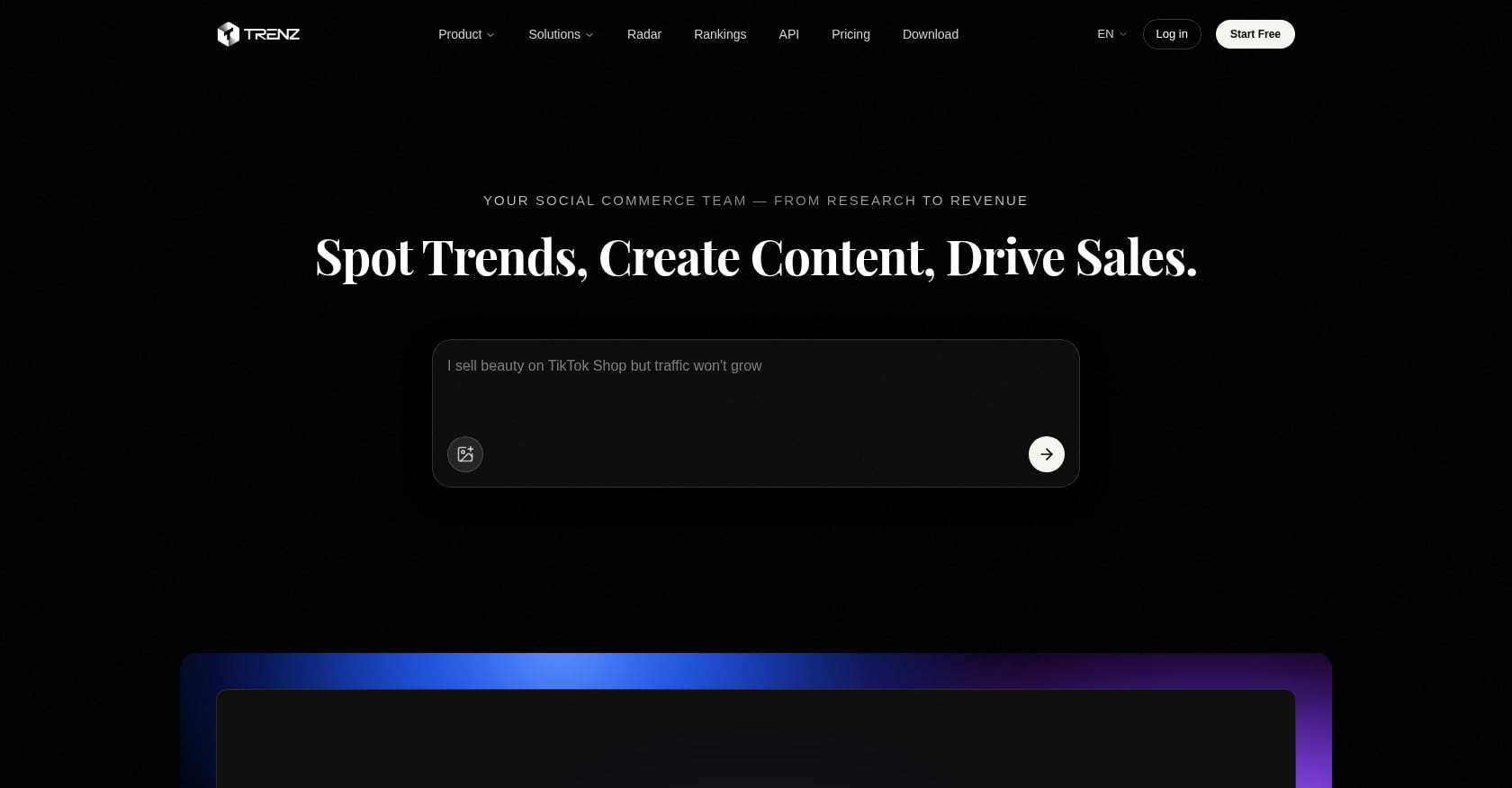
Best for: Agencies managing TikTok Shop clients who need product intelligence, AI content creation, and GMV tracking in one platform
Trenz is an AI-native social commerce platform built specifically around TikTok Shop workflows. Where every other tool on this list stops at scheduling and engagement metrics, Trenz connects content to actual commerce outcomes, tracking which posts drive GMV, which creators convert, and which products are worth promoting.
The platform is organized around three AI agents: a Market Analyst for product discovery and competitive intelligence, a Creative Director for video, image, and script generation, and a Social Manager for cross-platform publishing and engagement. This structure means an agency can go from identifying a trending product to publishing a short-form video about it in a single workflow.
Pricing:
Free: 50 welcome credits, 1 social account (no credit card required)
Growth: 250 credits/month, 3 social accounts
Pro: 650 credits/month, 10 social accounts
Scale: 1,800 credits/month, 50 social accounts, team workspace, $19/seat/month
Credits work out to roughly $0.10 each. A single AI-generated video costs approximately 12 credits. Top-up credits never expire, and the Scale plan offers a 50% bonus on purchased credits. See full pricing details.
Key agency features:
50 social accounts on the Scale plan, enough for a mid-sized agency roster
Cross-platform publishing to TikTok, Instagram, YouTube, and Facebook from one calendar
AI video generation in roughly 60 seconds using integrated models (Seedance 2.0, Veo 3.1, Wan 2.6)
Daily Radar trend briefings with concrete GMV data, growth metrics, and creator-concentration analysis
Monthly TikTok Shop Rankings tracking $408.7M in GMV across categories
Open API exposing TikTok commerce data, AI content generation, and social publishing endpoints
50M+ TikTok products and 2M+ creators indexed for product discovery
Honest tradeoffs:
TikTok-first depth. Other platforms are supported for publishing and analytics, but the deepest commerce intelligence is TikTok Shop specific.
The credit-based system requires budgeting. A 60-second video at 3 credits/second uses 180 credits, so teams need to plan production volume against their monthly allocation.
Base plan prices for Growth, Pro, and Scale tiers aren’t displayed publicly beyond credits and features. Agencies in procurement will want to run a test cycle to estimate all-in costs.
As a newer platform, it lacks the volume of third-party reviews that established tools have accumulated.
Who should pick Trenz: Any agency where TikTok Shop revenue matters to clients. If your clients care about GMV, not just impressions, this is the only tool that connects content creation directly to commerce results. Agencies that don’t manage TikTok Shop accounts will get more value from a general-purpose tool below.
2. Sprout Social
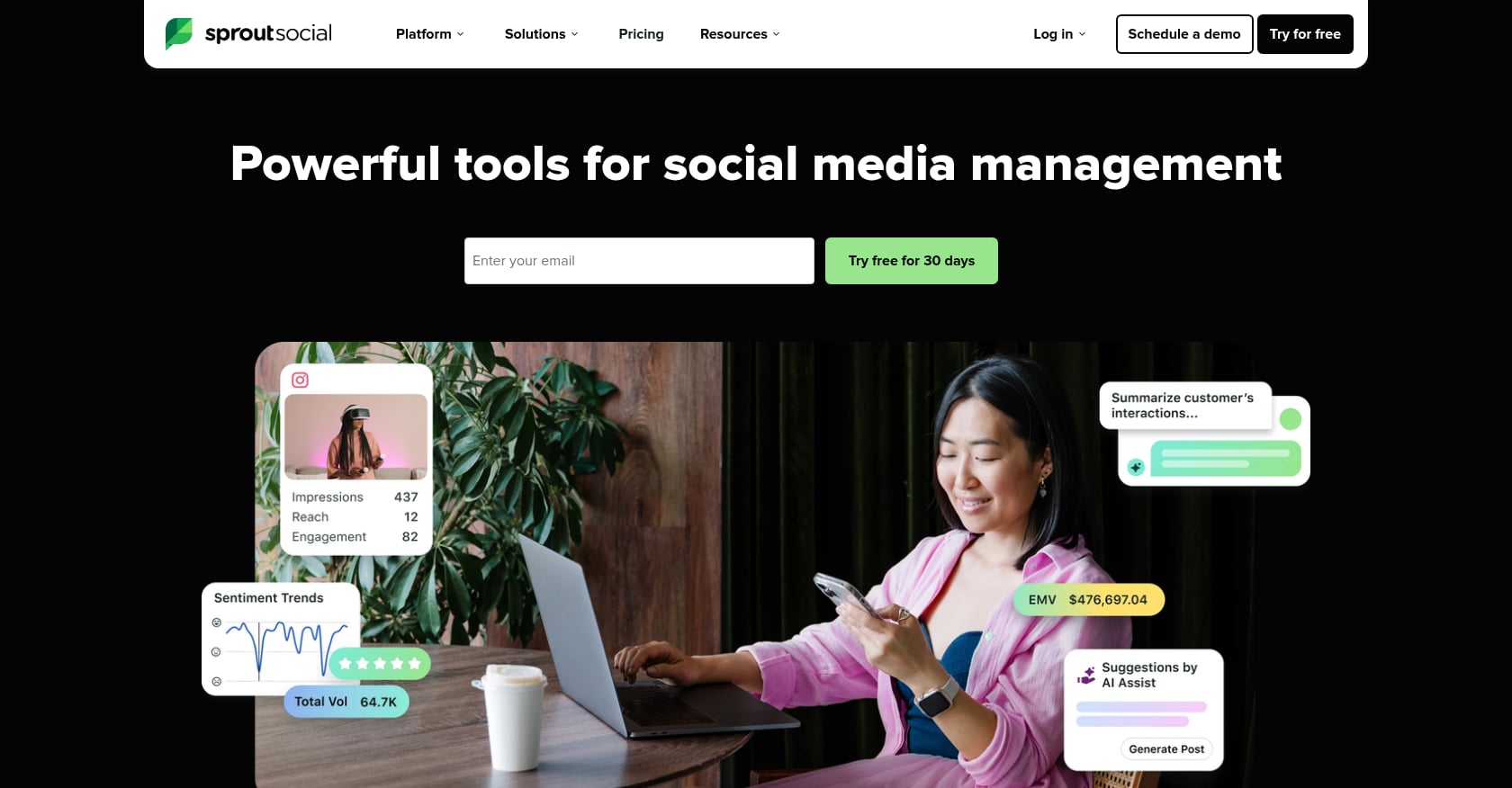
Best for: Enterprise agencies that need CRM-integrated reporting and social listening at scale
Sprout Social is the tool that agency operations directors tend to gravitate toward. Its unified smart inbox, competitive reporting, and CRM integrations (Salesforce, HubSpot) make it a strong fit for agencies that serve enterprise clients demanding polished, data-rich reports.
Pricing:
Standard: $199/user/month (5 social profiles)
Professional: $299/user/month
Advanced: $399/user/month
Enterprise: custom-quoted
All plans are billed annually. Here’s where the math gets painful for agencies. A 5-person team on the Professional plan pays $1,495/month, or $17,940/year. A 10-person team on Advanced? That’s $3,990/month, nearly $48,000 annually, before you add social listening (a paid add-on). One agency operations lead on a forum noted that a seemingly reasonable $249/month plan became $647/month after adding just two team members at $199 each.
The Standard tier’s hard limit of 5 social profiles forces most agencies into Professional almost immediately.
Key agency features:
Unified smart inbox across all connected accounts
Competitive reports and benchmarking
Approval workflows (higher tiers)
CRM integrations for tying social to sales pipeline
Social listening (paid add-on)
Honest tradeoffs:
The most expensive per-seat pricing in the category. At $399/user, a 10-person agency faces a $4,000 monthly bill.
Social listening costs extra on top of already premium pricing.
User sentiment is polarized: 4.4/5 on G2 from 6,200 reviews, but 2.1/5 on Trustpilot. Professional buyers rate it highly; smaller teams often feel burned by costs.
3. Hootsuite
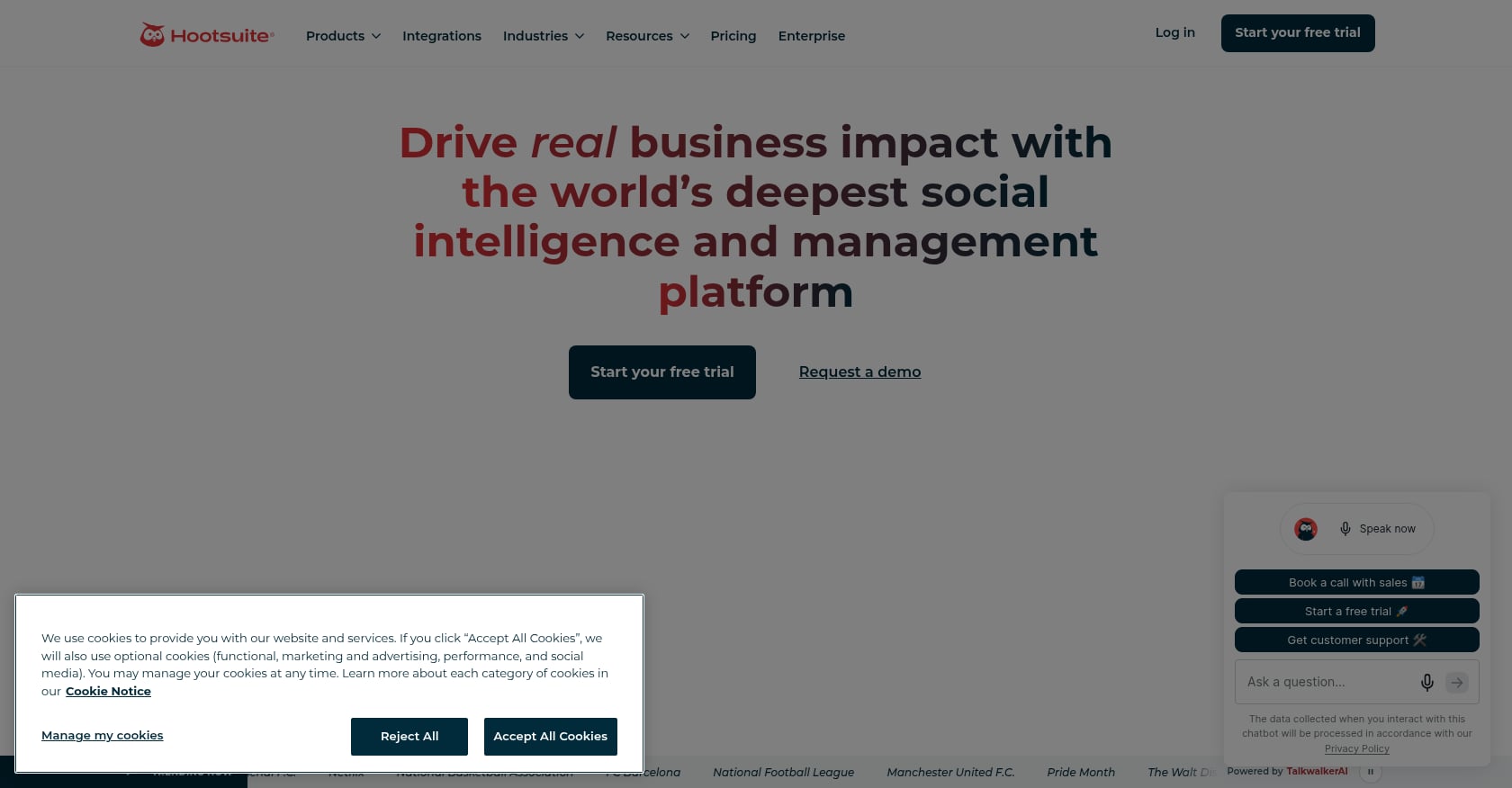
Best for: Mature agencies with established multi-platform workflows
Hootsuite is the incumbent. It’s been around since 2008 and has the broadest integration ecosystem of any tool here. For agencies that already have workflows built around Hootsuite’s stream-based monitoring and app marketplace, switching costs are high, and there’s a reasonable argument for staying.
Pricing:
Professional: ~$99/month (1 user, 10 accounts)
Team: ~$249/month (3 users, 20 accounts)
Business and Enterprise: custom quotes
Monthly billing adds 20-25% compared to annual rates. Because there are no bundled user rates on lower plans, costs scale linearly.
Key agency features:
Stream-based real-time monitoring
Broad third-party app integrations (150+)
Social listening (add-on)
Workspace features for team collaboration
Honest tradeoffs:
Hootsuite has been moving upmarket deliberately. Solo creators and small agencies have been priced out intentionally.
The interface feels dated compared to newer competitors. Practitioners on Reddit frequently mention the clunky UX when comparing it to tools like Planable or Cloud Campaign.
Social listening is an add-on, not included in base plans.
4. Buffer
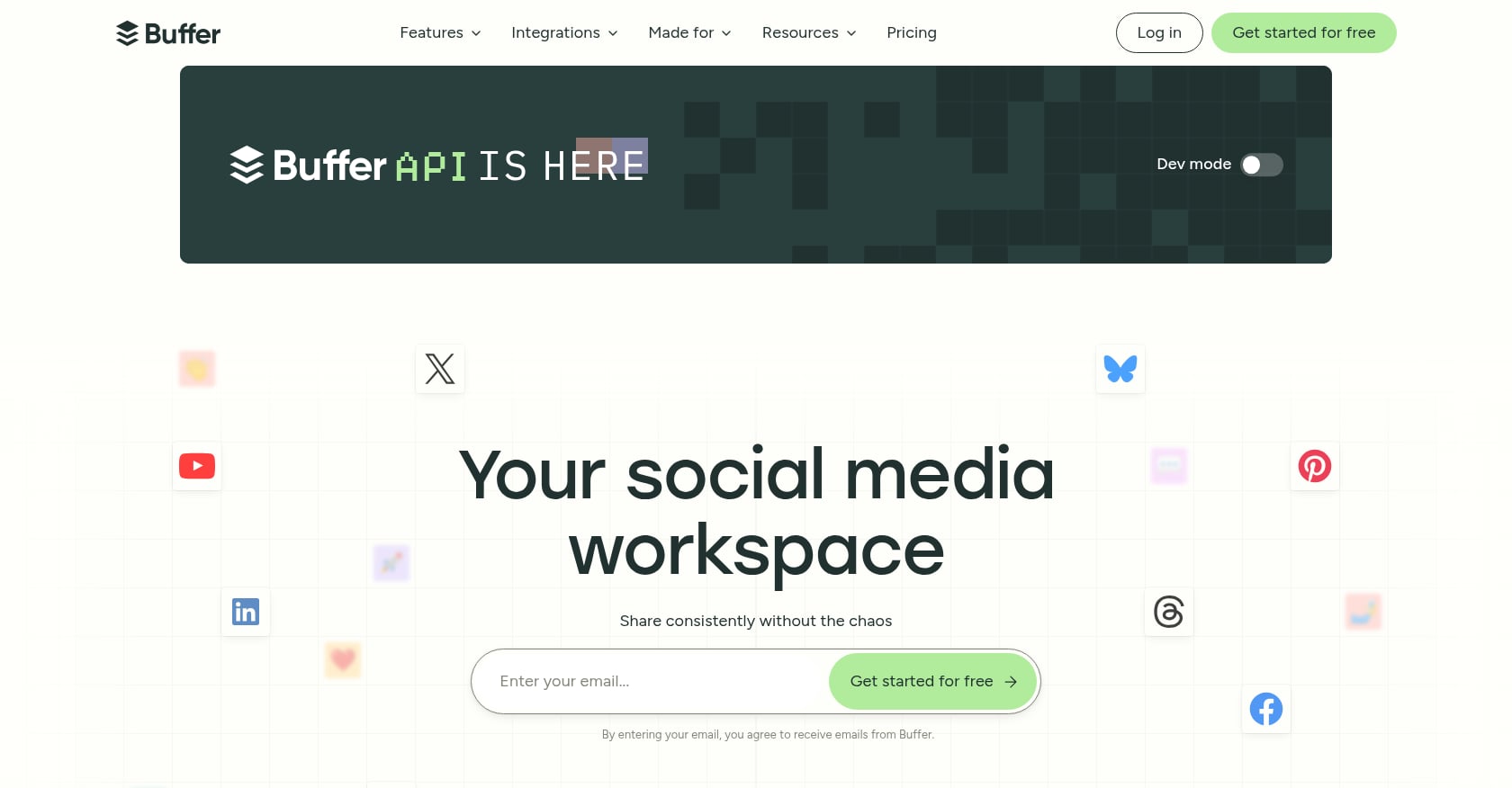
Best for: Small agencies on a tight budget managing fewer than 30 channels
Buffer’s simplicity is its selling point. The per-channel pricing model starts at just $6/channel/month, making it the cheapest entry point for agencies managing a handful of client accounts.
Pricing:
Free: 3 channels, basic scheduling
Essentials: $6/channel/month
Team: $12/channel/month (unlimited users)
Buffer eliminated its dedicated “Agency” tier in December 2025, folding those features into the Team plan. The scaling math matters: a 30-client agency averaging 5 profiles per client (150 total channels) would pay approximately $4,550/year on the Team plan.
Key agency features:
Unlimited users on Team plan (no per-seat trap)
Clean, intuitive scheduling interface
AI text assistant for caption generation
Approval workflows on Team plan
Honest tradeoffs:
No social listening at all. In 2026, monitoring brand mentions is table stakes for serious social media management, and Buffer doesn’t offer it.
Analytics are basic. No white-label reporting.
Per-channel pricing adds up faster than it looks. Community discussions frequently point out that Buffer works great under 50 channels but becomes cost-inefficient beyond that.
No social commerce capabilities.
5. Agorapulse
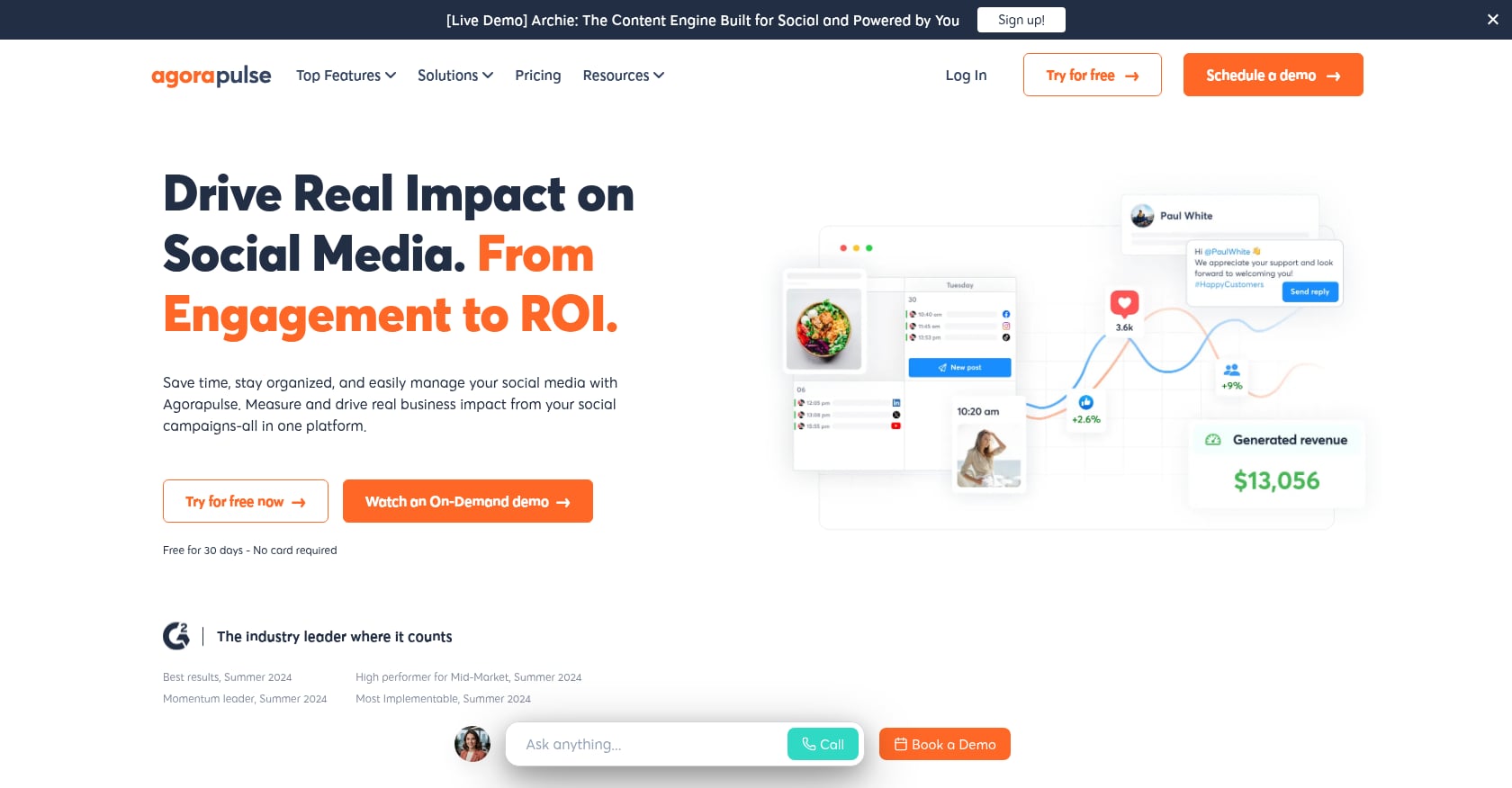
Best for: Agencies where community management and inbox volume are the primary workload
If your agency spends more time responding to comments, DMs, and reviews than scheduling posts, Agorapulse deserves serious consideration. Its unified inbox with sentiment analysis and audience labeling gives community managers tools that most schedulers don’t touch.
Pricing:
Free plan available (limited)
Paid plans from $49/user/month after 30-day trial
Tiered by users and social profiles
Key agency features:
Unified inbox for mentions, comments, and reviews across platforms
Social listening with sentiment analysis
Audience labeling for segmentation and reporting
Content approval workflows
Honest tradeoffs:
Per-user billing. Costs increase significantly beyond 15 social profiles, so the math changes fast for growing agencies.
No white-label reporting options.
Practitioners report that Agorapulse is well-balanced for agencies managing up to around 15 profiles, but pricing escalation beyond that threshold pushes many agencies to explore alternatives.
6. Sendible
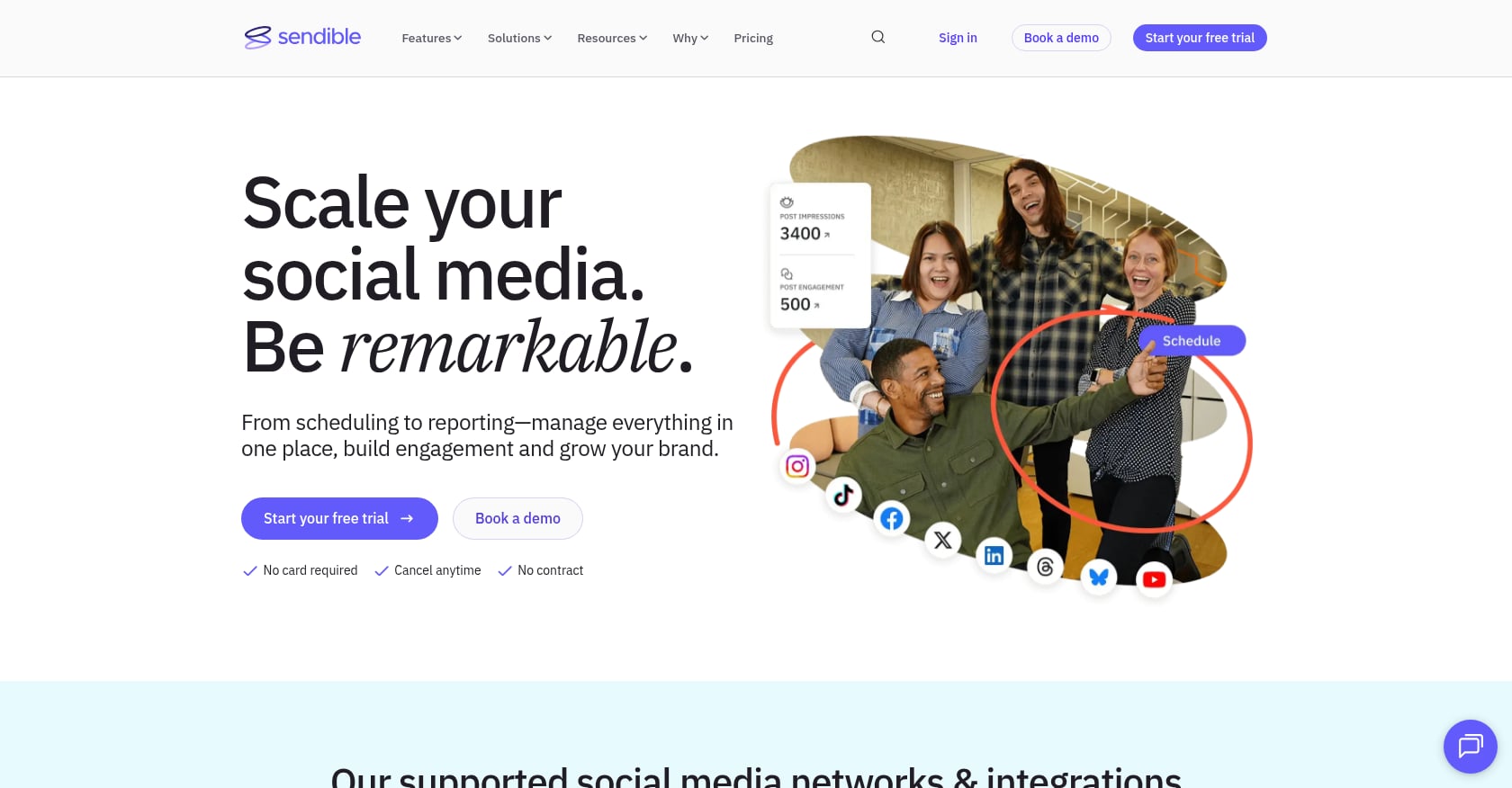
Best for: Agencies that need white-label client-facing dashboards
Sendible is the strongest option for agencies that want clients to see their brand, not the tool’s brand. It lets agencies replace the login screen, email notifications, and automated reports with their own identity, which is something most tools either don’t offer or gate behind enterprise pricing.
Pricing:
Creator: $29/month
Traction: $89/month
Scale: $199/month
Advanced: $299/month
Enterprise: $750/month
Key agency features:
Full white-label customization (login, emails, reports)
Client-facing dashboards under your brand
Content calendar with approval workflows
Broad platform support
Honest tradeoffs:
User costs scale as your agency grows. SocialPilot offers unlimited users at $200/month, while Sendible charges more for comparable capacity.
Analytics depth doesn’t match Sprout Social or Sprinklr.
4.6/5 on Capterra from 137 reviews, a solid score, but the review volume is smaller than competitors.
7. SocialPilot
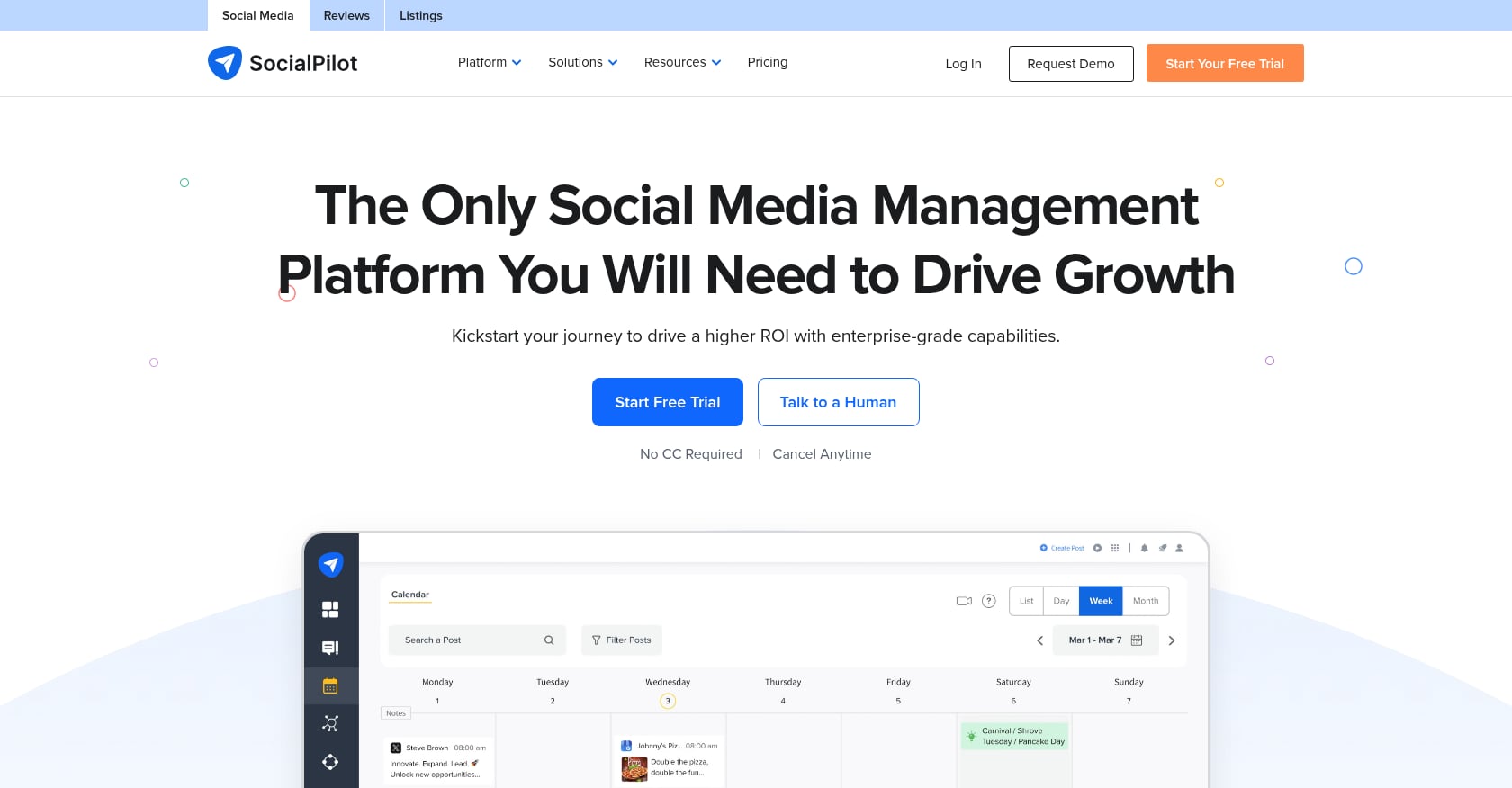
Best for: Budget-conscious agencies managing a large number of client accounts
SocialPilot consistently wins on value. Its top-tier plan supports 50 social accounts with unlimited users and includes white-label features for $200/month. For agencies where the math on per-seat tools is simply prohibitive, SocialPilot is the clearest alternative.
Pricing:
Starts at $30/month
Top-tier: $200/month (50 accounts, unlimited users, white-label)
Key agency features:
Bulk scheduling of up to 500 posts at once
Approval-on-the-go: clients can review content from any device without logging in
White-label reports on higher tiers
Unlimited users on the top plan
Honest tradeoffs:
Analytics and reporting are basic compared to Agorapulse or Sprout Social. Reports can’t be heavily customized, and there’s no Google Analytics integration.
The interface is functional but not as polished as Planable or Cloud Campaign.
Smaller integration ecosystem than Hootsuite.
8. Planable
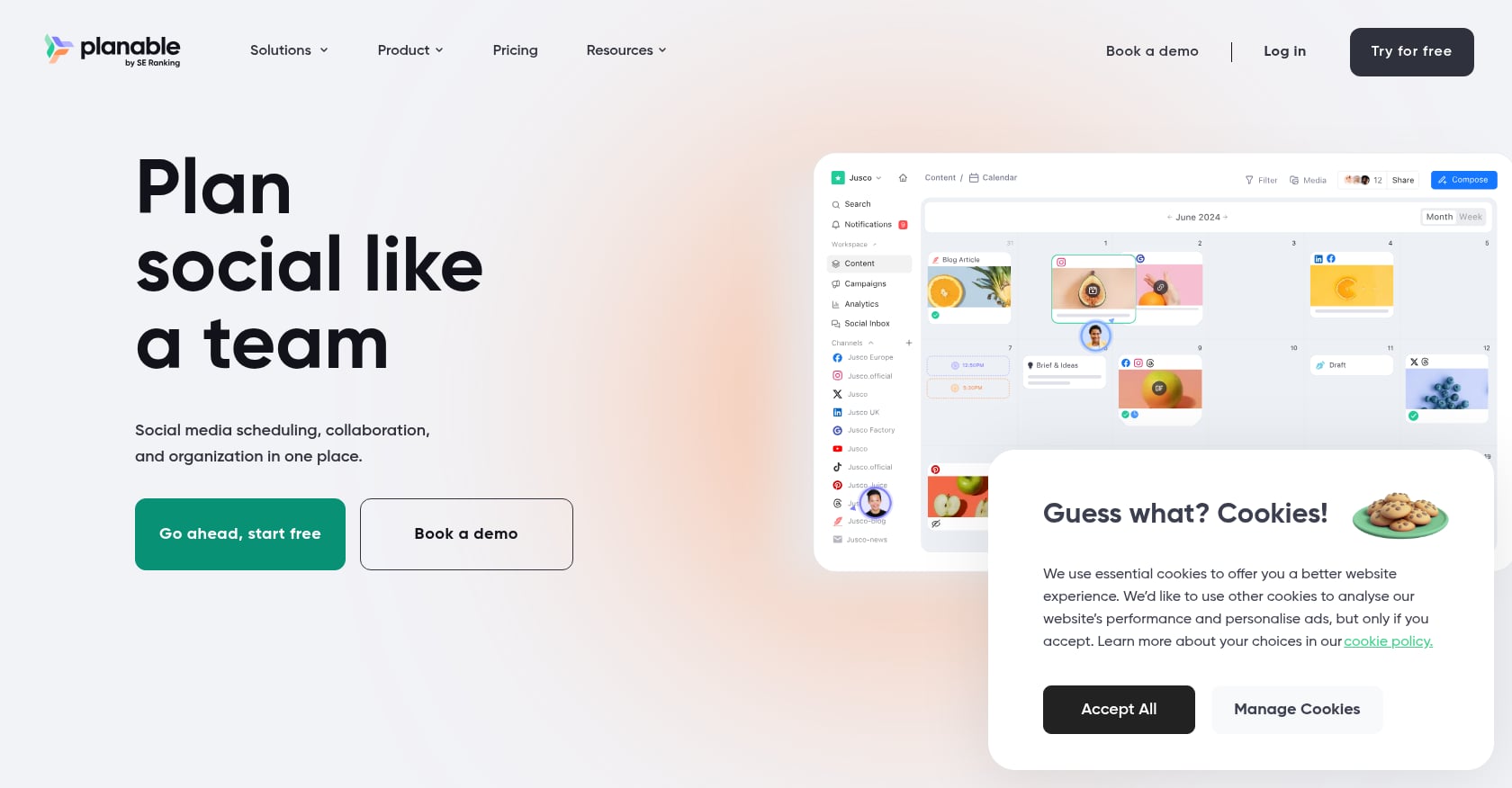
Best for: Agencies where content approval bottlenecks slow everything down
Planable was built for one thing and it does that thing exceptionally well: getting content reviewed and approved by multiple stakeholders without email chains and spreadsheet trackers. Content previews show exactly how a post will appear on each platform before it goes live, so what clients approve is what gets published.
Pricing:
Basic: $33/workspace/month
Pro: $49/workspace/month
Enterprise: custom
Add-ons: Analytics ($14/workspace/month), Engagement/Social inbox ($9/workspace/month)
All paid tiers include unlimited users.
Key agency features:
Custom approval chains per workspace: none, optional, required, or multi-level (team → client → legal → exec)
Pixel-perfect post previews per platform
Unlimited users on all paid plans
Real-time collaboration with comments and feedback
Honest tradeoffs:
No social ads management.
Analytics and engagement are paid add-ons, not included in base plans. An agency needing both adds $23/workspace/month to the sticker price.
Planable is a content workflow tool first and a publishing tool second. Agencies that need deep analytics or social listening will need a second tool.
9. Cloud Campaign
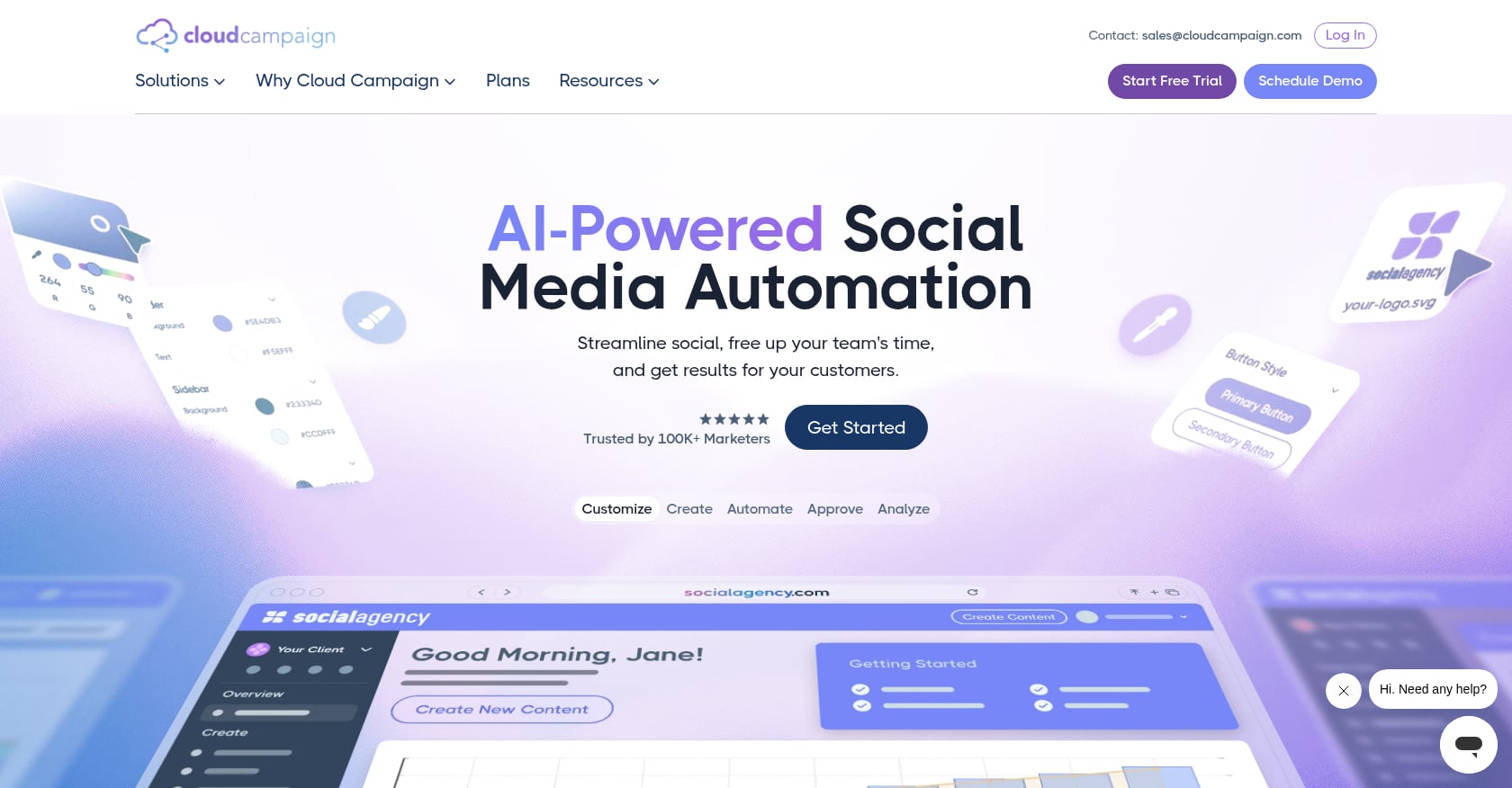
Best for: Small agencies built around content calendar workflows
Cloud Campaign earns the highest satisfaction score in the category: 4.9/5 on G2 from 159 reviews. That kind of near-perfect rating from a meaningful sample size is rare. Users consistently praise its agency-first design and clean content calendar.
Pricing:
Freelancer: $49/month
Agency: $120/month (10 channels, plus $6/channel beyond that)
Key agency features:
Agency-first workspace design
Client-separated content calendars
Content library with categories
Approval workflows
Honest tradeoffs:
Smaller ecosystem and fewer integrations than Hootsuite or Sprout Social.
Limited social listening capabilities.
Less suited for enterprise-scale agencies, but excellent for boutique shops managing 10-30 client accounts.
10. Loomly
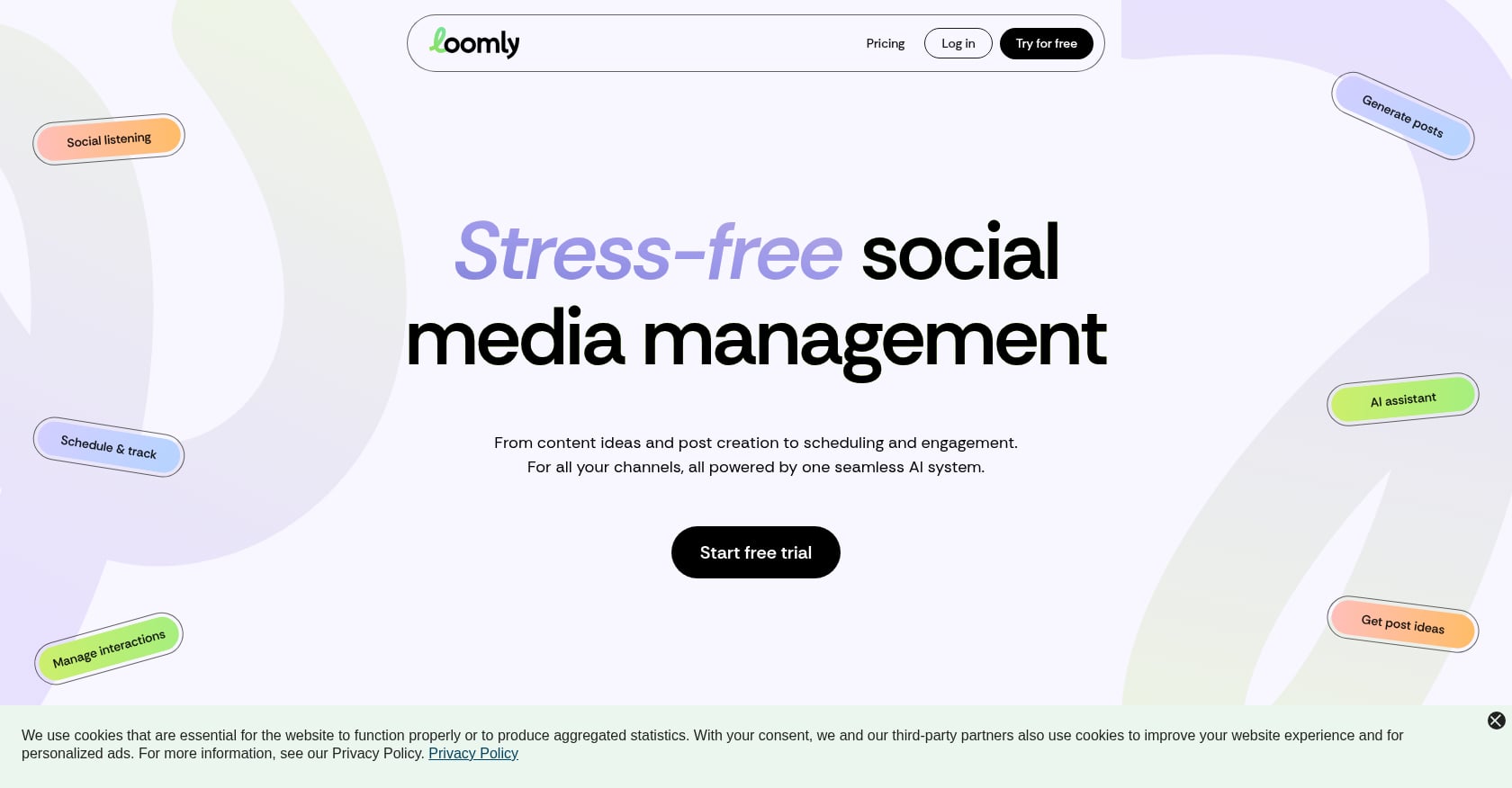
Best for: Teams that need guided content ideation and consistent brand execution
Loomly stands out for its content ideation features. The platform suggests post ideas based on trending topics, RSS feeds, and social media best practices. For agencies onboarding junior social media managers, this guided approach reduces training time and helps maintain quality standards.
Pricing:
Base: $65/month (3 users, 12 social accounts)
Best agency plan: $332/month
Key agency features:
Collaborative workflow: draft → feedback → approval → publish
Content ideation engine with trending topic suggestions
Post preview across platforms
Automated publishing and scheduling
Honest tradeoffs:
Prioritizes guided execution for brand teams but trades off agency-scale multi-client depth and cost efficiency.
At $332/month for the best agency plan, it’s more expensive than SocialPilot or Cloud Campaign for comparable account volumes.
4.6/5 on G2 from 1,793 reviews, strong but not differentiated enough to justify the premium for most agencies.
11. Sprinklr
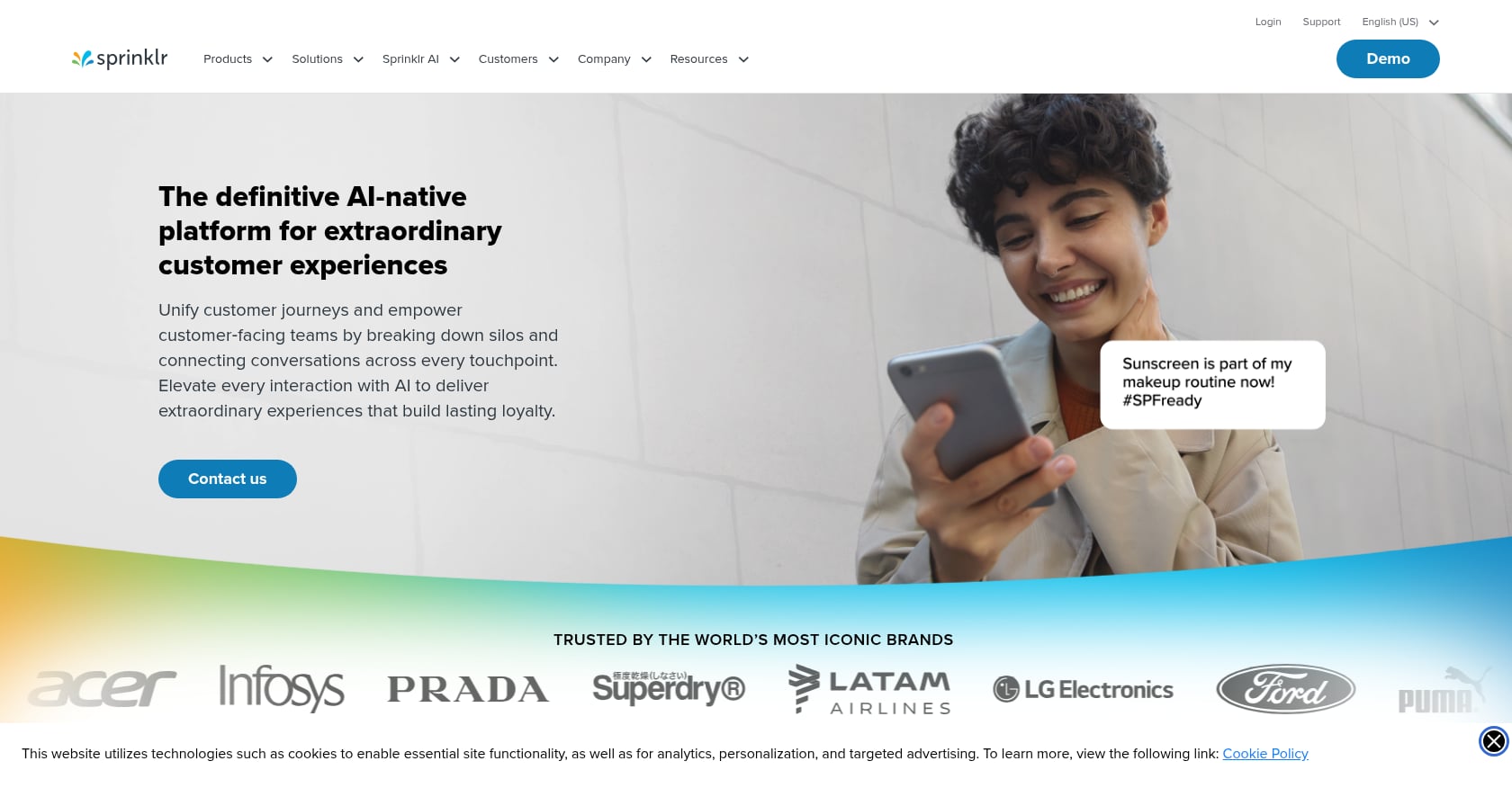
Best for: Fortune 500 agencies managing 30+ social channels with enterprise governance
Sprinklr is the heavyweight. Coverage across 30+ channels (including Bluesky, Discord, Nextdoor, Reddit, Snapchat, Tumblr, Twitch, Telegram, and WhatsApp) makes it the only option for agencies whose enterprise clients demand presence on niche platforms. The AI-powered insights and workflow automation are genuinely advanced.
Pricing:
Essentials Growth: $2,800/user/year
Enterprise: custom quotes
Key agency features:
30+ channel coverage, far more than any competitor
AI-powered social listening and trend detection
Enterprise governance and compliance workflows
Advanced analytics with custom dashboards
Honest tradeoffs:
Steep learning curve. Many users on G2 (4.1/5 from 1,206 reviews) note onboarding challenges and occasional performance issues.
The price point locks out any agency that isn’t serving enterprise clients with corresponding budgets.
Overkill for agencies managing fewer than 50 social profiles.
12. Vista Social
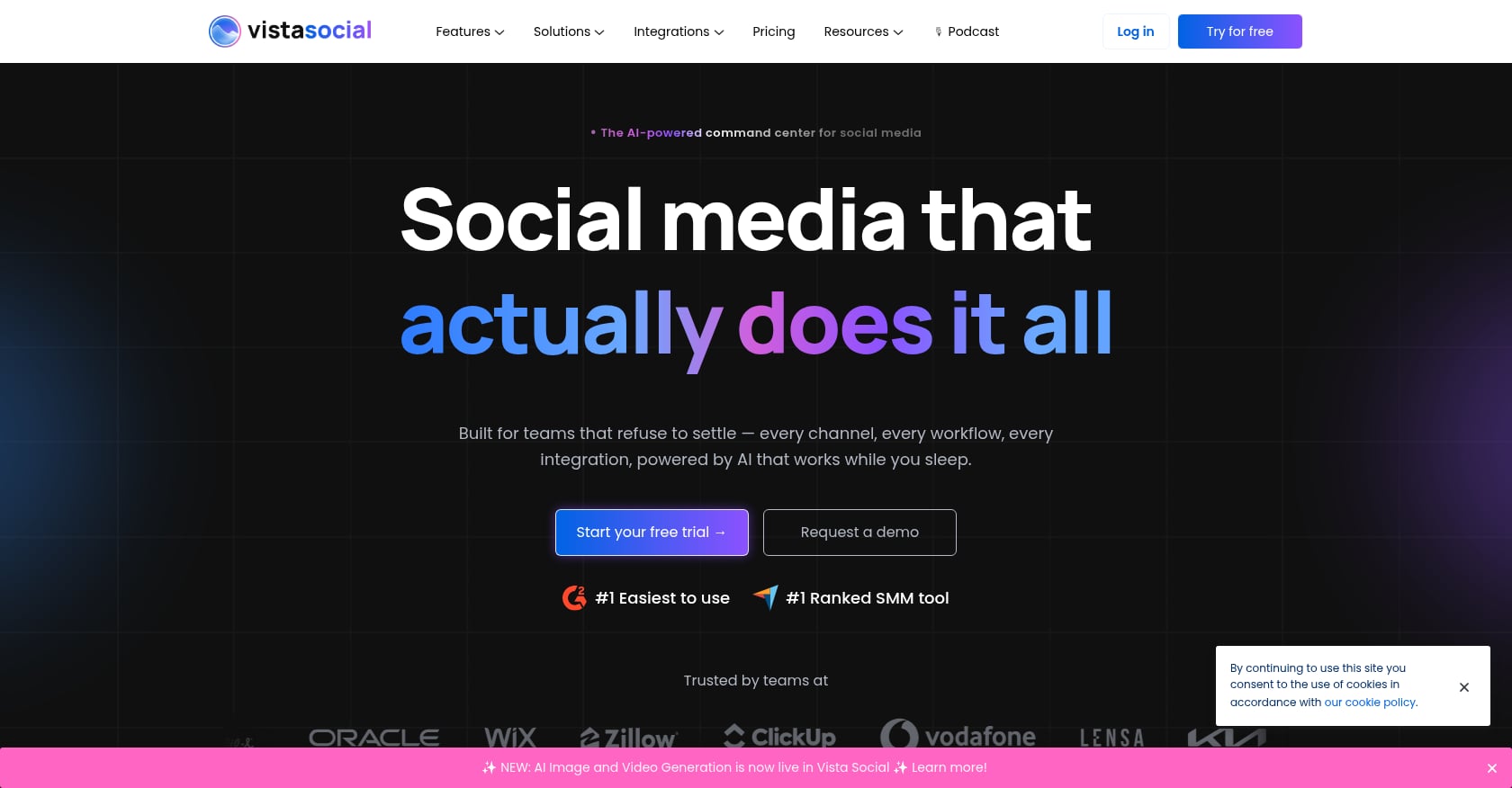
Best for: Mid-market agencies wanting feature depth without enterprise pricing
Vista Social quietly offers one of the most complete feature sets in the mid-market. It supports 13 platforms (including Threads, Snapchat, Reddit, Bluesky, and Tumblr), includes social listening, DM automations, and task management, all starting at $79/month.
Pricing:
Professional: $79/month (3 users, 15 accounts)
Higher tiers available
Key agency features:
Broadest platform support outside of Sprinklr
Social listening included (not an add-on)
DM automations for common inquiries
Task management built into the platform
Honest tradeoffs:
Smaller brand recognition than Hootsuite or Sprout Social, which can matter when pitching to enterprise clients.
Less suitable for enterprise governance.
4.8/5 on G2 from 1,074 reviews, the highest rating among established platforms, which suggests strong product-market fit despite lower brand awareness.
How to Choose: Agency Decision Framework
The best social media management software for agencies isn’t one tool. It’s the right tool for your agency’s specific client mix, team size, and growth trajectory.
Match your agency type to the right tool:
If your agency… | Start with… | Why |
|---|---|---|
Manages TikTok Shop clients | Trenz | Only tool connecting content to GMV. See agency solutions. |
Serves Fortune 500 brands | Sprout Social or Sprinklr | Enterprise reporting, CRM integrations, governance |
Needs strict approval workflows | Planable | Multi-level approvals, unlimited users, pixel-perfect previews |
Operates on a tight budget | SocialPilot | 50 accounts, unlimited users, $200/month |
Wants white-label everything | Sendible | Full brand customization on client-facing dashboards |
Prioritizes community management | Agorapulse | Unified inbox with sentiment analysis |
Model your 12-month cost with projected team growth. The biggest mistake agencies make is choosing a tool based on today’s team size. If you’re a 3-person team planning to hire 2 more people this year, a per-seat tool at $299/user goes from $897/month to $1,495/month. That’s $7,176 more per year just for adding seats. Flat-rate or credit-based pricing models protect you from this kind of cost escalation.
For deeper guidance on selecting agency tools for TikTok Shop specifically, the guide to choosing TikTok Shop agency software breaks down the decision in more detail.
The Social Commerce Gap Most Agencies Are Ignoring
Every tool in this list except Trenz treats social media as a publishing and engagement channel. You schedule posts, monitor comments, pull analytics reports, and call it done. That workflow made sense in 2020. It doesn’t in 2026.
TikTok Shop is now a fully integrated commerce environment. Users browse, checkout, and track orders without leaving the app. Over 91% of social commerce transactions happen on smartphones. The content an agency creates for a TikTok Shop client doesn’t just need to get views; it needs to generate revenue.
This creates a measurement problem. When an agency reports “your TikTok video got 500K views and 12K engagements,” the client running a TikTok Shop wants to know: “How much did it sell?” Legacy social media management tools can’t answer that question because they don’t connect to commerce data.
Agencies running TikTok Shop campaigns need tools that track GMV alongside engagement, identify which creators actually convert (not just drive views), and surface product opportunities based on sales data rather than vanity metrics. Tools like Trenz’s TikTok Shop analytics and creator analytics exist specifically for this purpose.
The emergence of agentic AI is accelerating this shift. AI systems that analyze social data to deliver real-time insights, identify trends, and recommend optimized strategies are reducing the manual effort in campaign management. But the biggest gains come when that AI is connected to commerce outcomes, not just content performance.
Agencies that ignore this gap will increasingly lose pitches to competitors who can show clients a direct line from content to revenue.
Common Mistakes Agencies Make When Choosing Software
Choosing based on “starting price” instead of total cost of ownership
Ignoring per-seat pricing traps that scale poorly
Using publishing tools when approval workflows are the real bottleneck
Overlooking client separation features
Not factoring in social listening or analytics add-ons
Choosing enterprise tools too early (overkill for small teams)
Ignoring social commerce entirely (especially TikTok Shop growth)
FAQ
What’s the cheapest social media management software for a 5-person agency?
SocialPilot at $200/month gives you 50 social accounts and unlimited users. Buffer’s Team plan is cheaper per channel but adds up fast if you manage many profiles ($12/channel/month across 50 channels = $600/month). Trenz uses a credit-based model where additional team members cost $19/seat/month, making a 5-person Scale team roughly $76/month in seat costs plus the base plan.
Which tools support TikTok Shop natively?
Trenz is the only social media management platform that integrates directly with TikTok Shop commerce data, including GMV tracking, product discovery, and creator conversion analytics. All other tools on this list support TikTok for publishing and basic analytics but don’t connect to shop-level revenue data.
Should I pick per-user or flat-rate pricing?
If your team is growing, flat-rate or credit-based models protect you from cost escalation. Per-user pricing (Sprout Social, Agorapulse) works when your team is small and stable. A Sprout Social Advanced plan at $399/user becomes a $48,000/year commitment for a 10-person team. SocialPilot’s unlimited-user model at $200/month stays at $2,400/year regardless of team size.
Do I need social listening, and which tools include it?
If your agency monitors brand mentions, tracks industry conversations, or reports on share of voice, yes. Vista Social includes social listening in its base plan. Agorapulse includes it on paid tiers. Sprout Social and Hootsuite both charge extra for it. Buffer doesn’t offer it at all.
What’s the best tool for content approval workflows?
Planable is purpose-built for this. Its multi-level approval chains (team → client → legal → exec) and pixel-perfect post previews make it the strongest option for agencies with complex sign-off processes. Cloud Campaign and Loomly also offer approval workflows but with less granularity.
Can any of these tools generate AI video content?
Most tools offer basic AI text assistance for captions and hashtags. Trenz is the only platform on this list with integrated AI video and image generation, supporting multiple models with average generation time around 60 seconds. For agencies producing short-form video content at scale, this eliminates the need for a separate video creation tool.
Which tool is best for agencies that manage both social media and social commerce?
Trenz is the clear choice for agencies bridging content and commerce, particularly on TikTok Shop. For agencies that don’t manage commerce clients, a combination like Planable (for approvals) plus Vista Social (for publishing and listening) covers most workflow needs.
How much should an agency budget for social media management software annually?
It depends on your team size and client count, but realistic ranges are: small agencies (2-3 people, under 20 clients) should budget $2,400-$6,000/year; mid-size agencies (5-10 people, 20-50 clients) should budget $6,000-$20,000/year; enterprise agencies (10+ people, 50+ clients) can expect $20,000-$50,000+ annually. Always model the cost at your projected team size 12 months from now, not your current headcount.
Author


